Quartz crystal clear
1344×768 · AVIF · CC BY 4.0
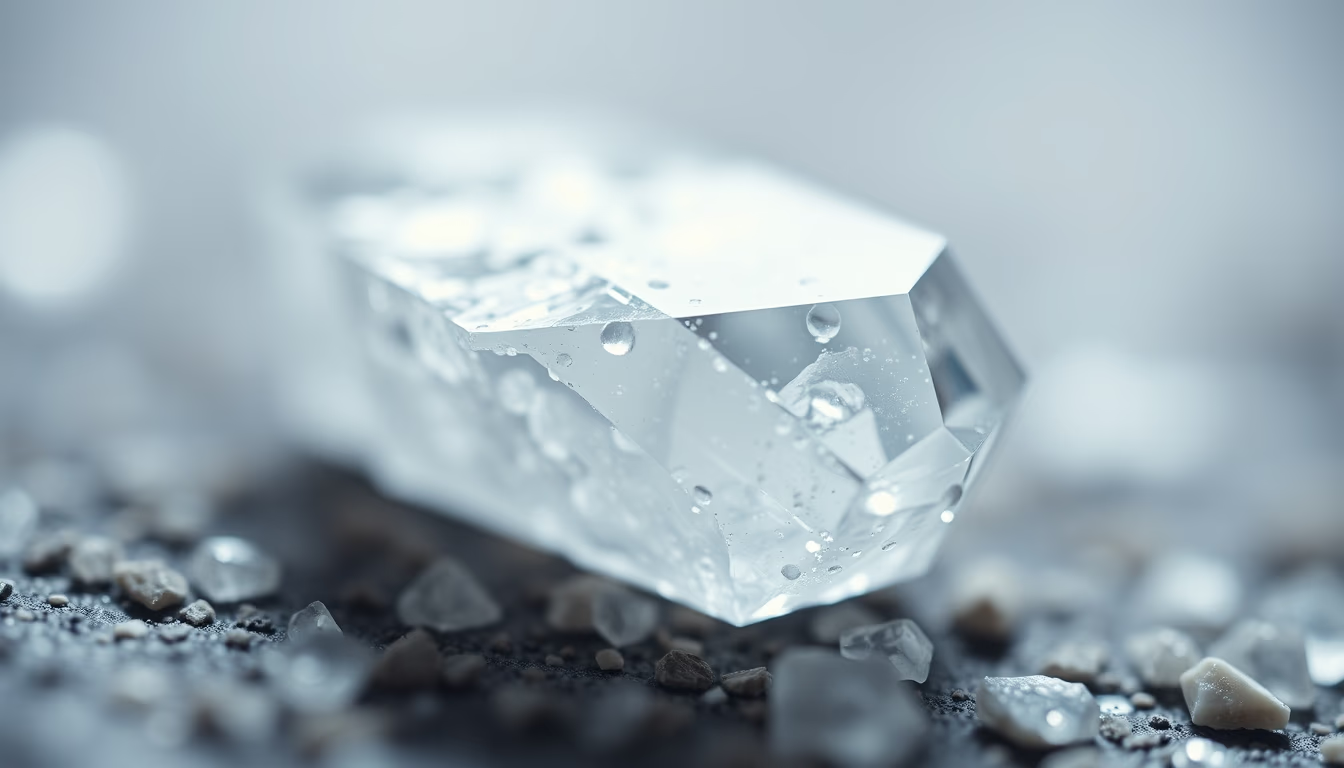
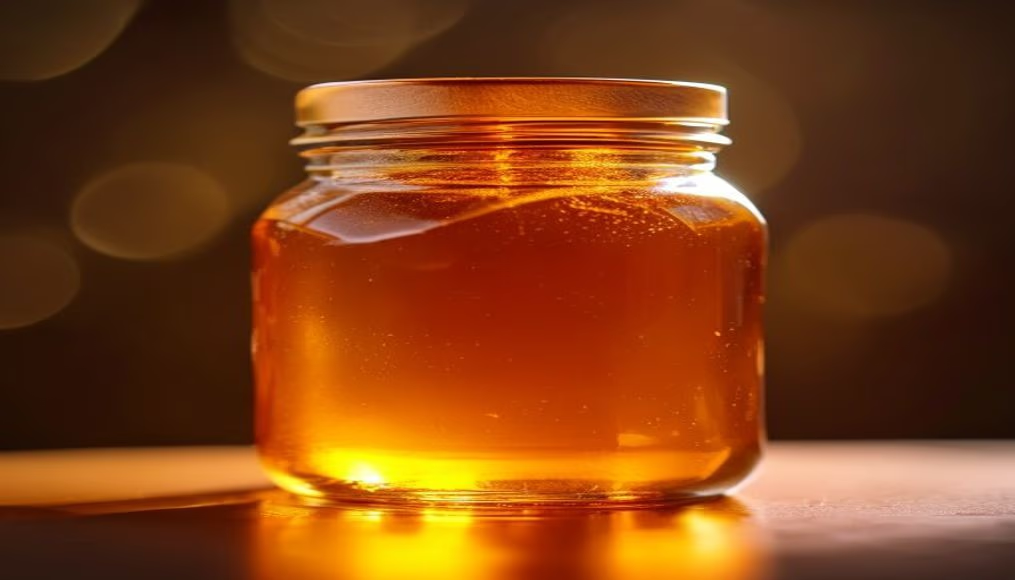
Pure, transparent quartz crystal with hexagonal cleavage and vitreous luster, essential for the electronics industry and prized in global mining.
About this subject
Quartz is the most abundant mineral in the Earth's crust, composed of silicon dioxide (SiO2). Its hexagonal crystal structure forms elongated prisms with pyramidal terminations, as seen in clear, colorless crystals known as rock crystal. The transparency and purity of quartz result from the absence of impurities in its crystal lattice, making it ideal for optical and electronic applications.
In Brazil, quartz is found abundantly in the states of Minas Gerais, Goiás, and Bahia, with the country being one of the world's largest producers of rock crystal. Colorless quartz is used to manufacture quartz oscillators for watches, radio circuits, and frequency filters, leveraging its piezoelectric property: when subjected to mechanical pressure, it generates a precise electric current.
Beyond technological use, quartz occurs in colored varieties such as amethyst (violet), citrine (yellow), and smoky quartz (brown), whose colors are caused by iron impurities or natural irradiation. On the Mohs scale, quartz has a hardness of 7, making it scratch-resistant and widely used in jewelry and lapidary.
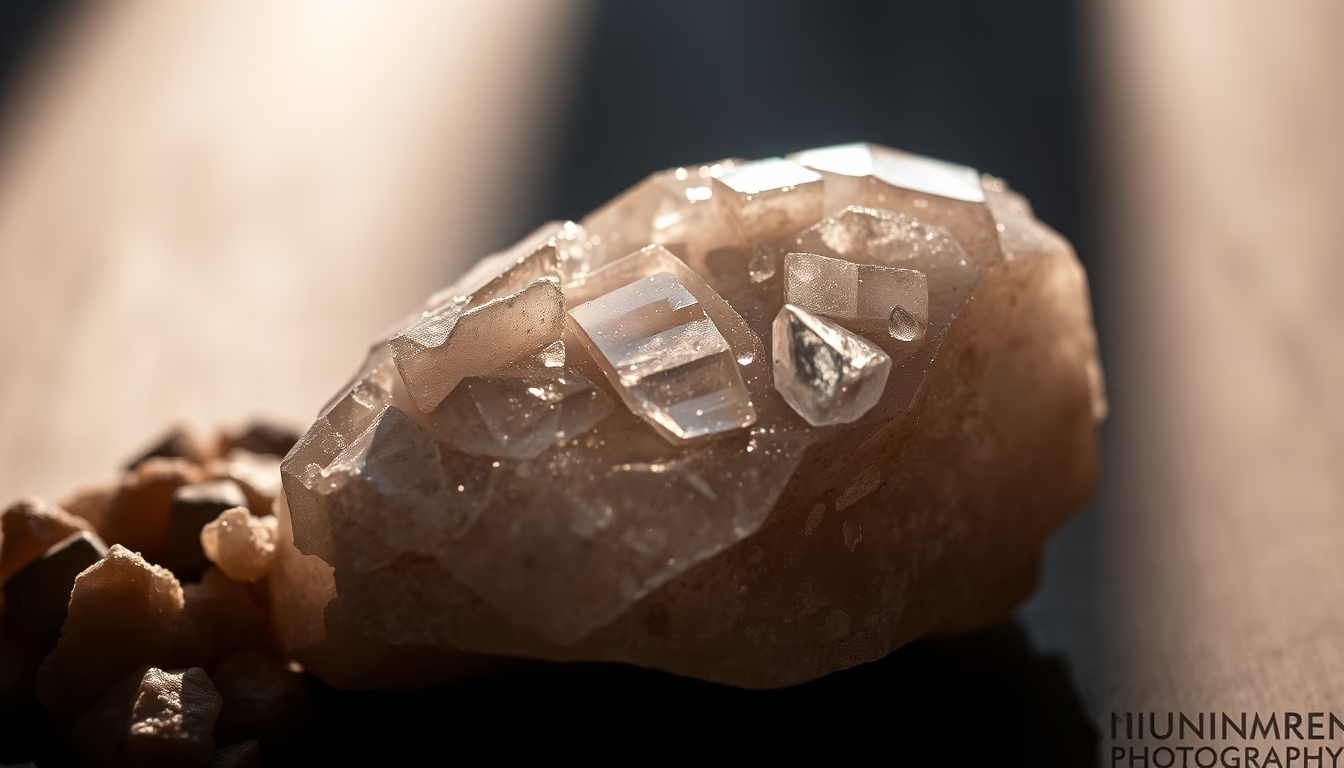
Historically, quartz was used by ancient civilizations for tools and ornaments. Today, giant crystals can be found in geodes, with cavities lined with well-formed crystals. The purity of quartz is tested by its optical clarity and absence of inclusions, factors that determine its value for collectors and industry.
Frequently Asked Questions
How is quartz formed in nature?
Quartz forms from the cooling of silica-rich magma or by precipitation from hydrothermal solutions in rock cavities. Large, clear crystals grow in open spaces such as geodes over thousands of years.
Why is quartz used in wristwatches?
Quartz has a piezoelectric property: when an electric current is applied, it vibrates at an extremely stable frequency. This vibration is used to regulate time in quartz watches, providing accuracy within seconds per month.
What are the main colored varieties of quartz?
The main varieties are amethyst (violet), citrine (yellow to orange), smoky quartz (brown), rose quartz (pink), and milky quartz (opaque white). The colors are caused by impurities of elements such as iron, titanium, or exposure to natural radiation.
Direct URL
https://pub-c7d6a6ea828543ac903a74a341ccb2e1.r2.dev/imagens/quartz-crystal-clear-macro-closeup-p5.avifHow to credit
Include a visible link back to UtilizAí. Copy one of the snippets below:
<a href="https://xn--utiliza-eza.com/en/midia/imagens/quartz-crystal-clear-macro-closeup-p5">Quartz crystal clear</a> by <a href="https://xn--utiliza-eza.com">UtilizAí</a>, licensed under <a href="https://creativecommons.org/licenses/by/4.0/">CC BY 4.0</a>.
[Quartz crystal clear](https://xn--utiliza-eza.com/en/midia/imagens/quartz-crystal-clear-macro-closeup-p5) by [UtilizAí](https://xn--utiliza-eza.com), CC BY 4.0
License: CC-BY-4.0