Quantum computer chip
1344×768 · AVIF · CC BY 4.0
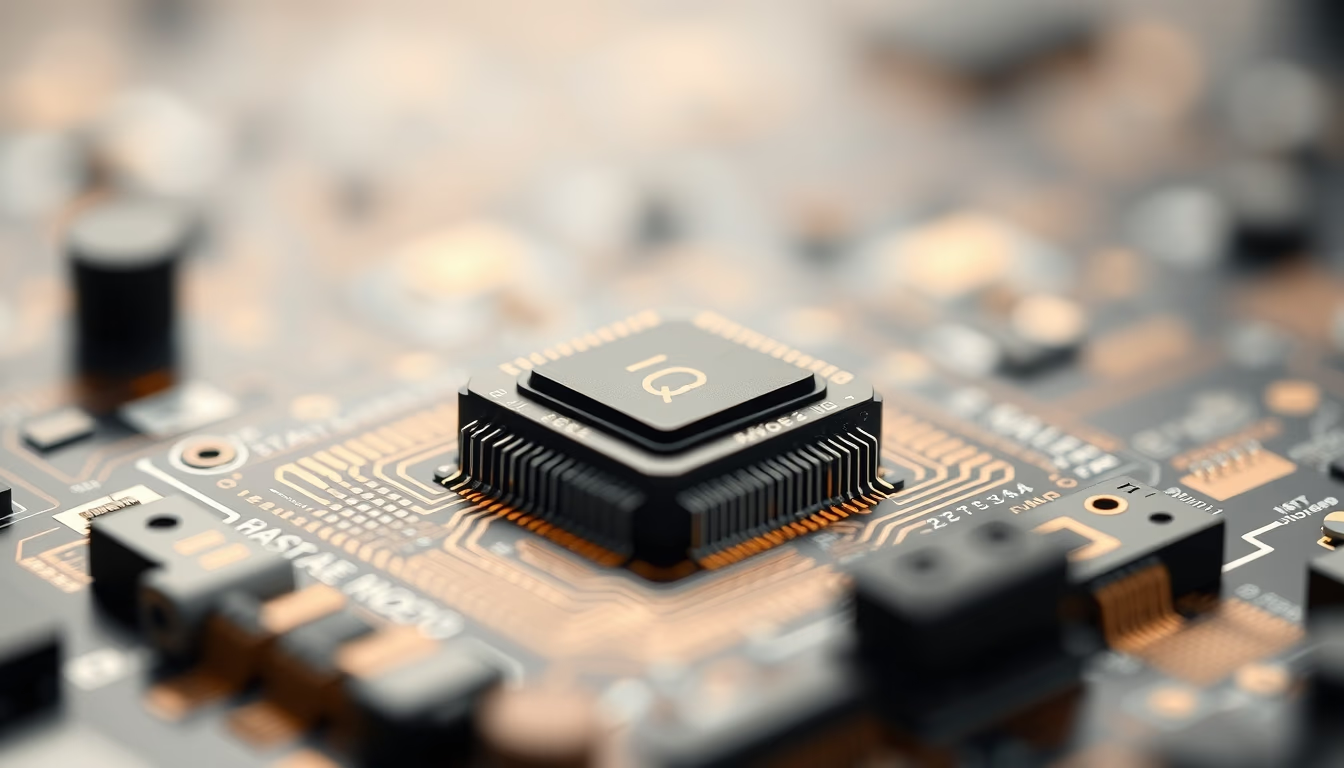
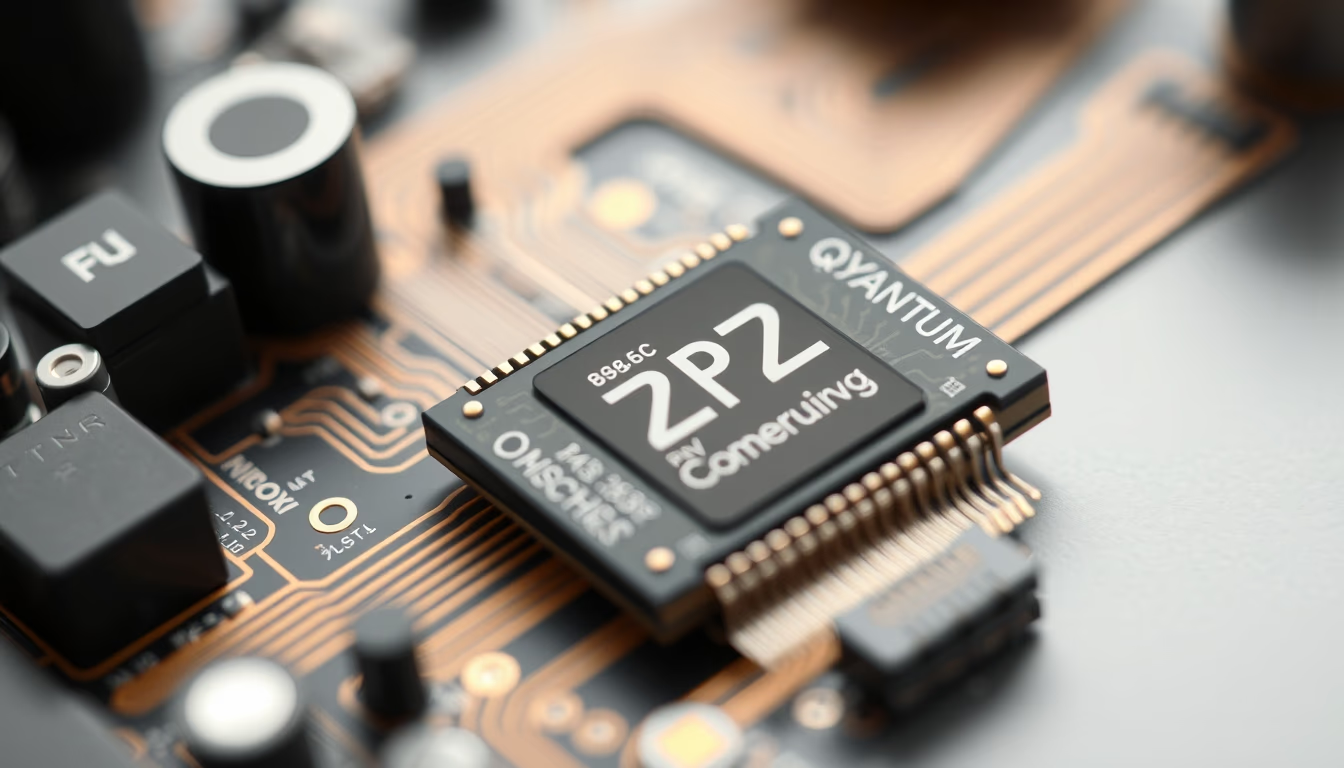
Quantum chips use qubits to process information, promising to revolutionize fields like cryptography and molecular simulation.
About this subject
A quantum computer chip is the core of a quantum computer, a device that leverages quantum mechanics phenomena like superposition and entanglement to perform calculations. Unlike classical chips operating with bits (0 or 1), quantum chips use qubits, which can exist in multiple states simultaneously. This property enables quantum computers to solve complex problems in minutes that would take classical supercomputers thousands of years.
Qubits are implemented in various ways, such as trapped ions, superconducting circuits, or nuclear spins. Companies like Google, IBM, and IonQ lead the development. Google's Sycamore processor, with 53 superconducting qubits, demonstrated quantum supremacy in 2019 by performing a specific task in 200 seconds. However, these chips operate at temperatures near absolute zero (-273°C) to minimize external interference.
Decoherence is the main challenge: the loss of quantum coherence due to environmental interactions limits computation time. To mitigate this, quantum error correction systems are needed, requiring thousands of physical qubits to form a single logical qubit. Scalability is another bottleneck, as increasing qubit count while maintaining precise control is extremely complex.
Despite difficulties, recent advances include chips with over 100 qubits and improvements in gate fidelity. Future applications range from drug discovery to logistics optimization and post-quantum cryptography. The development of quantum chips is a global race with billions in investment from governments and private companies.
Frequently Asked Questions
What distinguishes a quantum chip from a classical chip?
Classical chips use bits representing 0 or 1, while quantum chips use qubits, which can exist in a superposition of 0 and 1 simultaneously. Qubits can also be entangled, enabling instant correlations that accelerate certain calculations.
How many qubits are needed for a useful quantum computer?
For practical applications like cryptography or chemical simulations, millions of qubits are estimated to be necessary. Current processors have around 100 qubits, but error correction requires many physical qubits per logical qubit.
What are the main challenges in building quantum chips?
The main challenges include decoherence (loss of quantum information), the need for extremely low operating temperatures, and scalability to millions of qubits with precise control.
Direct URL
https://pub-c7d6a6ea828543ac903a74a341ccb2e1.r2.dev/imagens/quantum-computer-chip-tilt-shift-miniature-p9.avifHow to credit
Include a visible link back to UtilizAí. Copy one of the snippets below:
<a href="https://xn--utiliza-eza.com/en/midia/imagens/quantum-computer-chip-tilt-shift-miniature-p9">Quantum computer chip</a> by <a href="https://xn--utiliza-eza.com">UtilizAí</a>, licensed under <a href="https://creativecommons.org/licenses/by/4.0/">CC BY 4.0</a>.
[Quantum computer chip](https://xn--utiliza-eza.com/en/midia/imagens/quantum-computer-chip-tilt-shift-miniature-p9) by [UtilizAí](https://xn--utiliza-eza.com), CC BY 4.0
License: CC-BY-4.0