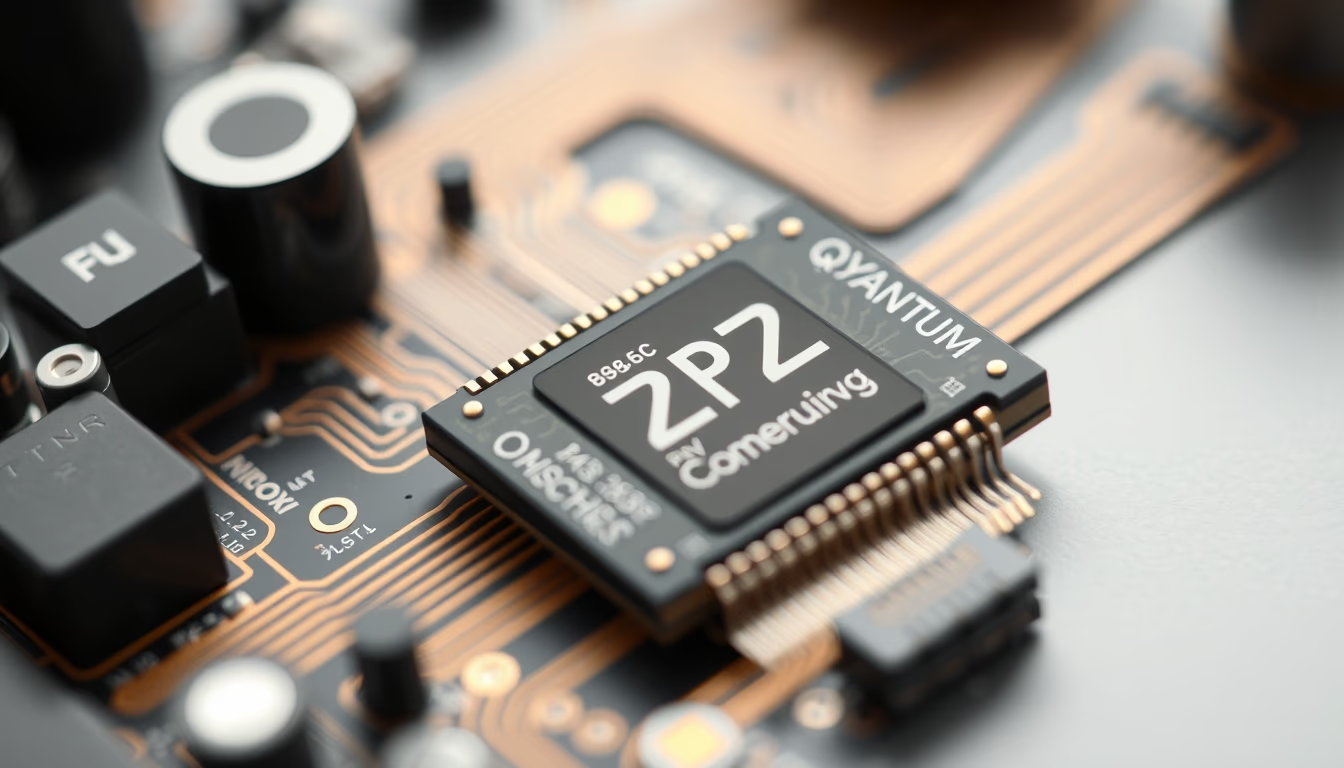
Quantum computer chip
1344×768 · AVIF · CC BY 4.0
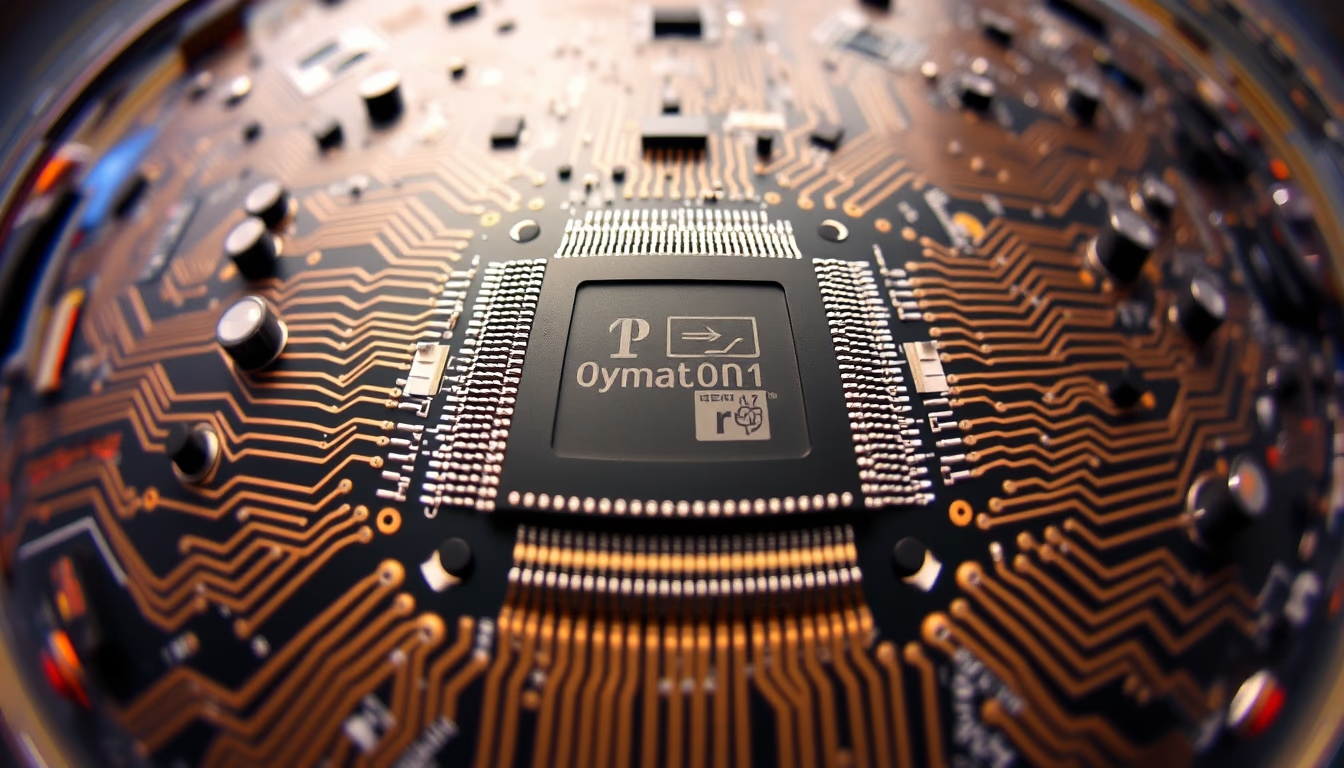
Quantum processors represent a technological leap by using qubits to process information exponentially faster than classical chips.
About this subject
A quantum computer chip is the core of a quantum computer, where qubits (quantum bits) replace classical bits. Unlike bits, which are either 0 or 1, qubits can exist in a superposition of both states simultaneously, allowing parallel calculations. Moreover, quantum entanglement connects qubits so that the state of one instantly influences another, even at a distance, enabling exponentially faster algorithms for certain problems.
Fabricating quantum chips is extremely challenging. Most current designs use superconducting materials like niobium or aluminum, cooled to near absolute zero (around -273 °C) to minimize thermal interference. Other approaches include trapped ions, quantum dots, and topological qubits. Scalability is a major hurdle: increasing the number of qubits while maintaining quantum coherence and error correction is complex.
Quantum chips have the potential to revolutionize fields such as cryptography, molecular simulation, optimization, and artificial intelligence. Algorithms like Shor's (for factoring large numbers) and Grover's (for unstructured search) show theoretical exponential and quadratic speedups, respectively. Companies like IBM, Google, and Rigetti lead development, with processors up to 127 qubits (IBM Eagle) or 53 qubits (Google Sycamore).
We are currently in the NISQ (Noisy Intermediate-Scale Quantum) era, where chips contain tens to hundreds of qubits but are still sensitive to noise and errors. The next step is implementing logical qubits, which use redundancy to correct errors efficiently. Roadmaps from companies and research institutes point to fault-tolerant quantum computers in about two decades, though practical applications in specific niches may emerge sooner.
Frequently Asked Questions
How does a quantum computer chip work?
A quantum chip uses qubits that can be in superposition of both 0 and 1 simultaneously, and entanglement between qubits to perform parallel calculations. This allows exponentially faster processing than classical chips for specific tasks.
What are the main challenges in building quantum chips?
Key challenges include maintaining quantum coherence (qubits quickly lose their quantum state), error correction without disturbing the system, and scaling the number of qubits to hundreds or thousands while keeping noise low.
When will we have practical quantum computers?
Experts estimate that quantum computers capable of solving practical problems reliably, with efficient error correction, will be available within the next 10 to 20 years. Limited applications in specific niches may appear earlier.
Direct URL
https://pub-c7d6a6ea828543ac903a74a341ccb2e1.r2.dev/imagens/quantum-computer-chip-fish-eye-wide-angle-p8.avifHow to credit
Include a visible link back to UtilizAí. Copy one of the snippets below:
<a href="https://xn--utiliza-eza.com/en/midia/imagens/quantum-computer-chip-fish-eye-wide-angle-p8">Quantum computer chip</a> by <a href="https://xn--utiliza-eza.com">UtilizAí</a>, licensed under <a href="https://creativecommons.org/licenses/by/4.0/">CC BY 4.0</a>.
[Quantum computer chip](https://xn--utiliza-eza.com/en/midia/imagens/quantum-computer-chip-fish-eye-wide-angle-p8) by [UtilizAí](https://xn--utiliza-eza.com), CC BY 4.0
License: CC-BY-4.0