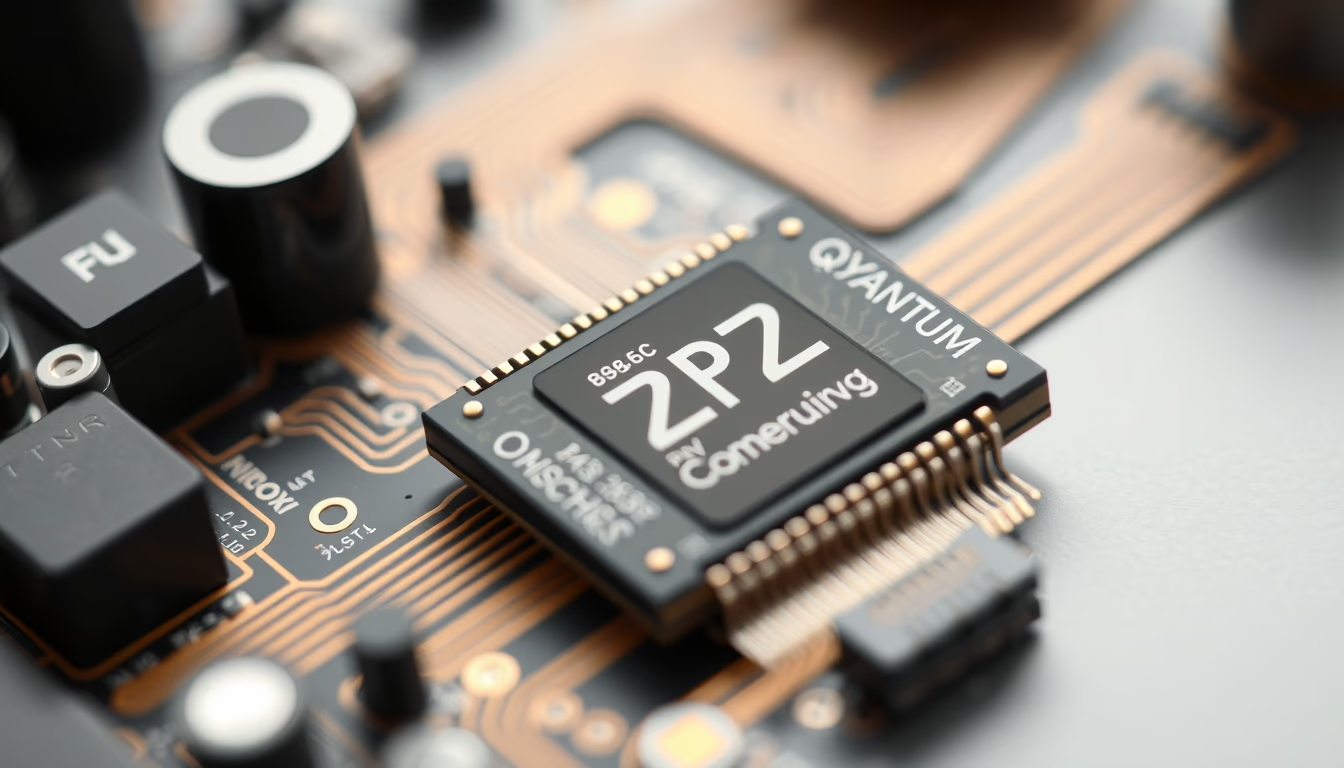
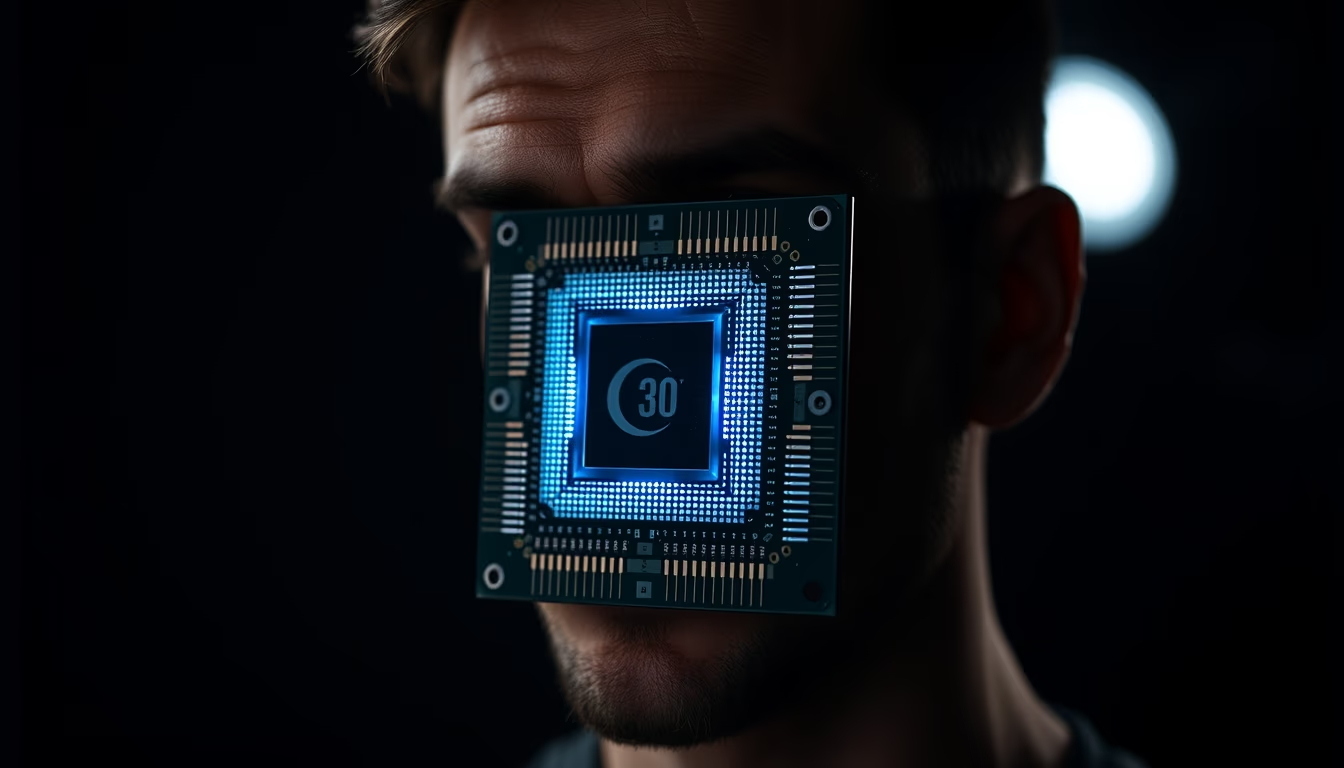
Quantum computer chip detail
1344×768 · AVIF · CC BY 4.0
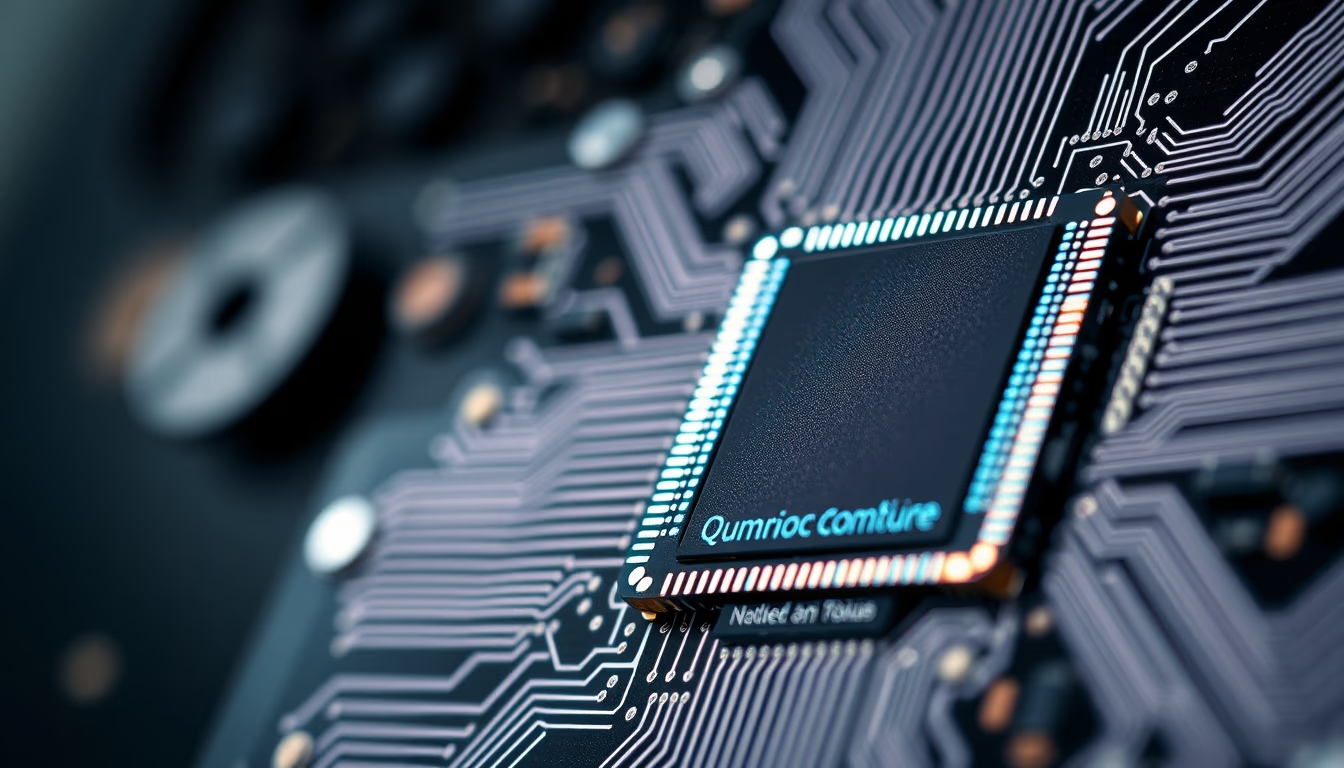
Close-up of a quantum computer chip reveals the intricate layout of superconducting qubits and cryogenic control circuits.
About this subject
Quantum computer chips represent the cutting edge of computing, where classical bits are replaced by qubits that can exist in multiple states simultaneously thanks to the principles of quantum mechanics. Unlike conventional silicon chips, current quantum chips often use superconducting materials such as niobium or aluminum, operating at temperatures near absolute zero (around 15 millikelvin) to prevent thermal noise from destroying quantum coherence.
Companies like IBM, Google, and Rigetti lead the development of superconducting quantum processors. Google's Sycamore chip, for instance, demonstrated quantum supremacy in 2019 by solving a problem in 200 seconds that would take thousands of years on a classical supercomputer. These chips are fabricated in clean rooms with nanometer precision, with each qubit controlled by microwave wires that apply radio-frequency pulses.
A key challenge is error rate: qubits are extremely sensitive to external noise. To mitigate this, chips include quantum error correction circuits and electromagnetic shielding. Beyond superconductors, other approaches include semiconductor spin qubits (e.g., silicon quantum dots) and trapped ions controlled by electromagnetic fields. Each architecture has trade-offs in scalability and coherence time.
The chip shown in detail likely integrates resonators, couplers, and readout lines that enable measuring qubit states without prematurely collapsing them. Ongoing miniaturization of these components is essential for building fault-tolerant quantum computers capable of revolutionizing fields like cryptography, materials simulation, and drug discovery. Currently, the record for qubits on a single superconducting chip is around 1,000 (e.g., IBM's Condor processor), but qubit quality still needs improvement for practical applications.
Frequently Asked Questions
How does a quantum computer chip work?
A quantum chip uses qubits that can be in a superposition of both 0 and 1 simultaneously. Superconducting qubits are tiny circuits that conduct current without resistance at cryogenic temperatures. Microwave pulses manipulate the qubits to perform quantum logic operations.
What is the difference between a classical chip and a quantum chip?
Classical chips use transistors to represent bits (0 or 1). Quantum chips use qubits (superconducting, trapped ions, etc.) that allow superposition and entanglement, enabling quantum parallelism and the potential to solve problems exponentially faster.
What materials are used in superconducting quantum chips?
Common materials include niobium, aluminum, and aluminum oxide (for Josephson junctions). These metals become superconductors at temperatures below 1 K, allowing currents to flow without energy loss.
Direct URL
https://pub-c7d6a6ea828543ac903a74a341ccb2e1.r2.dev/imagens/quantum-computer-chip-detail-documentary-photography-p4.avifHow to credit
Include a visible link back to UtilizAí. Copy one of the snippets below:
<a href="https://xn--utiliza-eza.com/en/midia/imagens/quantum-computer-chip-detail-documentary-photography-p4">Quantum computer chip detail</a> by <a href="https://xn--utiliza-eza.com">UtilizAí</a>, licensed under <a href="https://creativecommons.org/licenses/by/4.0/">CC BY 4.0</a>.
[Quantum computer chip detail](https://xn--utiliza-eza.com/en/midia/imagens/quantum-computer-chip-detail-documentary-photography-p4) by [UtilizAí](https://xn--utiliza-eza.com), CC BY 4.0
License: CC-BY-4.0