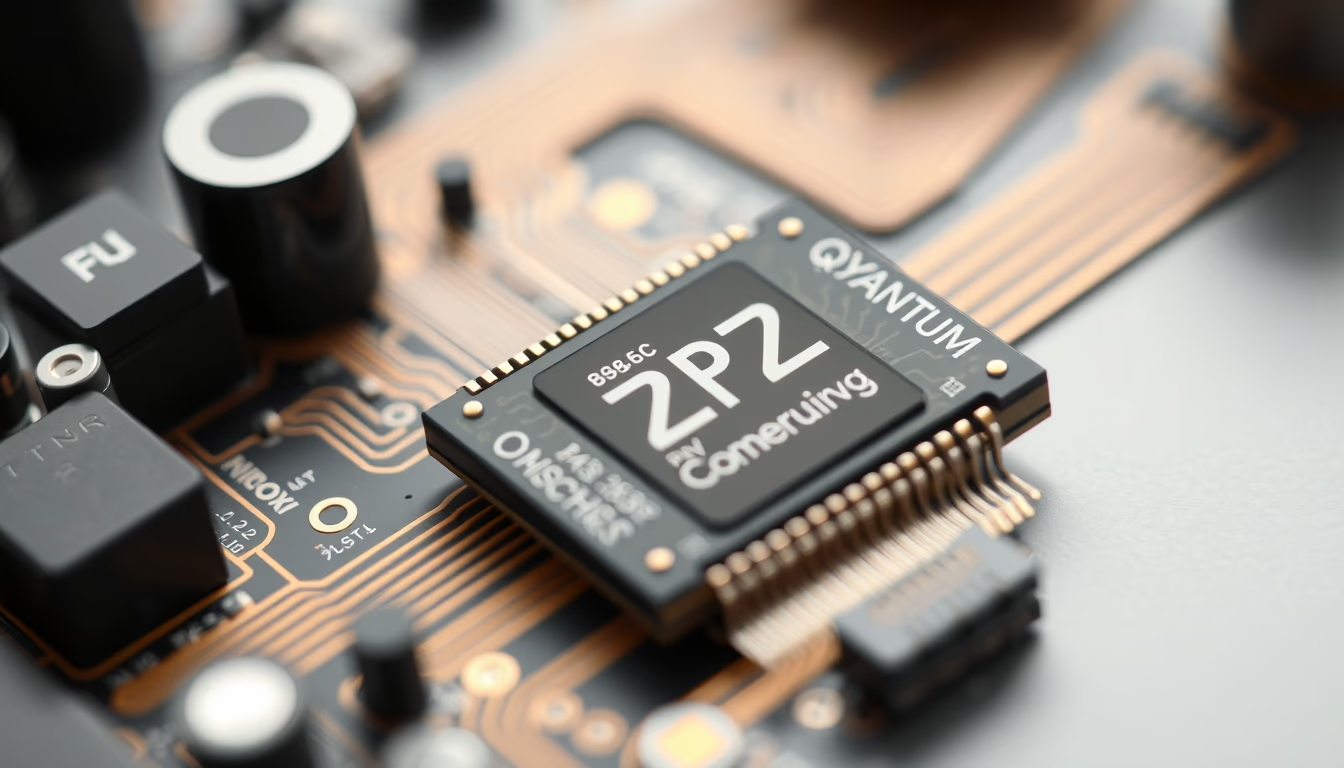
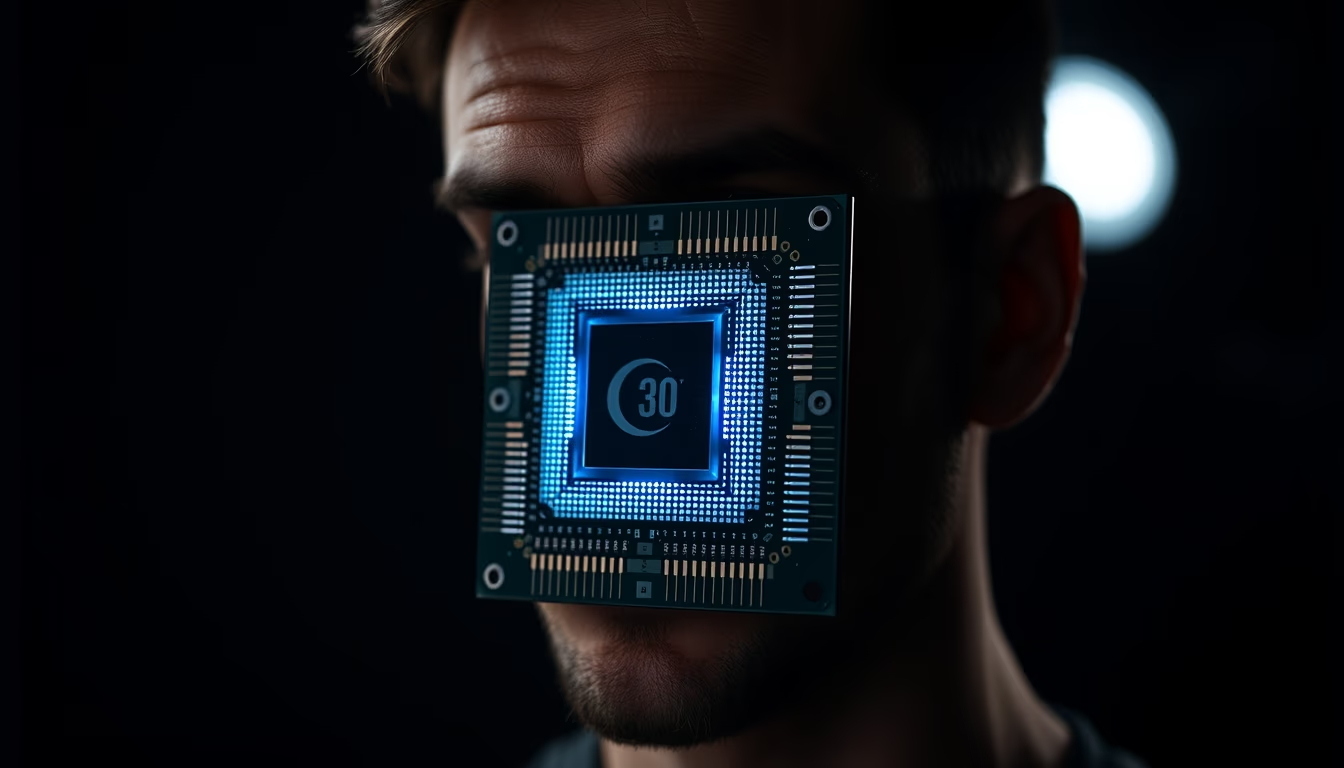
Quantum computer chip detail
1344×768 · AVIF · CC BY 4.0
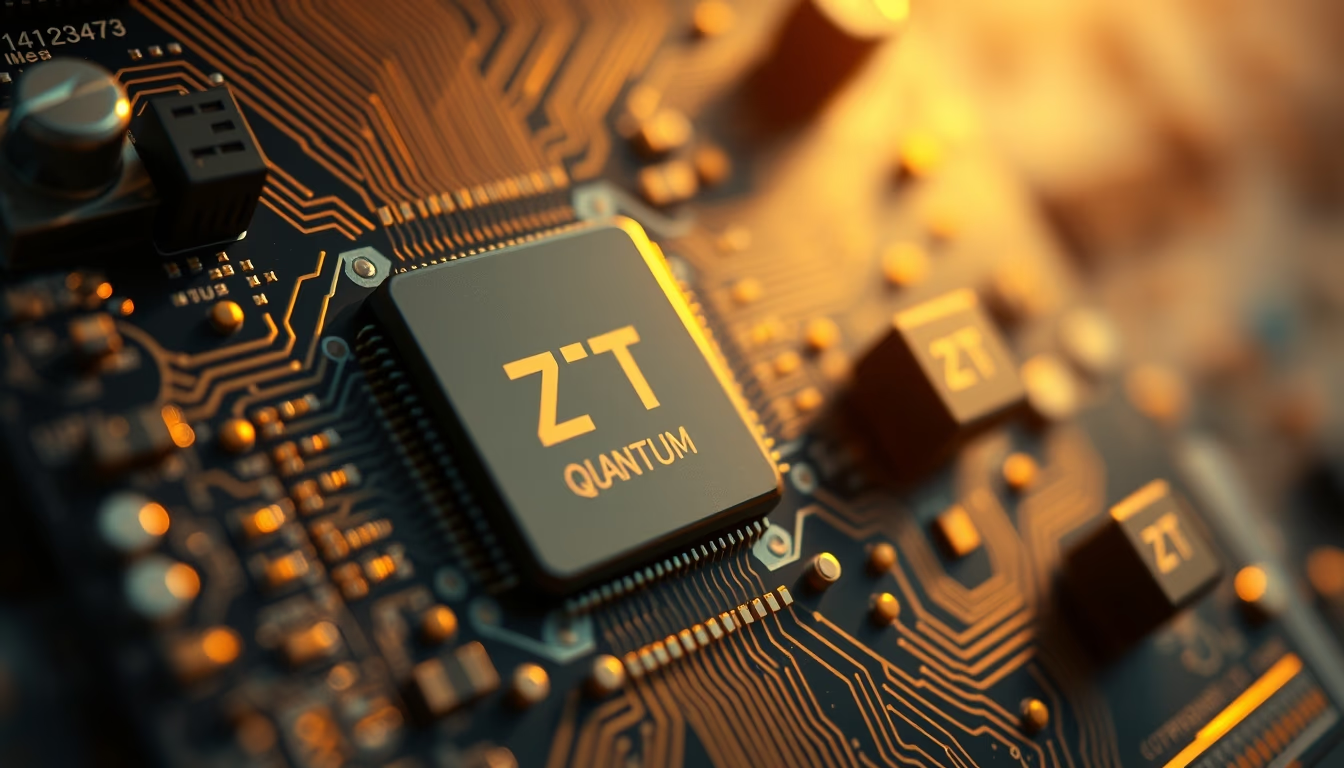
Quantum computer chips use qubits to process information in multiple states simultaneously, surpassing the limits of classical computing.
About this subject
The quantum computer chip is the core of quantum computing systems, based on qubits that can represent 0, 1 or both states simultaneously thanks to the principle of quantum superposition. Unlike classical bits, which are strictly binary, qubits enable exponential parallel operations. Companies like Google, IBM, and Intel lead the development, with chips such as Sycamore (Google) and Eagle (IBM). In 2019, Sycamore demonstrated quantum supremacy by performing in 200 seconds a task that would take thousands of years on a classical supercomputer.
Building a quantum chip requires maintaining qubits near absolute zero using dilution refrigerators to prevent decoherence. Materials vary: superconductors (IBM, Google), trapped ions (IonQ), or quantum dots (Intel). The number of qubits is not the sole performance indicator; error rates and qubit connectivity are critical. Today, chips with over 100 qubits exist, but error correction remains a challenge for fault-tolerant quantum computing.
In Brazil, quantum computing research is nascent but growing at universities such as USP and Unicamp, focusing on algorithms and simulations. Globally, quantum chips are expected to revolutionize fields like cryptography, molecular simulation, and optimization, though wide commercial applications are still decades away.
Frequently Asked Questions
What makes a quantum chip different from a classical chip?
A quantum chip uses qubits that exploit superposition and entanglement, allowing it to process multiple combinations simultaneously. Classical chips use bits that are strictly 0 or 1, performing sequential operations.
How many qubits does a quantum chip need to be useful?
There is no exact number, as it depends on error rates and algorithms. For practical applications, thousands of logical qubits (with error correction) are estimated. Currently, IBM's Eagle chip has 127 physical qubits.
Does Brazil develop quantum chips?
Yes, research is underway at universities such as USP and Unicamp, focusing on simulation and algorithms. However, hardware manufacturing still relies on international collaborations and facilities like LNLS.
Direct URL
https://pub-c7d6a6ea828543ac903a74a341ccb2e1.r2.dev/imagens/quantum-computer-chip-detail-cinematic-wide-shot-p5.avifHow to credit
Include a visible link back to UtilizAí. Copy one of the snippets below:
<a href="https://xn--utiliza-eza.com/en/midia/imagens/quantum-computer-chip-detail-cinematic-wide-shot-p5">Quantum computer chip detail</a> by <a href="https://xn--utiliza-eza.com">UtilizAí</a>, licensed under <a href="https://creativecommons.org/licenses/by/4.0/">CC BY 4.0</a>.
[Quantum computer chip detail](https://xn--utiliza-eza.com/en/midia/imagens/quantum-computer-chip-detail-cinematic-wide-shot-p5) by [UtilizAí](https://xn--utiliza-eza.com), CC BY 4.0
License: CC-BY-4.0