Quantum computer chip
1344×768 · AVIF · CC BY 4.0
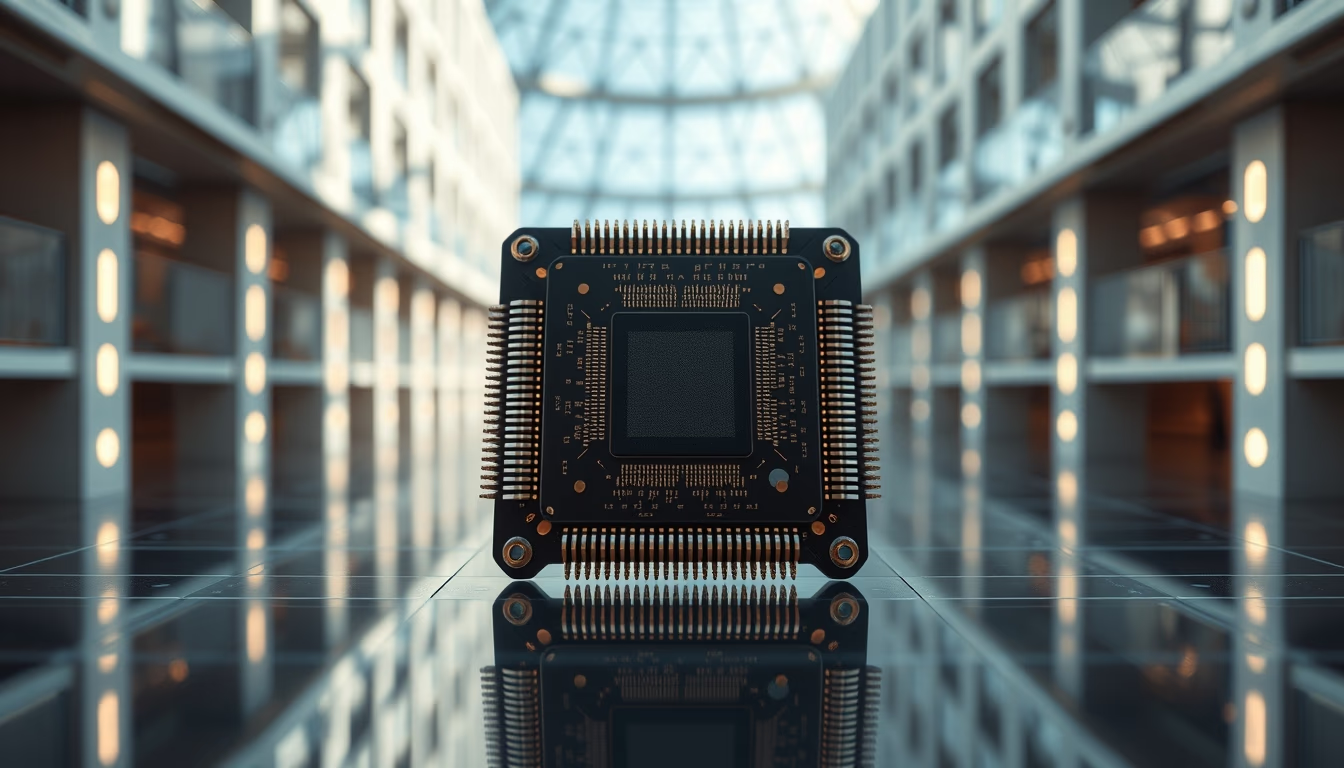
Quantum computer chips use qubits to process information exponentially faster than classical chips, revolutionizing fields like cryptography and molecular simulation.
About this subject
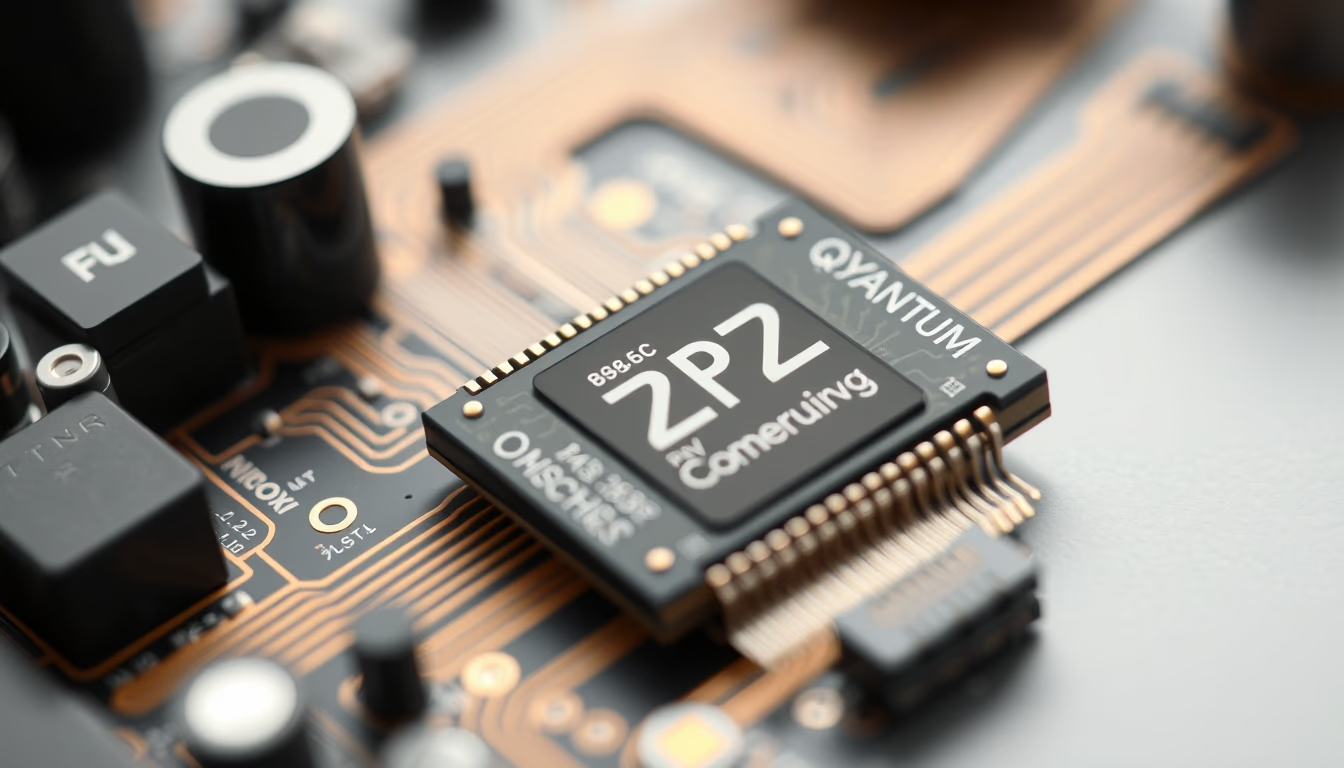
A quantum computer chip is the core component of a quantum computer, where qubits (quantum bits) are manipulated to perform calculations. Unlike classical chips using binary bits (0 or 1), qubits can exist in superposition states, allowing simultaneous processing of multiple possibilities. This property, combined with quantum entanglement, gives quantum chips colossal potential for solving problems intractable for classical computers.
Currently, various materials and architectures are explored for building quantum chips, such as superconductors (used by Google and IBM), trapped ions (IonQ, Honeywell), and quantum dots. Superconducting chips operate near absolute zero, requiring complex refrigeration systems. Despite advances, quantum chips still face coherence and error correction challenges, limiting the number of usable qubits.
The importance of quantum chips transcends computing. In cryptography, they can break current algorithms like RSA, but also enable theoretically unbreakable quantum cryptography. In chemistry and pharmacology, they simulate complex molecules to accelerate drug discovery. Companies like D-Wave already commercialize quantum annealing systems for optimization. Brazil, through initiatives like the National Laboratory for Scientific Computing (LNCC), also researches quantum technologies.
A curiosity: the first commercial quantum chip was launched by D-Wave Systems in 2011, with 128 qubits. Since then, the number of qubits has grown exponentially, but quality (fidelity) is as crucial as quantity. The race for a fault-tolerant quantum chip, capable of surpassing classical computers in practical tasks (quantum supremacy), continues intensely, with billions in investments from governments and industries.
Frequently Asked Questions
What differentiates a quantum chip from a classical chip?
A quantum chip uses qubits that can be in superposition of 0 and 1 simultaneously, while classical chips use fixed binary bits. This allows quantum computers to solve complex problems much more efficiently.
What materials are used to fabricate quantum chips?
Common materials include superconductors (e.g., niobium and aluminum), trapped ions, semiconductor quantum dots, and photons. Each approach has specific advantages and challenges regarding scalability and coherence.
Are quantum chips commercially available?
Yes, companies like IBM, Google, IonQ, and D-Wave offer cloud access to quantum chips. However, these are still experimental systems with limited qubits and error rates, primarily aimed at research and development.
Direct URL
https://pub-c7d6a6ea828543ac903a74a341ccb2e1.r2.dev/imagens/quantum-computer-chip-architectural-photography-p2.avifHow to credit
Include a visible link back to UtilizAí. Copy one of the snippets below:
<a href="https://xn--utiliza-eza.com/en/midia/imagens/quantum-computer-chip-architectural-photography-p2">Quantum computer chip</a> by <a href="https://xn--utiliza-eza.com">UtilizAí</a>, licensed under <a href="https://creativecommons.org/licenses/by/4.0/">CC BY 4.0</a>.
[Quantum computer chip](https://xn--utiliza-eza.com/en/midia/imagens/quantum-computer-chip-architectural-photography-p2) by [UtilizAí](https://xn--utiliza-eza.com), CC BY 4.0
License: CC-BY-4.0