Pyrite gold cubes
1344×768 · AVIF · CC BY 4.0
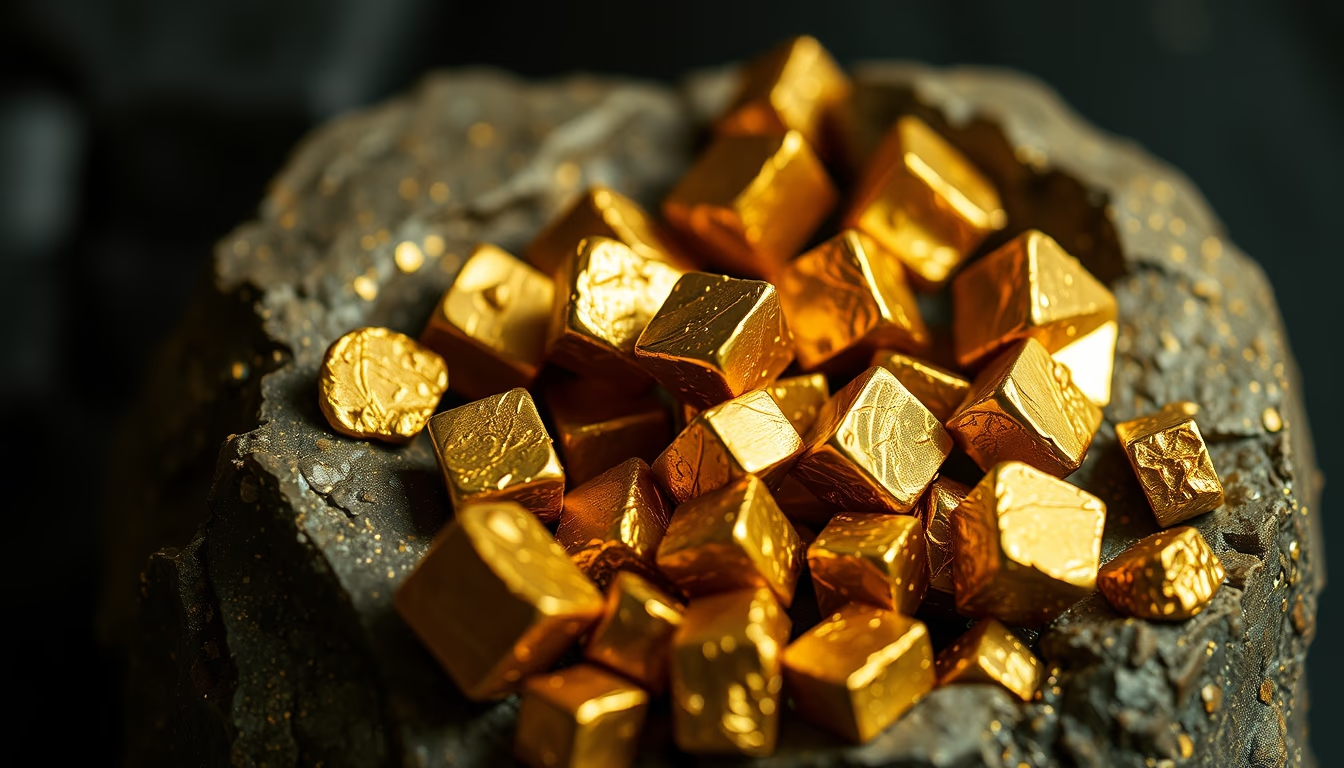
Cubic pyrite with golden metallic luster: the mineral known as fool's gold, its properties, geological formation, and historical significance.
About this subject
Pyrite (FeS₂), also known as fool's gold, is an iron sulfide that crystallizes in the cubic system, often forming perfect cubes with striated faces. Its intense metallic luster and brassy yellow color make it easily mistaken for gold, though it is lighter, harder (hardness 6, 6.5 on Mohs scale), and brittle, unlike malleable gold. The name comes from Greek pyr (fire), as it sparks when struck with steel.
Pyrite forms in diverse geological settings: high- and low-temperature hydrothermal veins, organic-rich sedimentary rocks, and metamorphic deposits. It is the most abundant sulfide mineral in the Earth's crust. Well-formed cubic crystals are common in quartz vein cavities and clay nodules. Notable deposits include Huanzala mine (Peru), Navajún (Spain), and Minas Gerais (Brazil).
Historically, pyrite was used by the Incas as polished mirrors and by 16th-century Europeans as a source of sulfur for gunpowder. During gold rushes, many prospectors were deceived by its resemblance to the precious metal. Today, it is mined for sulfur in sulfuric acid production, essential for the chemical industry. Large cubic crystals are prized by collectors and can fetch high prices at mineral shows.
Interestingly, pyrite may contain microscopic inclusions of real gold, though in uneconomic amounts. Its oxidation when exposed to air and water generates sulfuric acid, contributing to acid mine drainage, a serious environmental issue. Nonetheless, the beauty of its golden cubic crystals continues to captivate geologists and enthusiasts alike.
Frequently Asked Questions
Why is pyrite called fool's gold?
Because its metallic luster and brassy color closely resemble gold, tricking inexperienced prospectors. It differs by being lighter, harder, and brittle.
Where is cubic pyrite found?
In many locations worldwide, such as Peru (Huanzala), Spain (Navajún), the USA, and Brazil (Minas Gerais). It occurs in hydrothermal veins and sedimentary rocks.
Does pyrite have any practical use?
Yes, it is the primary source of sulfur for sulfuric acid production. It is also used in low-cost jewelry and as a collector's mineral.
Direct URL
https://pub-c7d6a6ea828543ac903a74a341ccb2e1.r2.dev/imagens/pyrite-gold-cubes-film-grain-authentic-p8.avifHow to credit
Include a visible link back to UtilizAí. Copy one of the snippets below:
<a href="https://xn--utiliza-eza.com/en/midia/imagens/pyrite-gold-cubes-film-grain-authentic-p8">Pyrite gold cubes</a> by <a href="https://xn--utiliza-eza.com">UtilizAí</a>, licensed under <a href="https://creativecommons.org/licenses/by/4.0/">CC BY 4.0</a>.
[Pyrite gold cubes](https://xn--utiliza-eza.com/en/midia/imagens/pyrite-gold-cubes-film-grain-authentic-p8) by [UtilizAí](https://xn--utiliza-eza.com), CC BY 4.0
License: CC-BY-4.0