Puffin nesting cliff
1344×768 · JPG · CC BY 4.0
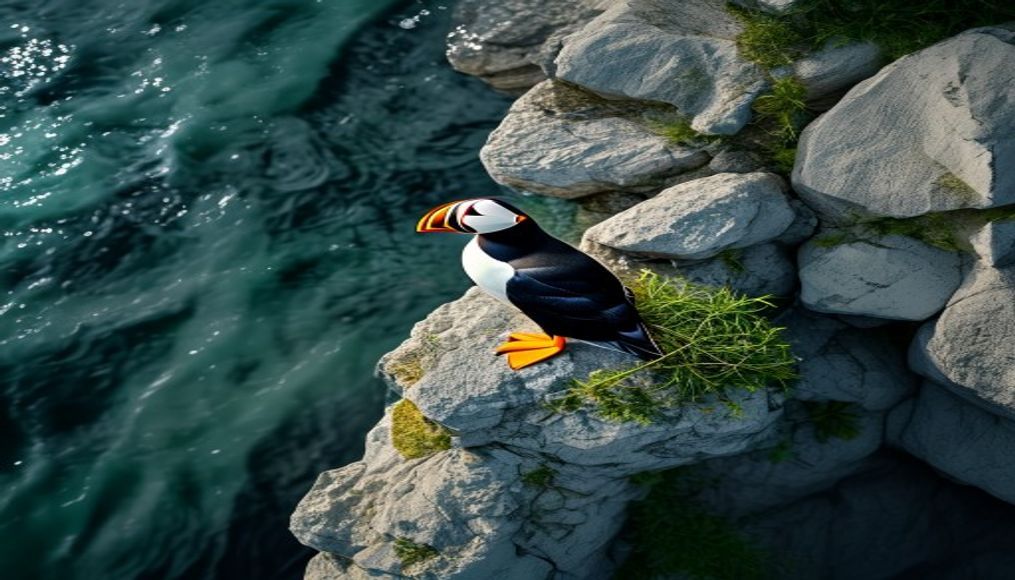
The cliffs where Atlantic puffins (Fratercula arctica) nest are crucial geological formations for the species' reproduction, hosting dense colonies across the North Atlantic.
About this subject
Atlantic puffins (Fratercula arctica) are seabirds that rely on coastal cliffs and rocky islands for nesting. They dig burrows in soft soil on cliff tops or in crevices among rocks, forming colonies that can number in the thousands. The steep cliffs provide isolation from terrestrial predators such as foxes and rats, while proximity to the sea ensures easy access to small fish like herring and sand lance.
Nesting cliffs are mainly distributed across the North Atlantic, with Iceland hosting about 60% of the global puffin population. Other key regions include the Faroe Islands, the coast of Norway, Scotland (especially the Shetland and Orkney islands), Ireland, and Newfoundland in Canada. These cliffs are formed from basalt or sedimentary rocks, eroded by sea and ice action, creating plateaus and ledges ideal for burrowing.
The nesting season runs from April to August, when pairs return to the same sites year after year, reusing and enlarging their burrows. Each female lays a single egg, incubated by both parents for about 40 days. After hatching, the chick is fed with fish carried in the adult's colorful beak, which can hold multiple fish at once due to a rough tongue and palate. Notably, puffins are excellent swimmers and divers, reaching depths of up to 60 meters to catch prey.
Despite local abundance, the species faces threats such as overfishing of prey stocks, oil pollution, and climate change altering prey distribution. In some colonies, fish shortages have reduced chick survival rates. As a result, nesting cliffs are considered priority conservation areas, with several nature reserves established to protect these unique breeding sites.
Frequently Asked Questions
Why do Atlantic puffins nest on cliffs?
Cliffs provide protection from terrestrial predators and direct access to the sea, making food delivery to chicks easier. The steep terrain and soft soil allow safe burrow excavation.
Where are the main puffin nesting cliffs located?
Major colonies are found in Iceland, the Faroe Islands, Norway, Scotland, Ireland, and Newfoundland (Canada). These sites combine rocky cliffs with abundant fish supplies.
How does climate change affect puffin nesting?
Warming waters shift the distribution of prey fish such as herring, reducing food availability. This can lower breeding success and force puffins to seek new nesting areas.
Direct URL
https://pub-c7d6a6ea828543ac903a74a341ccb2e1.r2.dev/imagens/puffin-nesting-cliff-isometric-flat-lay-p3.jpgHow to credit
Include a visible link back to UtilizAí. Copy one of the snippets below:
<a href="https://xn--utiliza-eza.com/en/midia/imagens/puffin-nesting-cliff-isometric-flat-lay-p3">Puffin nesting cliff</a> by <a href="https://xn--utiliza-eza.com">UtilizAí</a>, licensed under <a href="https://creativecommons.org/licenses/by/4.0/">CC BY 4.0</a>.
[Puffin nesting cliff](https://xn--utiliza-eza.com/en/midia/imagens/puffin-nesting-cliff-isometric-flat-lay-p3) by [UtilizAí](https://xn--utiliza-eza.com), CC BY 4.0
License: CC-BY-4.0