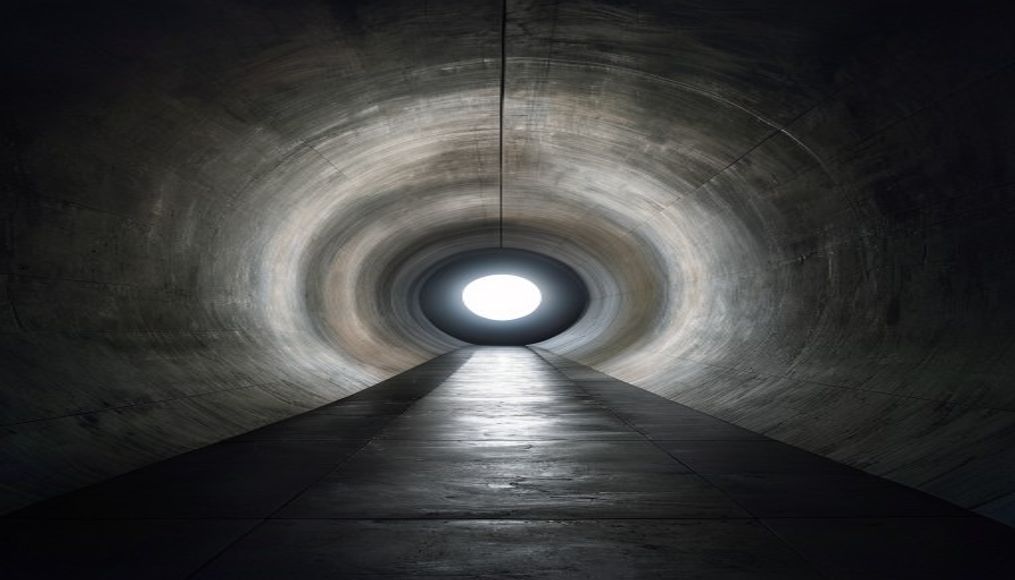
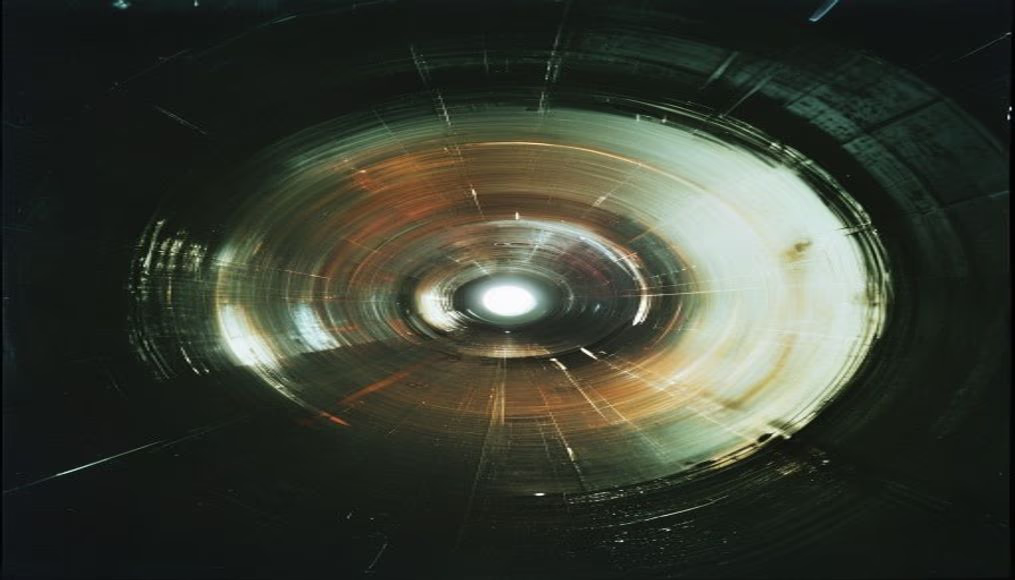
Protoplanetary disk forming
1344×768 · AVIF · CC BY 4.0

Protoplanetary disks are rotating structures of gas and dust around young stars, where planets are born.
About this subject
Protoplanetary disks form naturally during the collapse of a molecular cloud. As a region of gas and dust contracts under its own gravity, most material falls toward the center to form a protostar. The remaining material, due to angular momentum, flattens into a rotating disk. This disk is the birthplace of planets. Its composition includes molecular hydrogen, helium, silicate dust, ices, and organic compounds. Over time, dust particles collide and stick together, forming planetesimals that can grow into rocky planets or the cores of gas giants.
The lifespan of a protoplanetary disk is relatively short by astronomical standards, lasting between 1 and 10 million years. During this time, the central star emits winds and radiation that gradually dissipate the gas in the disk. Remaining dust may be swept away or undergo planetary accretion. Observations with telescopes such as ALMA (Atacama Large Millimeter/submillimeter Array) reveal stunning details, including rings and gaps that indicate the presence of forming planets. A notable example is the disk around the star HL Tauri, which shows clear concentric ring structures.
These disks are crucial for understanding the origin of the Solar System. Our own protoplanetary disk is estimated to have existed about 4.6 billion years ago. From it, the planets, moons, asteroids, and comets we know were formed. The study of these disks also helps explain the diversity of observed exoplanetary systems. Astronomers use fluid dynamics models and numerical simulations to reproduce disk evolution and test theories of planet formation.
Frequently Asked Questions
How long does a protoplanetary disk last?
Typically between 1 and 10 million years, enough time for planets to form before the gas is dissipated by the star.
What happens to the disk after planet formation?
Remaining gas is swept away by stellar wind and radiation, while dust aggregates into planetesimals or is accreted by planets. What remains may become a debris disk.
How do astronomers observe protoplanetary disks?
They use telescopes like ALMA, which operates at millimeter and submillimeter wavelengths, capable of penetrating dust clouds and revealing detailed disk structures.
Direct URL
https://pub-c7d6a6ea828543ac903a74a341ccb2e1.r2.dev/imagens/protoplanetary-disk-forming-cinematic-wide-shot-p2.avifHow to credit
Include a visible link back to UtilizAí. Copy one of the snippets below:
<a href="https://xn--utiliza-eza.com/en/midia/imagens/protoplanetary-disk-forming-cinematic-wide-shot-p2">Protoplanetary disk forming</a> by <a href="https://xn--utiliza-eza.com">UtilizAí</a>, licensed under <a href="https://creativecommons.org/licenses/by/4.0/">CC BY 4.0</a>.
[Protoplanetary disk forming](https://xn--utiliza-eza.com/en/midia/imagens/protoplanetary-disk-forming-cinematic-wide-shot-p2) by [UtilizAí](https://xn--utiliza-eza.com), CC BY 4.0
License: CC-BY-4.0