Power supply unit
1344×768 · AVIF · CC BY 4.0
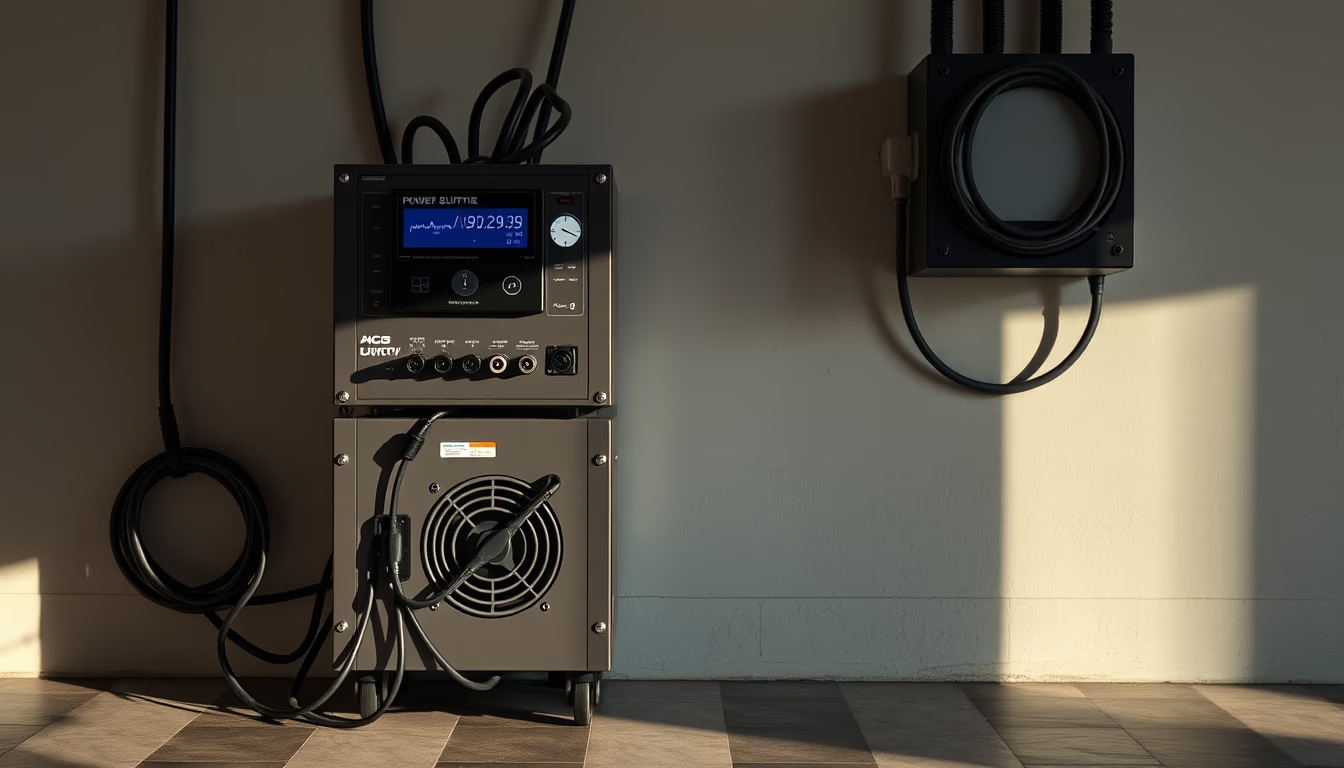
The power supply unit (PSU) converts electrical power from the outlet into stable voltages for computer components, essential for safe and efficient system operation.
About this subject
A power supply unit (PSU) is a critical component in any computer or electronic device that requires stable power. Its primary function is to convert alternating current (AC) from the wall outlet into direct current (DC) at the voltages needed to operate the motherboard, processor, graphics card, and other peripherals. The main voltages provided are 3.3V, 5V, and 12V, with the 12V rail being the most demanded by high-consumption components like modern GPUs and CPUs. A low-quality PSU can cause instability, permanent damage, or even fire hazards, making the choice of reliable brands with adequate protections a priority.
There are various PSU form factors, with ATX being the most common in desktops. For compact systems, formats like SFX, TFX, and Flex ATX occupy less space. Energy efficiency is measured by 80 Plus certifications, ranging from Bronze (85% efficiency at 50% load) to Titanium (94%). Higher certification models waste less heat, reduce electricity bills, and require less cooling. It is also important to check the actual power on the 12V rail, as cheaper models may overstate total wattage.
PSUs can be modular, semi-modular, or non-modular. Modular units allow connecting only necessary cables, improving airflow and cable management. Non-modular units have fixed cables, being cheaper but with more loose wires. Protections such as OVP (over-voltage), UVP (under-voltage), OCP (over-current), SCP (short-circuit), and OTP (over-temperature) are essential for component safety. Calculating required wattage involves summing each part's peak consumption and adding a 20, 30% safety margin. Online tools like PSU calculators help with this task.
Historically, power supplies evolved from linear models, heavy and inefficient, to switching (SMPS) units, lighter and more efficient. The ATX12V standard, introduced in 1995, brought specific connectors and greater stability. Today, trends like digital PSUs, which allow monitoring via software (e.g., Corsair iCUE and ASUS Aura Sync), and smart fan controllers are gaining popularity. In servers and data centers, redundant and highly efficient power supplies are vital for uptime and energy savings.
Frequently Asked Questions
What is the difference between modular and non-modular PSUs?
Modular PSUs allow connecting only the necessary cables, improving airflow and cable management. Non-modular units have fixed cables, making them cheaper but with more loose wires inside the case.
What do 80 Plus certifications mean?
They indicate the efficiency of the PSU in converting electrical power. Higher levels (Bronze to Titanium) mean less energy wasted as heat, resulting in lower electricity bills and less heat output.
How do I determine the ideal wattage for my computer?
Sum the peak power consumption of each component (CPU, GPU, etc.) and add a 20, 30% safety margin. Use online PSU calculators for a more accurate estimate.
Direct URL
https://pub-c7d6a6ea828543ac903a74a341ccb2e1.r2.dev/imagens/power-supply-unit-magazine-editorial-p7.avifHow to credit
Include a visible link back to UtilizAí. Copy one of the snippets below:
<a href="https://xn--utiliza-eza.com/en/midia/imagens/power-supply-unit-magazine-editorial-p7">Power supply unit</a> by <a href="https://xn--utiliza-eza.com">UtilizAí</a>, licensed under <a href="https://creativecommons.org/licenses/by/4.0/">CC BY 4.0</a>.
[Power supply unit](https://xn--utiliza-eza.com/en/midia/imagens/power-supply-unit-magazine-editorial-p7) by [UtilizAí](https://xn--utiliza-eza.com), CC BY 4.0
License: CC-BY-4.0