Power supply unit
1344×768 · AVIF · CC BY 4.0
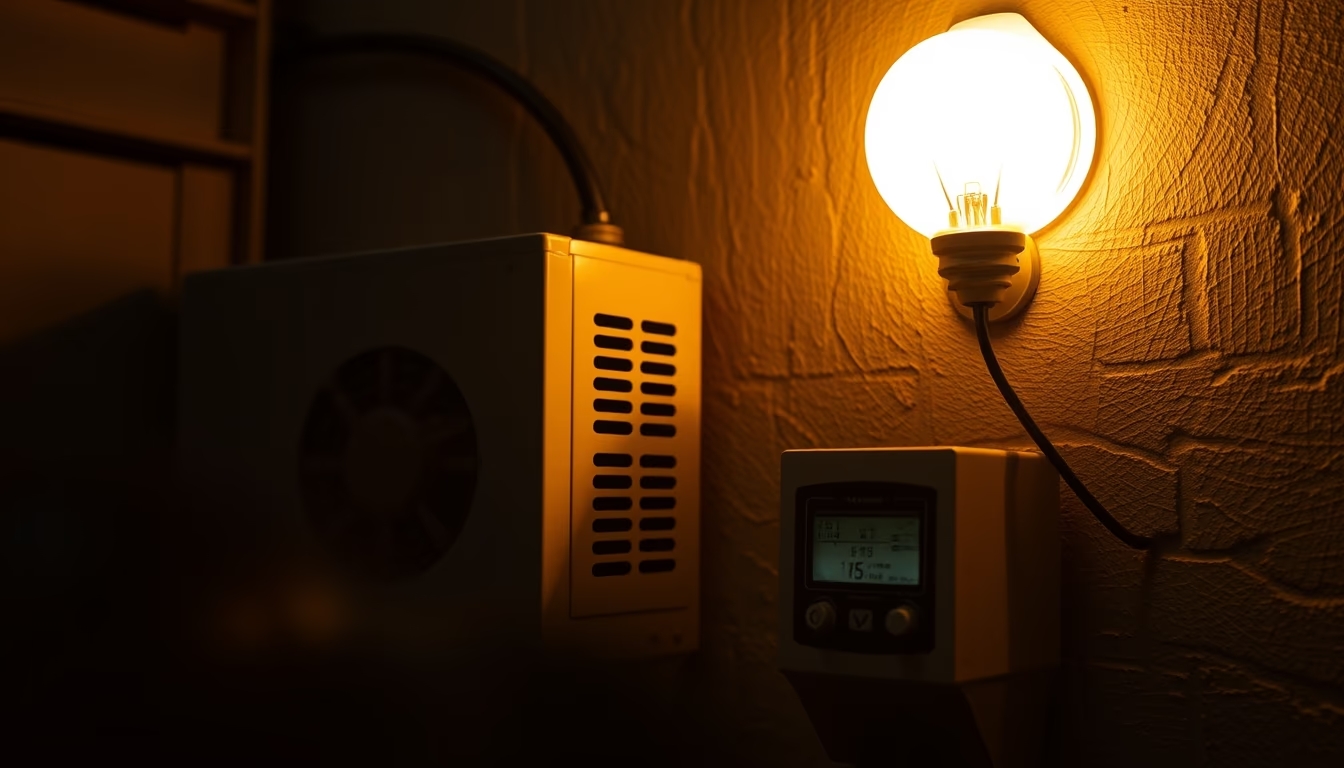
The power supply unit (PSU) converts mains electricity into stable DC voltages for the computer, protecting components and ensuring efficiency.
About this subject
The power supply unit is one of the most critical components of any computer, though often overlooked. Its primary role is to convert alternating current (AC) from the wall outlet into direct current (DC) at the voltages required by the motherboard, CPU, GPU, and peripherals. Without a reliable PSU, even the best components can suffer instability, damage, or reduced lifespan.
Different form factors exist, with ATX (Advanced Technology eXtended) being the most common in desktops. For compact builds, SFX (Small Form Factor) units are used. PSUs can be modular, semi-modular, or non-modular: modular versions allow unused cables to be detached, improving cable management and airflow. Efficiency is rated by certifications like 80 Plus (Bronze, Silver, Gold, Platinum, Titanium), indicating the percentage of energy converted without heat loss. An 80 Plus Gold unit, for instance, converts at least 87% of energy under typical loads.
Wattage needed depends on the components: a system with a high-end GPU may require 750W or more, while basic PCs work with 400W. It is wise to choose a PSU with headroom and protections such as OVP (overvoltage), OCP (overcurrent), and SCP (short circuit). Historically, PSUs evolved from heavy linear designs to compact switched-mode units with better regulation and quieter operation. Brands like Corsair, EVGA, Seasonic, and Cooler Master are well-regarded in the market.
Frequently Asked Questions
Why is 80 Plus certification important?
80 Plus certification indicates that the PSU operates with at least 80% efficiency at 20%, 50%, and 100% loads. This means less energy wasted as heat, lower electricity bills, and improved component longevity. Higher tiers like Gold, Platinum, and Titanium offer even greater efficiency.
Modular vs non-modular PSU: which to choose?
Modular PSUs let you attach only the cables you need, improving cable management and airflow. They are ideal for aesthetics-focused or high-airflow builds. Non-modular units are cheaper but may leave unused cables. Semi-modular options strike a balance between cost and convenience.
How to calculate the ideal PSU wattage?
Sum the power consumption of all components (CPU, GPU, drives, etc.) using online calculators or datasheets. Add a 20-30% headroom for load spikes and future upgrades. For instance, a system drawing 400W is well served by a 500-550W power supply.
Direct URL
https://pub-c7d6a6ea828543ac903a74a341ccb2e1.r2.dev/imagens/power-supply-unit-fine-art-photography-p6.avifHow to credit
Include a visible link back to UtilizAí. Copy one of the snippets below:
<a href="https://xn--utiliza-eza.com/en/midia/imagens/power-supply-unit-fine-art-photography-p6">Power supply unit</a> by <a href="https://xn--utiliza-eza.com">UtilizAí</a>, licensed under <a href="https://creativecommons.org/licenses/by/4.0/">CC BY 4.0</a>.
[Power supply unit](https://xn--utiliza-eza.com/en/midia/imagens/power-supply-unit-fine-art-photography-p6) by [UtilizAí](https://xn--utiliza-eza.com), CC BY 4.0
License: CC-BY-4.0