Power supply unit
1344×768 · AVIF · CC BY 4.0
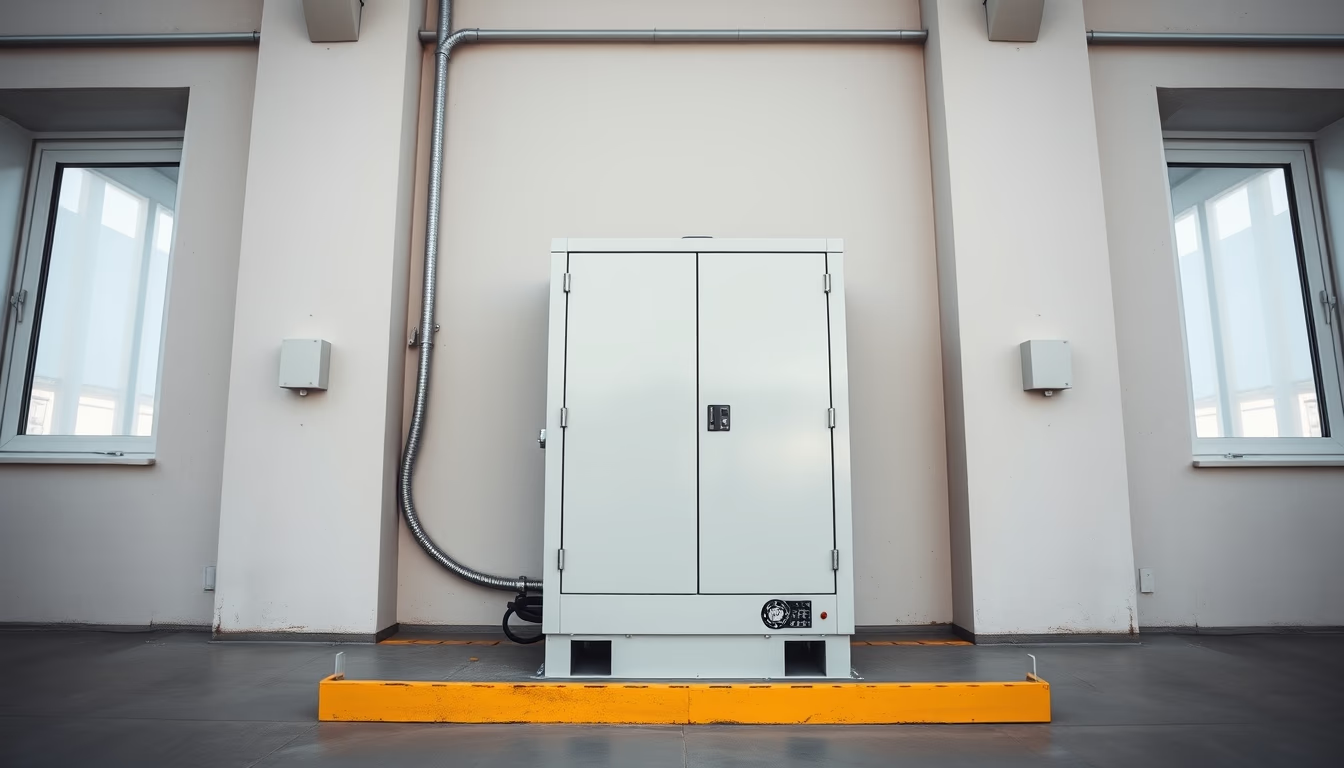
The power supply unit (PSU) is the component responsible for converting and distributing power to all computer components.
About this subject
The power supply unit (PSU) is an essential component in any computer, responsible for converting alternating current (AC) from the wall outlet into direct current (DC) used by internal components. Without a functional PSU, no other hardware can operate. It distributes power through multiple cables to the motherboard, processor, GPU, hard drives, and peripherals, ensuring each part receives the proper voltage and current.
There are various types of PSUs on the market, classified by form factor (ATX, SFX, etc.) and cable management system. Modular models allow connecting only necessary cables, improving internal case organization and airflow, while non-modular ones have fixed cables. Energy efficiency is measured by the 80 Plus certification, ranging from Bronze (82% efficiency) to Titanium (over 90%). A more efficient PSU wastes less heat and reduces electricity bills.
Protection features are crucial: OVP (overvoltage protection), OCP (overcurrent protection), SCP (short circuit), and OTP (overtemperature protection). High-quality units often use Japanese capacitors, known for greater longevity. In high-performance systems like gaming or editing rigs, a robust PSU prevents instability and damage. During assembly, wattage is calculated based on the total consumption of all components.
Although the PSU's primary purpose is technical, its design can also be aesthetically appreciated. In builds with side panels or RGB lighting, organized cables and a clean-looking unit contribute to the computer's visual appeal, paralleling architectural photography where clean lines and controlled lighting highlight the object's form and function.
Frequently Asked Questions
What does the 80 Plus certification mean?
The 80 Plus certification measures the energy efficiency of the power supply. The higher the level (Bronze, Silver, Gold, Platinum, Titanium), the more efficient the PSU, meaning less energy is wasted as heat, resulting in lower electricity consumption and cooler temperatures.
What is the difference between modular and non-modular PSUs?
Modular power supplies allow connecting only the necessary cables, reducing cable clutter inside the case and simplifying cable management. Non-modular units have fixed cables, which may leave unused cables inside the case, making organization harder.
How do I determine the required PSU wattage for my computer?
Calculate the maximum power consumption of all components (motherboard, CPU, GPU, drives, etc.) using online calculators or by summing specifications. Add a safety margin of 20% to 30% above the total to handle power spikes and future upgrades.
Direct URL
https://pub-c7d6a6ea828543ac903a74a341ccb2e1.r2.dev/imagens/power-supply-unit-architectural-photography-p12.avifHow to credit
Include a visible link back to UtilizAí. Copy one of the snippets below:
<a href="https://xn--utiliza-eza.com/en/midia/imagens/power-supply-unit-architectural-photography-p12">Power supply unit</a> by <a href="https://xn--utiliza-eza.com">UtilizAí</a>, licensed under <a href="https://creativecommons.org/licenses/by/4.0/">CC BY 4.0</a>.
[Power supply unit](https://xn--utiliza-eza.com/en/midia/imagens/power-supply-unit-architectural-photography-p12) by [UtilizAí](https://xn--utiliza-eza.com), CC BY 4.0
License: CC-BY-4.0