Pottery wheel hands clay
1344×768 · AVIF · CC BY 4.0
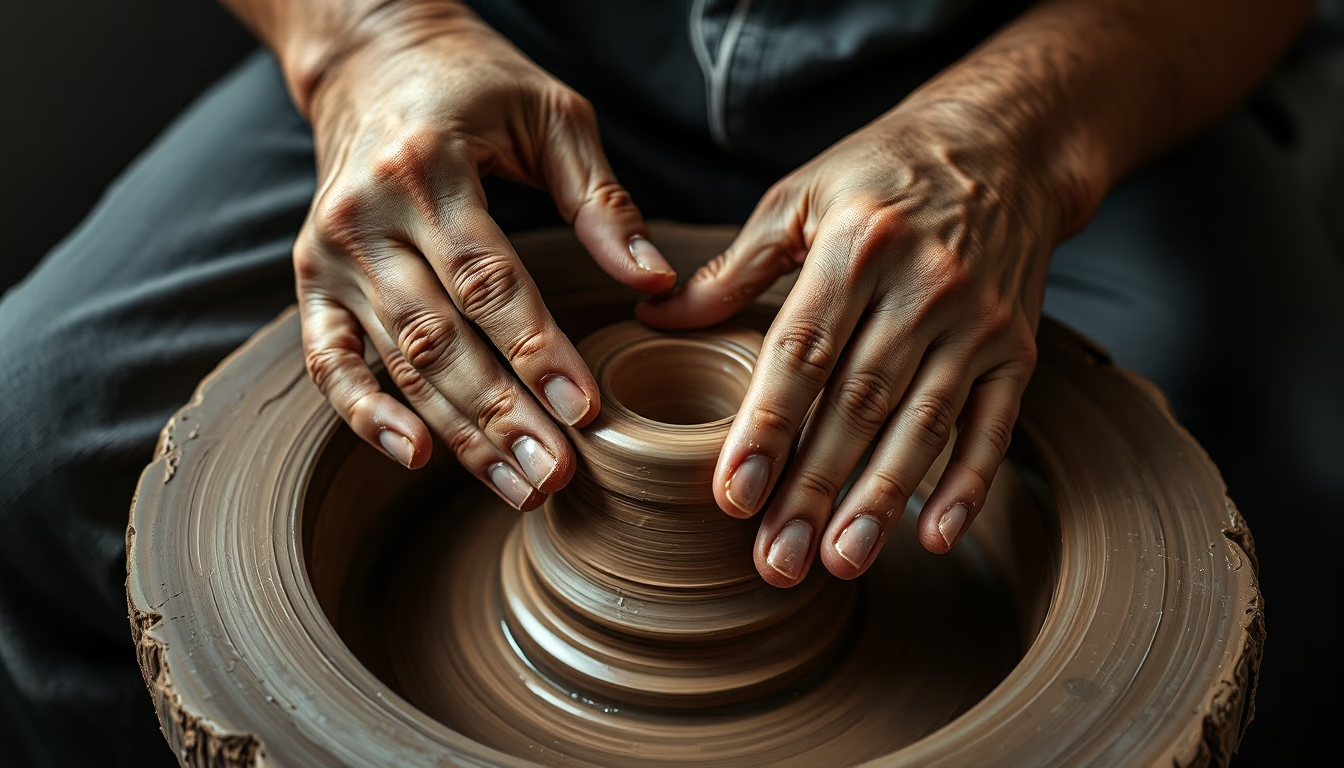
The potter's wheel is an ancient tool that transforms clay blocks into utilitarian and artistic pieces, combining technique, strength, and sensitivity.
About this subject
The potter's wheel, also known as a throwing wheel, is one of humanity's oldest tools, with evidence dating back to around 4000 BCE in Mesopotamia. Its invention revolutionized pottery production, enabling symmetry and thinner walls than hand-building techniques. In Brazil, artisanal ceramics thrive in communities like the Jequitinhonha Valley (Minas Gerais), where potters (paneleiras) work without wheels, but wheel throwing is common in kilns from the South and Southeast regions.
Throwing requires the potter to center the clay on the spinning disc and shape it with wet hands, a skill that demands hours of practice to master pressure and balance. Different clays behave uniquely: fine-grained clays like porcelain allow delicate details, while grogged clays (with crushed fired clay) resist thermal shock, ideal for cooking pots.
Beyond utility, the potter's wheel carries cultural and symbolic weight. In many traditions, the potter symbolizes a divine creator shaping human clay. In contemporary art, figures like Brazilian Frans Krajcberg and American Peter Voulkos pushed ceramics into sculptural realms, exploring textures and organic forms. The wheel remains an icon of the hand-material bond, crucial for preserving ancestral knowledge.
Frequently Asked Questions
What is the origin of the potter's wheel?
The potter's wheel was invented in Mesopotamia around 4000 BCE, initially as a stone or wood disc spun by hand. The kick wheel appeared later in India and China.
What are the main types of clay used on the wheel?
Main types include porcelain (fine and translucent), stoneware (durable and vitrified), earthenware (porous and colorful), and grogged clay (with particles for thermal resistance).
Is the potter's wheel used in all Brazilian pottery?
No. Traditional potteries like those in the Jequitinhonha Valley are made without wheels, using coil building. Industrial kilns and art studios use the wheel for mass production and unique pieces.
Direct URL
https://pub-c7d6a6ea828543ac903a74a341ccb2e1.r2.dev/imagens/pottery-wheel-hands-clay-fine-art-photography-p0.avifHow to credit
Include a visible link back to UtilizAí. Copy one of the snippets below:
<a href="https://xn--utiliza-eza.com/en/midia/imagens/pottery-wheel-hands-clay-fine-art-photography-p0">Pottery wheel hands clay</a> by <a href="https://xn--utiliza-eza.com">UtilizAí</a>, licensed under <a href="https://creativecommons.org/licenses/by/4.0/">CC BY 4.0</a>.
[Pottery wheel hands clay](https://xn--utiliza-eza.com/en/midia/imagens/pottery-wheel-hands-clay-fine-art-photography-p0) by [UtilizAí](https://xn--utiliza-eza.com), CC BY 4.0
License: CC-BY-4.0