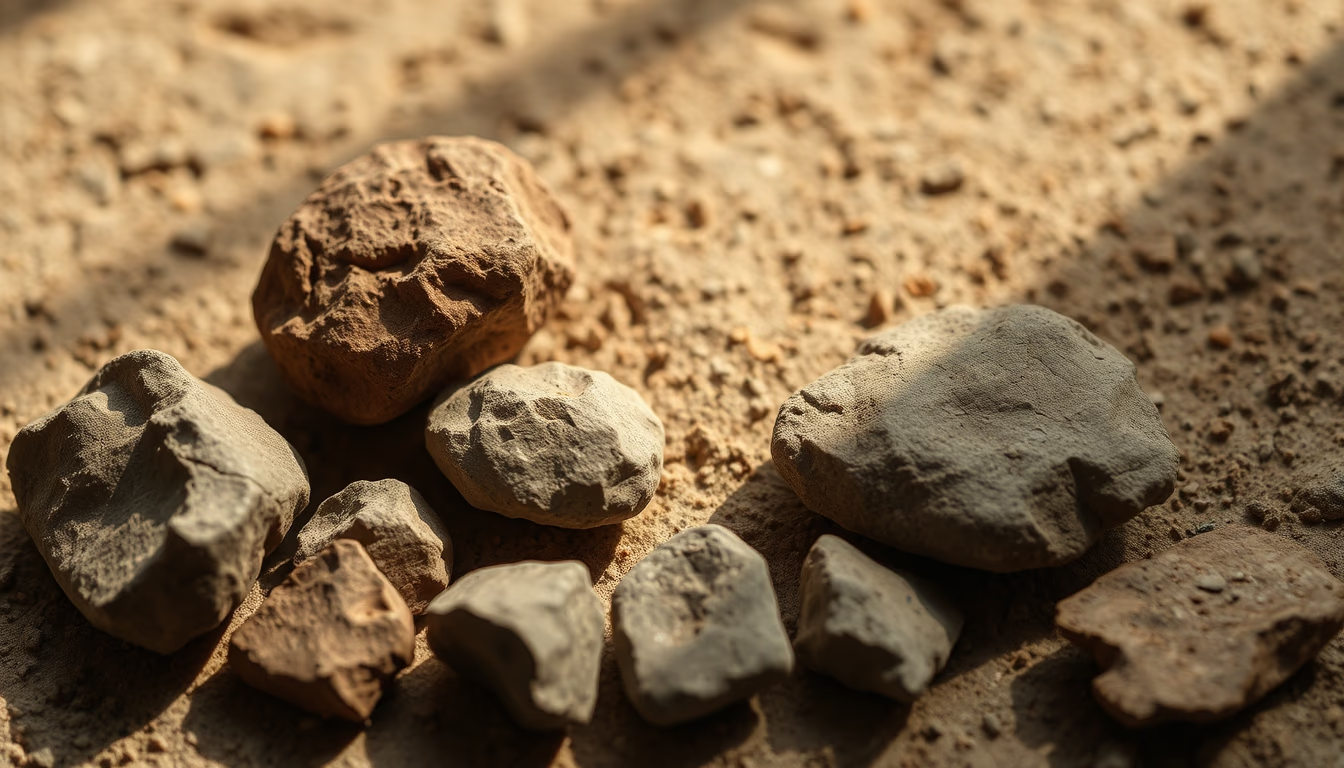
Pottery shards ancient
1344×768 · AVIF · CC BY 4.0
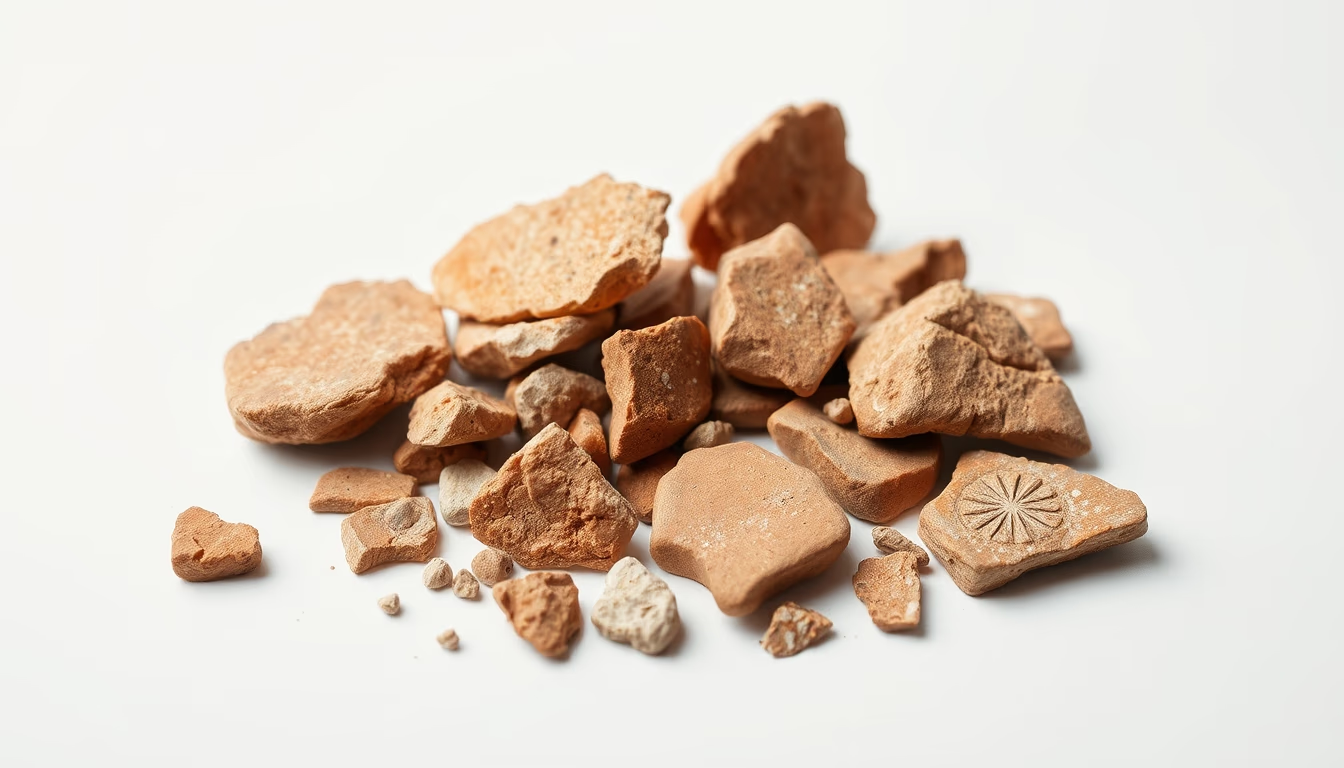
Ancient pottery shards, also known as sherds, are essential archaeological sources that reveal daily life, technology, and art of past civilizations.
About this subject
Ancient pottery shards, commonly referred to as sherds, are among the most abundant and informative artifacts found in archaeological sites worldwide. They are remains of vessels, plates, pots, and other objects shaped from clay and fired, whose durability allows preservation for millennia. To archaeologists, these fragments are veritable archives of the past: shape, thickness, decoration, and clay composition provide clues about manufacturing techniques, object functions, dietary habits, trade routes, and even religious beliefs.
Dating of sherds is primarily done through thermoluminescence, which measures radiation accumulated since the last firing, or by stratigraphic association with other datable materials. Petrographic and chemical analyses identify the source of clay and tempering materials, enabling mapping of distribution networks. In the Brazilian Amazon, for example, Marajoara pottery (400, 1400 AD) stands out for its rich painted and anthropomorphic decoration, while the Tupi-Guarani tradition produced vessels with incised and red-and-black painted designs. Outside Brazil, fragments of ancient Greek pottery, with their black and red figures, help reconstruct myths and daily scenes.
Interestingly, in some cultures, sherds with inscriptions or potter's marks served as receipts or currency. Analysis of organic residues on the inner surfaces can reveal what was cooked or stored, such as grains, oils, or fermented beverages. Small discarded sherds from ancient trash pits are as valuable as intact objects, as they represent unsampled daily life. Thus, every sherd is a piece of the human history puzzle.
Frequently Asked Questions
How do archaeologists date pottery sherds?
Dating is mainly done via thermoluminescence, which measures radiation accumulated since the last firing, or by association with stratigraphic layers and other datable artifacts, such as charcoal for radiocarbon dating.
What do pottery fragments reveal about the past?
They reveal manufacturing techniques, object functions, dietary habits, trade routes, religious beliefs, and even discard practices, helping reconstruct the daily life of ancient societies.
What are the main analytical techniques for archaeological pottery?
They include petrographic analysis to identify paste composition, organic residue analysis to detect foods, X-ray diffraction for mineral phases, and dating by thermoluminescence or electron paramagnetic resonance.
Direct URL
https://pub-c7d6a6ea828543ac903a74a341ccb2e1.r2.dev/imagens/pottery-shards-ancient-commercial-product-photography-p1.avifHow to credit
Include a visible link back to UtilizAí. Copy one of the snippets below:
<a href="https://xn--utiliza-eza.com/en/midia/imagens/pottery-shards-ancient-commercial-product-photography-p1">Pottery shards ancient</a> by <a href="https://xn--utiliza-eza.com">UtilizAí</a>, licensed under <a href="https://creativecommons.org/licenses/by/4.0/">CC BY 4.0</a>.
[Pottery shards ancient](https://xn--utiliza-eza.com/en/midia/imagens/pottery-shards-ancient-commercial-product-photography-p1) by [UtilizAí](https://xn--utiliza-eza.com), CC BY 4.0
License: CC-BY-4.0