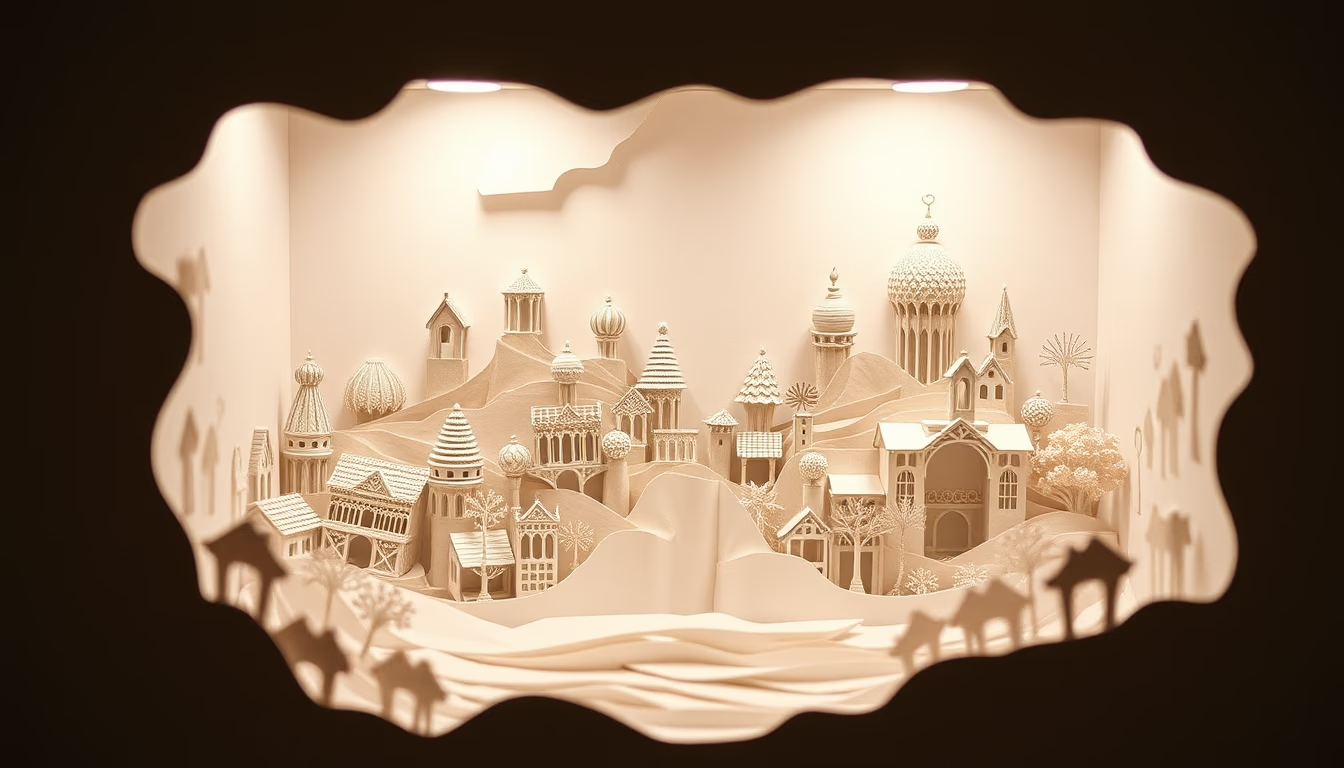
Pop-up book opened
1344×768 · AVIF · CC BY 4.0
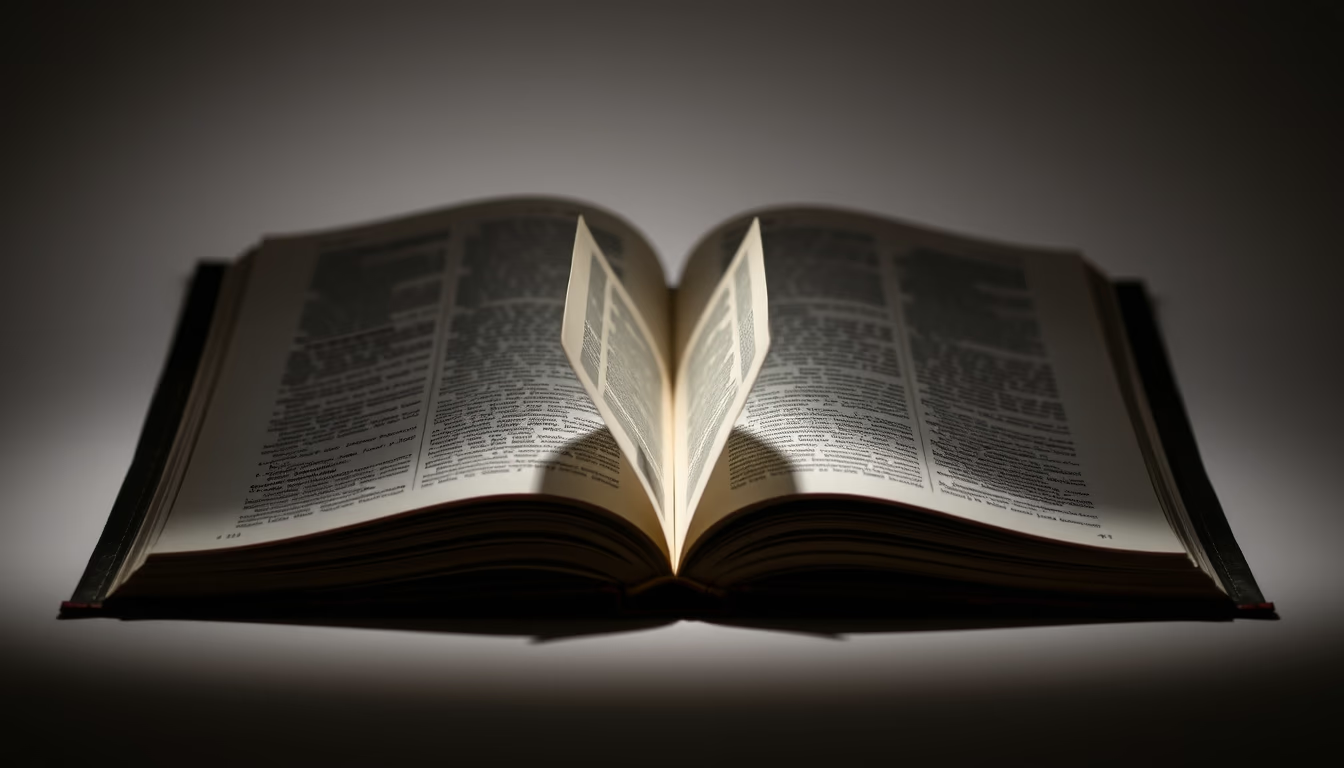
Pop-up books combine paper art and engineering to create three-dimensional scenes that amaze readers of all ages.
About this subject
Pop-up books are feats of paper engineering that transform flat pages into three-dimensional structures. Each fold and cut is designed to create movement and depth, offering a unique interactive experience. Although they seem like a modern invention, their history dates back to the 13th century, when Catalan monk Ramon Llull used rotating mechanisms in manuscripts. In the 19th century, the first books with flaps and movable elements became popular in England, especially for teaching anatomy and astronomy. In the 20th century, artists like Robert Sabuda and Matthew Reinhart revolutionized the genre with complex, highly detailed creations, elevating pop-ups to a recognized art form.
The technique behind pop-ups involves principles of geometry and material strength. Cuts are made by laser or hand, and folds follow patterns such as the V-fold and parallel fold. Paper choice is crucial: thicker paper ensures stability, while thinner paper allows for fine details. Lighting, often dramatic like Rembrandt lighting, enhances shadows and textures, bringing scenes to life. Fans of this style appreciate the contrast between light and shadow, which highlights each layer and cutout.
Pop-ups are not just entertainment; they have important educational applications. They are used in textbooks to explain concepts in science, history, and art visually and tactilely. Additionally, there are exhibitions dedicated to this art, such as 'Pop-Up!' at the Museum of Modern Art in New York. Collectors seek limited editions and works by renowned artists, with prices reaching thousands of dollars. Despite the digital age, pop-up books continue to enchant, proving that paper still has much to offer.
Frequently Asked Questions
How did the first pop-up books originate?
The earliest recorded pop-up mechanisms date back to the 13th century, with the manuscripts of monk Ramon Llull, who used rotating discs. In the 19th century, books with flaps and movable elements were produced in England for educational purposes.
Who are the main pop-up book artists?
Robert Sabuda and Matthew Reinhart are the most famous contemporary artists. Other notable names include David A. Carter, known for 'The Elements of Pop-Up', and Marion Bataille, author of 'ABC3D'.
Why is lighting important in pop-up photography?
Dramatic lighting, such as Rembrandt lighting, enhances shadows and textures of paper cutouts, creating depth and highlighting the three-dimensional layers, which is essential to capture the complexity of the work.
Direct URL
https://pub-c7d6a6ea828543ac903a74a341ccb2e1.r2.dev/imagens/pop-up-book-opened-rembrandt-lighting-dramatic-shadows-fresh4.avifHow to credit
Include a visible link back to UtilizAí. Copy one of the snippets below:
<a href="https://xn--utiliza-eza.com/en/midia/imagens/pop-up-book-opened-rembrandt-lighting-dramatic-shadows-fresh4">Pop-up book opened</a> by <a href="https://xn--utiliza-eza.com">UtilizAí</a>, licensed under <a href="https://creativecommons.org/licenses/by/4.0/">CC BY 4.0</a>.
[Pop-up book opened](https://xn--utiliza-eza.com/en/midia/imagens/pop-up-book-opened-rembrandt-lighting-dramatic-shadows-fresh4) by [UtilizAí](https://xn--utiliza-eza.com), CC BY 4.0
License: CC-BY-4.0