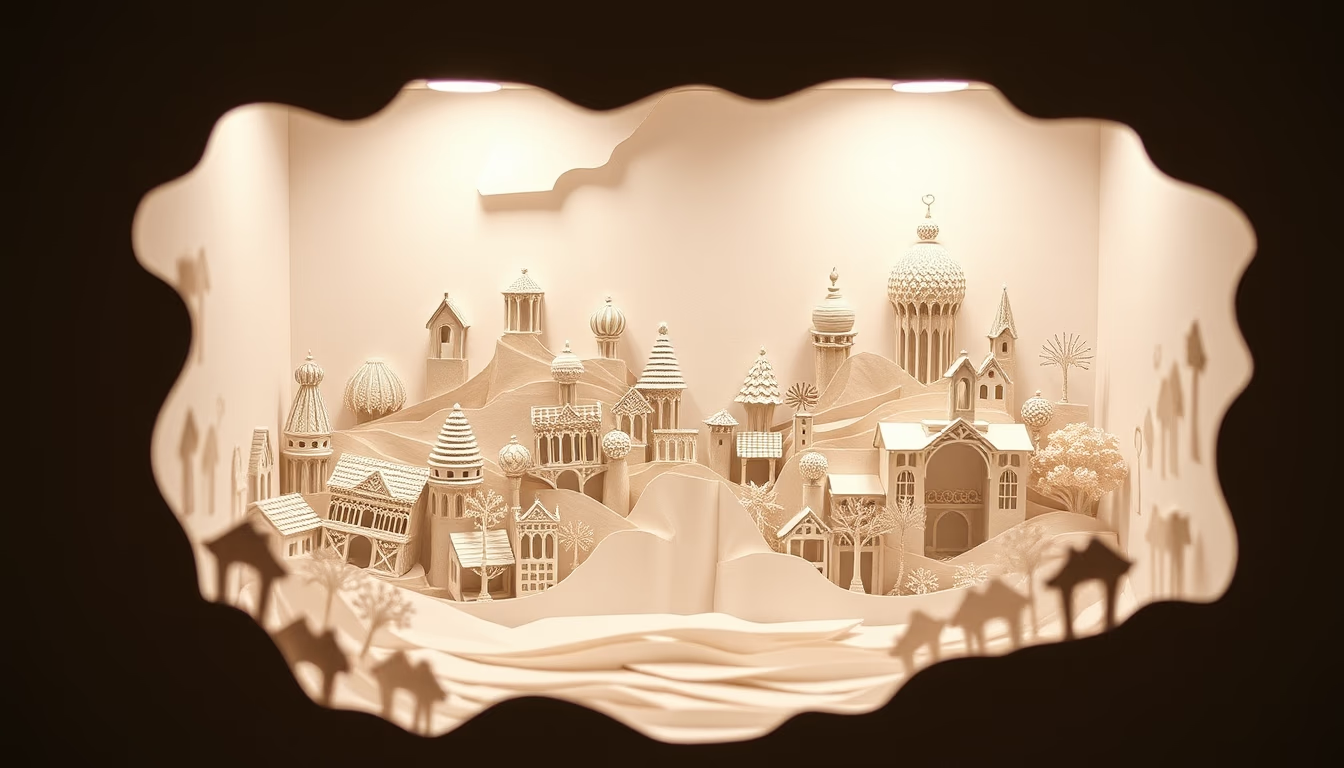
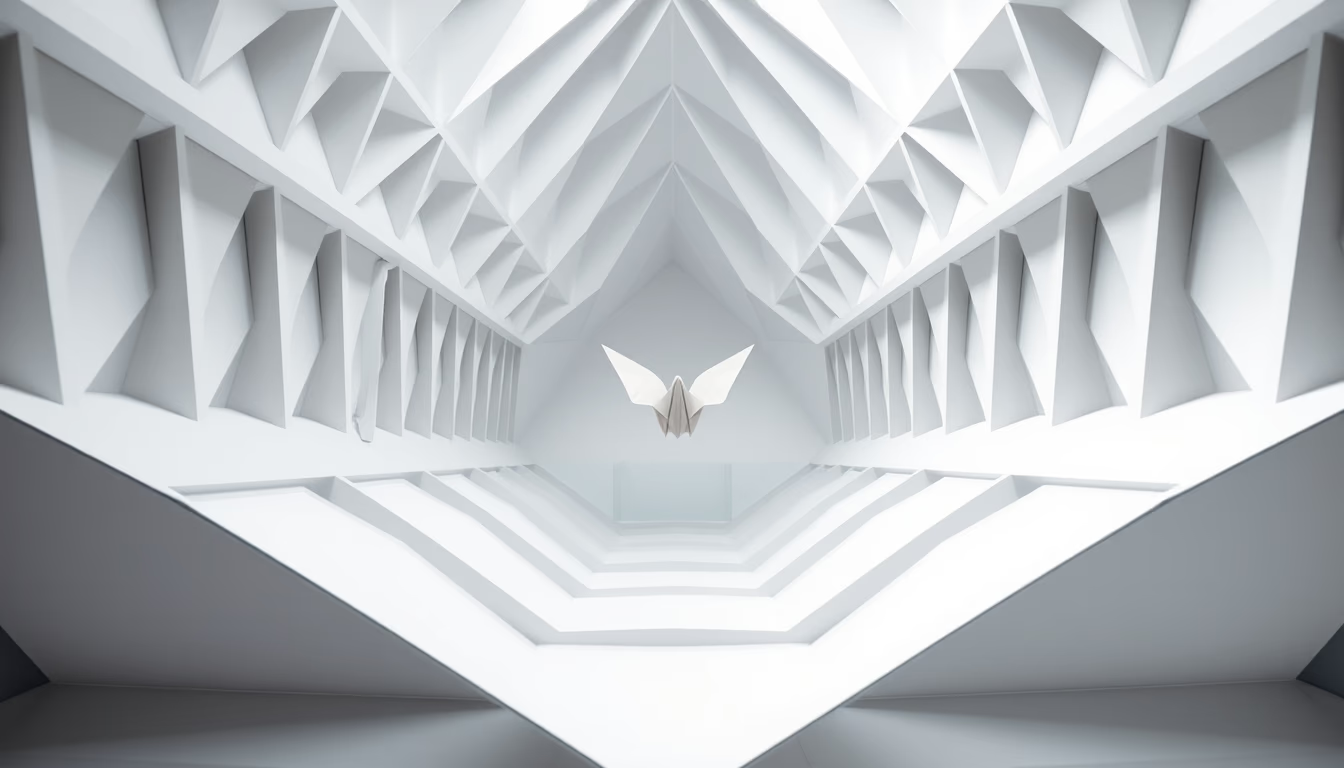
Pop-up book opened
1344×768 · AVIF · CC BY 4.0

An open pop-up book reveals paper engineering with three-dimensional layers and folding mechanisms that delight readers of all ages.
About this subject
A pop-up book, also known as a movable or three-dimensional book, uses cut and folded paper to create scenes that rise when the page is turned. The technique dates back to the 13th century, when Catalan monk Ramon Llull created rotating mechanisms to illustrate theological concepts. In the 18th century, English children's books popularized the format, and today artists like Robert Sabuda have elevated the art to extraordinary complexity. Globally, paper engineers such as Matthew Reinhart and David A. Carter push boundaries with intricate structures that combine storytelling and engineering.
Pop-up books are powerful educational tools, used in anatomy, astronomy, and architecture books to explain complex structures in a tactile and visual way. For children, they aid fine motor skills and spatial awareness. Collectors seek limited editions, often signed by the paper engineers, who are true artisans of graphic design. The books also feature in museum exhibitions and have a dedicated fan base worldwide.
The engineering behind a pop-up involves millimeter precision. Each layer is carefully designed in illustration software before being cut by laser or by hand. Common mechanisms include V-folds, flap mechanisms, and pull-tabs, requiring years of practice to master. Printing is done on high-grammage paper to withstand repeated use. Some books contain hundreds of hand-glued pieces, justifying their high cost. The design process starts with sketches and 3D mock-ups, ensuring that every fold aligns perfectly.
In Brazil, pop-up books have gained traction through publishers like Globinho and Panda Books, as well as independent artists. Exhibitions such as 'Papéis que Saltam' at Sesc and book biennials celebrate the art form. Despite production challenges, pop-ups continue to captivate by uniting literature, art, and engineering in a unique interactive experience.
Frequently Asked Questions
How do pop-up book mechanisms work?
They use folding, cutting, and scoring techniques, combining layers of paper that rise when the page is opened. Common types include flaps, pull-tabs, and V-folds.
What is the origin of pop-up books?
13th-century records show Catalan monk Ramon Llull using rotating mechanisms. The modern form appeared in the 18th century with English children's books.
Where can pop-up books be found in Brazil?
Specialized bookstores, second-hand shops, and online retailers. Publishers like Globinho and Panda Books have collections. Art fairs and biennials also feature works by national artists.
Direct URL
https://pub-c7d6a6ea828543ac903a74a341ccb2e1.r2.dev/imagens/pop-up-book-opened-long-exposure-fresh0.avifHow to credit
Include a visible link back to UtilizAí. Copy one of the snippets below:
<a href="https://xn--utiliza-eza.com/en/midia/imagens/pop-up-book-opened-long-exposure-fresh0">Pop-up book opened</a> by <a href="https://xn--utiliza-eza.com">UtilizAí</a>, licensed under <a href="https://creativecommons.org/licenses/by/4.0/">CC BY 4.0</a>.
[Pop-up book opened](https://xn--utiliza-eza.com/en/midia/imagens/pop-up-book-opened-long-exposure-fresh0) by [UtilizAí](https://xn--utiliza-eza.com), CC BY 4.0
License: CC-BY-4.0