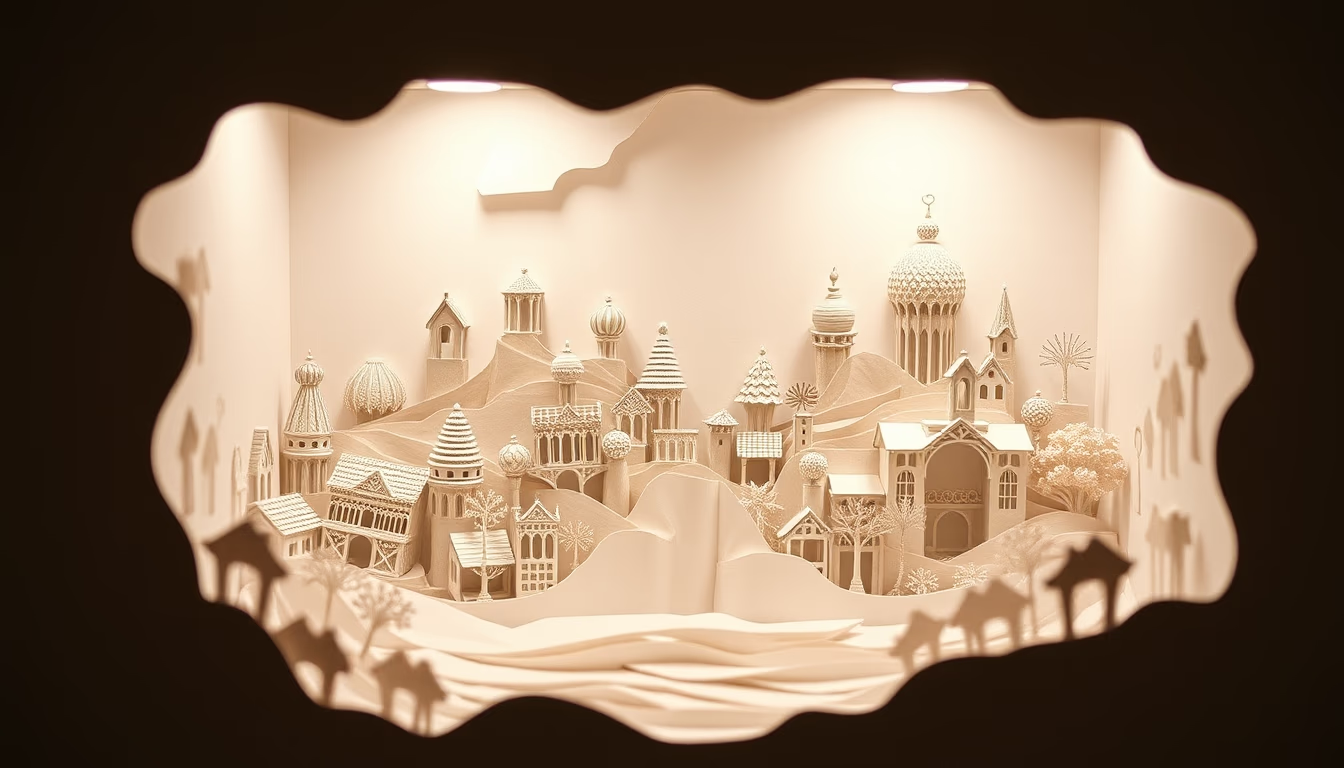
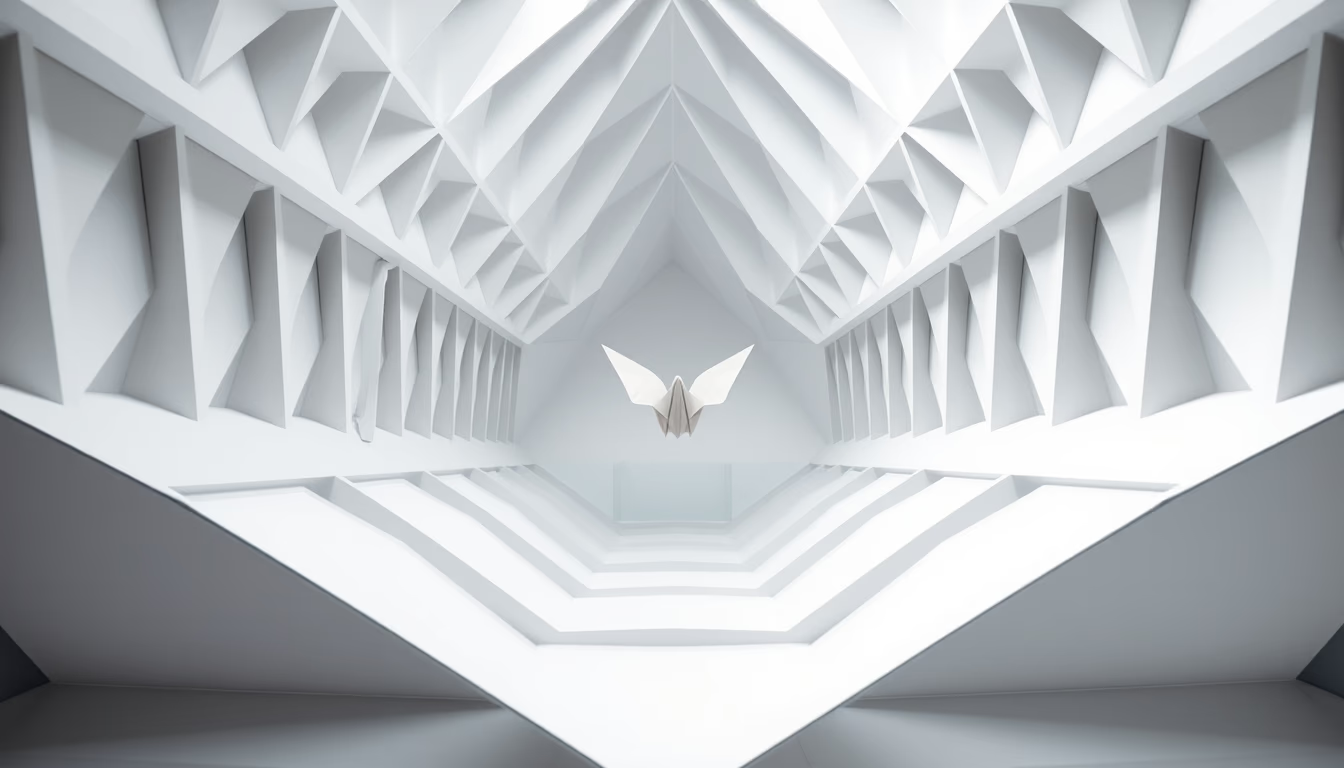
Pop-up book opened
1344×768 · AVIF · CC BY 4.0

An opened pop-up book reveals three-dimensional paper engineering, combining art and mechanics to create scenes that leap off the pages.
About this subject
Pop-up books, also known as movable or three-dimensional books, are paper crafts that use cutting, folding, and gluing techniques to create structures that rise from the pages when opened. This art form requires precision and creativity, transforming a flat surface into a relief scene. The foundation is paper engineering, which involves cardstock, scoring, and mechanisms like levers and flaps.
The history of pop-ups dates back to the 13th century when monk and astronomer Matthew Paris created a rotating mechanism for calculating religious dates. In the 18th century, educational children's books began to include folds and cuts. However, it was in the 19th century that German Lothar Meggendorfer elevated the technique with jointed figures and complex scenes. Today, artists like Robert Sabuda and Matthew Reinhart are global references, producing books that are true paper sculptures with hundreds of pieces and intricate details.
Culturally, pop-ups are valued both as educational tools and collectible objects. They stimulate the imagination of children and adults, telling stories interactively. There are pop-up books covering science, history, art, and literature, with limited editions becoming rare items. The technique is also used in greeting cards and art exhibitions.
In Brazil, interest in pop-ups has grown with publications from publishers like Cosac Naify and the popularization of paper engineering workshops. The manual skill required to create these books is an art form combining patience, mathematics, and design. Interestingly, some modern pop-ups employ advanced engineering, like movement and light, expanding interaction possibilities.
Frequently Asked Questions
How does a pop-up book work?
A pop-up book works through precise cuts, folds, and gluing of paper, forming mechanisms like flaps, levers, and gears that rise when the page is opened, creating a three-dimensional scene.
Who are the main paper engineering artists?
Key artists include Robert Sabuda and Matthew Reinhart, known for their complex and detailed books. Historical figures include Lothar Meggendorfer, a pioneer in the 19th century, and Vojtěch Kubašta.
What is the origin of pop-up books?
The origin dates back to the 13th century with rotating mechanisms in astronomical manuscripts. In the 18th century, children's books with flaps appeared, but the modern format was established in the 19th century with the works of Lothar Meggendorfer.
Direct URL
https://pub-c7d6a6ea828543ac903a74a341ccb2e1.r2.dev/imagens/pop-up-book-opened-cinematic-wide-shot-fresh6.avifHow to credit
Include a visible link back to UtilizAí. Copy one of the snippets below:
<a href="https://xn--utiliza-eza.com/en/midia/imagens/pop-up-book-opened-cinematic-wide-shot-fresh6">Pop-up book opened</a> by <a href="https://xn--utiliza-eza.com">UtilizAí</a>, licensed under <a href="https://creativecommons.org/licenses/by/4.0/">CC BY 4.0</a>.
[Pop-up book opened](https://xn--utiliza-eza.com/en/midia/imagens/pop-up-book-opened-cinematic-wide-shot-fresh6) by [UtilizAí](https://xn--utiliza-eza.com), CC BY 4.0
License: CC-BY-4.0