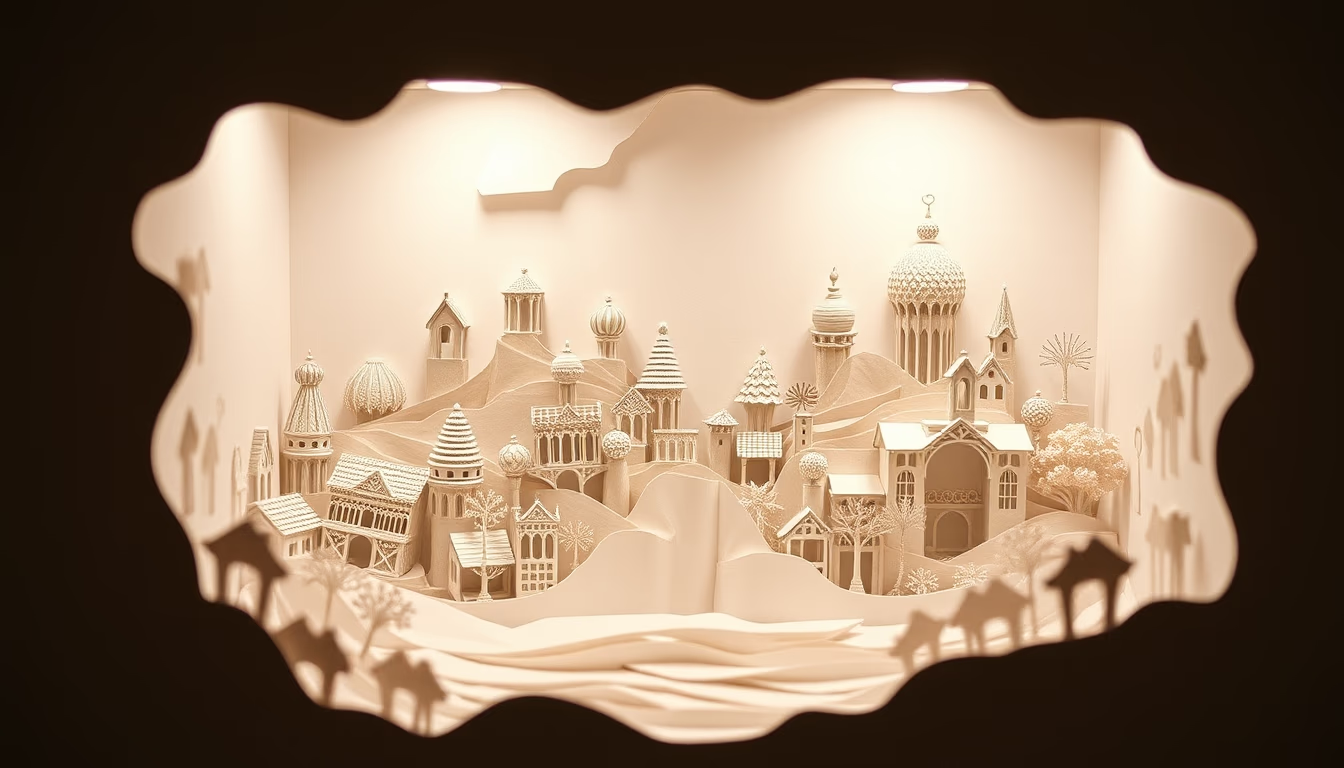
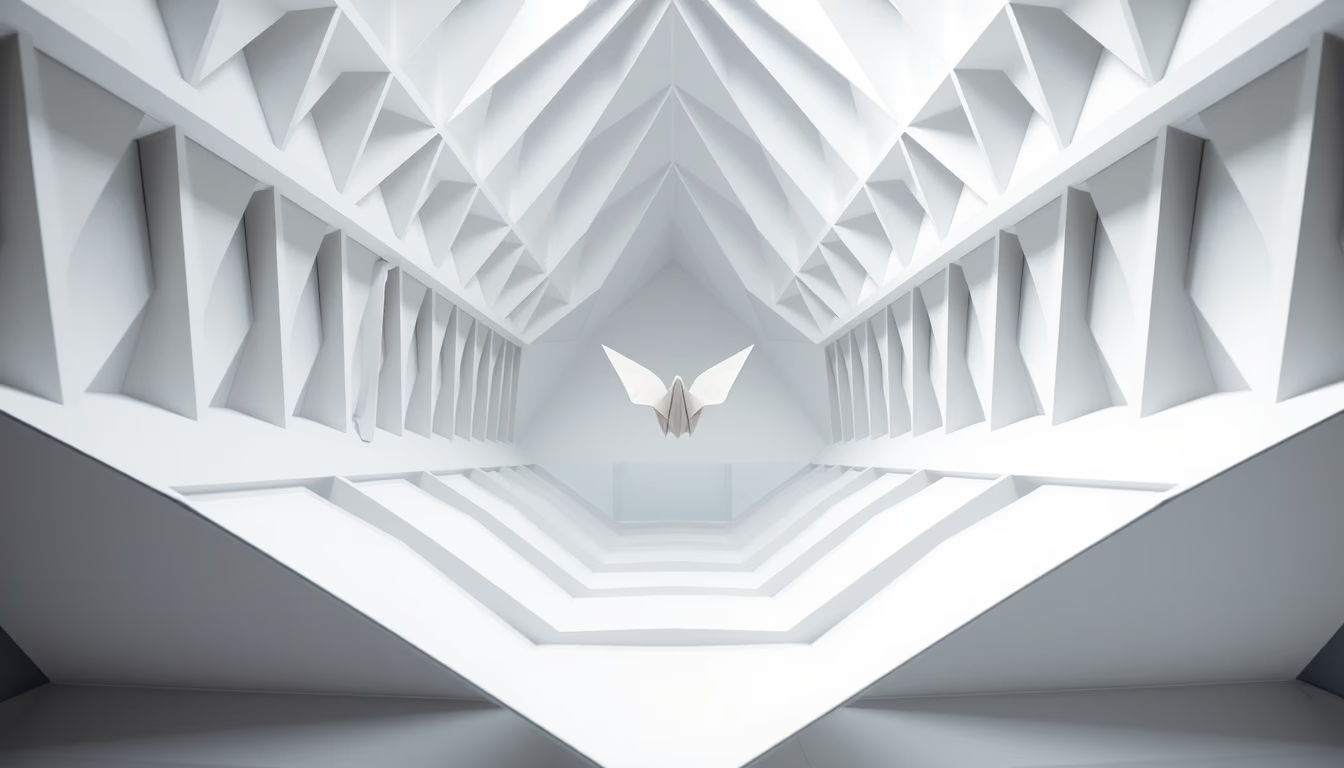
Pop-up book opened
1344×768 · AVIF · CC BY 4.0

A marvel of paper engineering, pop-up books combine art, architecture, and three-dimensional design to amaze readers of all ages.
About this subject
Pop-up books, also known as movable or three-dimensional books, are true paper sculptures that rise when their pages are opened. The technique dates back to the 13th century, when English monk and mathematician Matthew Paris created rotating illustrations for computing religious dates. In the 18th century, the first children's books with flaps and simple mechanisms appeared, but it was in the 19th century that industrial production allowed the dissemination of complex works, such as those by German Lothar Meggendorfer, considered the father of modern pop-ups.
Designing a pop-up requires millimeter precision and knowledge of descriptive geometry. Every fold, crease, and tab must be calculated so that the structure rises and collapses perfectly. Paper engineers like Robert Sabuda and Matthew Reinhart elevate the technique to architectural levels, recreating everything from Gothic cathedrals to futuristic urban landscapes. Architectural pop-up books, in particular, capture details of facades, columns, and vaults, allowing readers to explore miniature buildings without leaving home.
The popularity of pop-ups grew with laser cutting and digital printing techniques, which lowered production costs and expanded creative possibilities. Today, they are used in education, advertising, and even medicine to illustrate anatomy. Despite their apparent fragility, well-preserved books can last for decades, becoming collector's items. In Brazil, artists like Alexandre Rangel and the duo Aranda\(Lasch explore pop-ups as a medium for visual narratives and social critique.
Interestingly, pop-up engineering has influenced fields such as robotics and adaptive architecture. Researchers study paper mechanisms to create large-scale retractable structures, such as emergency shelters and foldable satellites. This intersection of art and science shows that, even in the digital age, paper remains a surprising medium for innovation.
Frequently Asked Questions
How do pop-up book mechanisms work?
The mechanisms rely on folds, cuts, and glue. When a page is opened, a paper structure attached by tabs and creases rises, creating volume. Paper engineers calculate angles and tensions to ensure smooth movement and stability.
What is the most famous pop-up book in the world?
One of the most iconic is The Pop-Up Book of Phobias (1999) by Gary Greenberg and Matthew Reinhart, featuring mechanisms depicting fears like spiders and clowns. Another classic is Alice's Adventures in Wonderland by Robert Sabuda.
Can I make a pop-up book at home?
Yes, using cardstock, a craft knife, a ruler, and glue. Online tutorials teach everything from basic shapes like the pyramid to more complex mechanisms. Practice requires patience, as each fold must be precise.
Direct URL
https://pub-c7d6a6ea828543ac903a74a341ccb2e1.r2.dev/imagens/pop-up-book-opened-architectural-photography-fresh16.avifHow to credit
Include a visible link back to UtilizAí. Copy one of the snippets below:
<a href="https://xn--utiliza-eza.com/en/midia/imagens/pop-up-book-opened-architectural-photography-fresh16">Pop-up book opened</a> by <a href="https://xn--utiliza-eza.com">UtilizAí</a>, licensed under <a href="https://creativecommons.org/licenses/by/4.0/">CC BY 4.0</a>.
[Pop-up book opened](https://xn--utiliza-eza.com/en/midia/imagens/pop-up-book-opened-architectural-photography-fresh16) by [UtilizAí](https://xn--utiliza-eza.com), CC BY 4.0
License: CC-BY-4.0