Pompeii ruins fresco
1344×768 · AVIF · CC BY 4.0
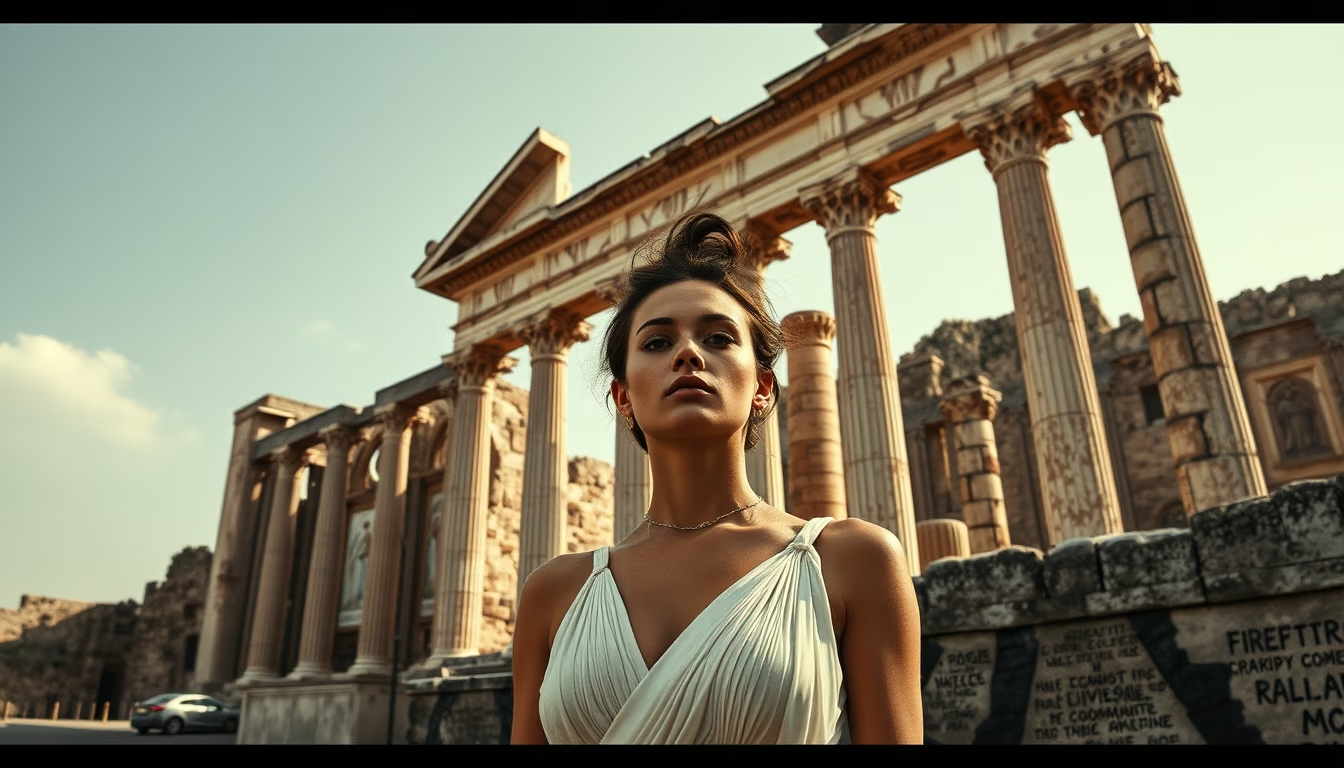
Fresco from Pompeii, preserved by the eruption of Mount Vesuvius in 79 AD, reveals details of daily Roman life.
About this subject
The Pompeii fresco belongs to a vast collection of mural paintings that decorated houses and public buildings in the Roman city buried by the eruption of Mount Vesuvius in 79 AD. These works survived thanks to the layer of ash and pumice that protected them from decay for nearly two millennia. Frescoes were executed on fresh plaster, permanently fixing the pigments. The vivid colors, obtained from minerals such as ochre, Egyptian blue, and cinnabar, impress with their durability. The scenes depict mythology, landscapes, still lifes, and everyday activities like banquets, games, and religious rituals. The systematic excavation of Pompeii began in the 18th century under King Charles of Bourbon and has since uncovered over 10,000 fragments of mural painting. Many frescoes have been removed to museums, notably the National Archaeological Museum of Naples. Roman fresco technique is considered an evolution of Greek painting, adapted to local tastes. Pompeian styles are classified into four periods, from First to Fourth Style, each with distinct characteristics. This particular example likely dates from the Third or Fourth Style, marked by illusionistic architectural settings and mythological figures. The eruption of Vesuvius was described by Pliny the Younger in letters to the historian Tacitus, providing a firsthand account of the disaster. Today, Pompeii is a UNESCO World Heritage site and attracts millions of visitors annually.
Frequently Asked Questions
What is a Pompeii fresco?
It is a mural painting made on fresh plaster on the walls of buildings in the Roman city of Pompeii, preserved by the eruption of Vesuvius in 79 AD. These frescoes depict mythological, everyday, and decorative scenes.
How did Pompeii frescoes survive to the present day?
The volcanic eruption covered the city with ash and pumice, creating a protective layer that isolated the paintings from air and moisture, preventing their deterioration over centuries.
Where can I see Pompeii frescoes today?
Many frescoes have been removed and are displayed at the National Archaeological Museum of Naples. Others remain in situ at the ruins of Pompeii, which is an open archaeological site.
Direct URL
https://pub-c7d6a6ea828543ac903a74a341ccb2e1.r2.dev/imagens/pompeii-ruins-fresco-high-fashion-editorial-p0.avifHow to credit
Include a visible link back to UtilizAí. Copy one of the snippets below:
<a href="https://xn--utiliza-eza.com/en/midia/imagens/pompeii-ruins-fresco-high-fashion-editorial-p0">Pompeii ruins fresco</a> by <a href="https://xn--utiliza-eza.com">UtilizAí</a>, licensed under <a href="https://creativecommons.org/licenses/by/4.0/">CC BY 4.0</a>.
[Pompeii ruins fresco](https://xn--utiliza-eza.com/en/midia/imagens/pompeii-ruins-fresco-high-fashion-editorial-p0) by [UtilizAí](https://xn--utiliza-eza.com), CC BY 4.0
License: CC-BY-4.0