Pointillism seurat dots
1344×768 · AVIF · CC BY 4.0
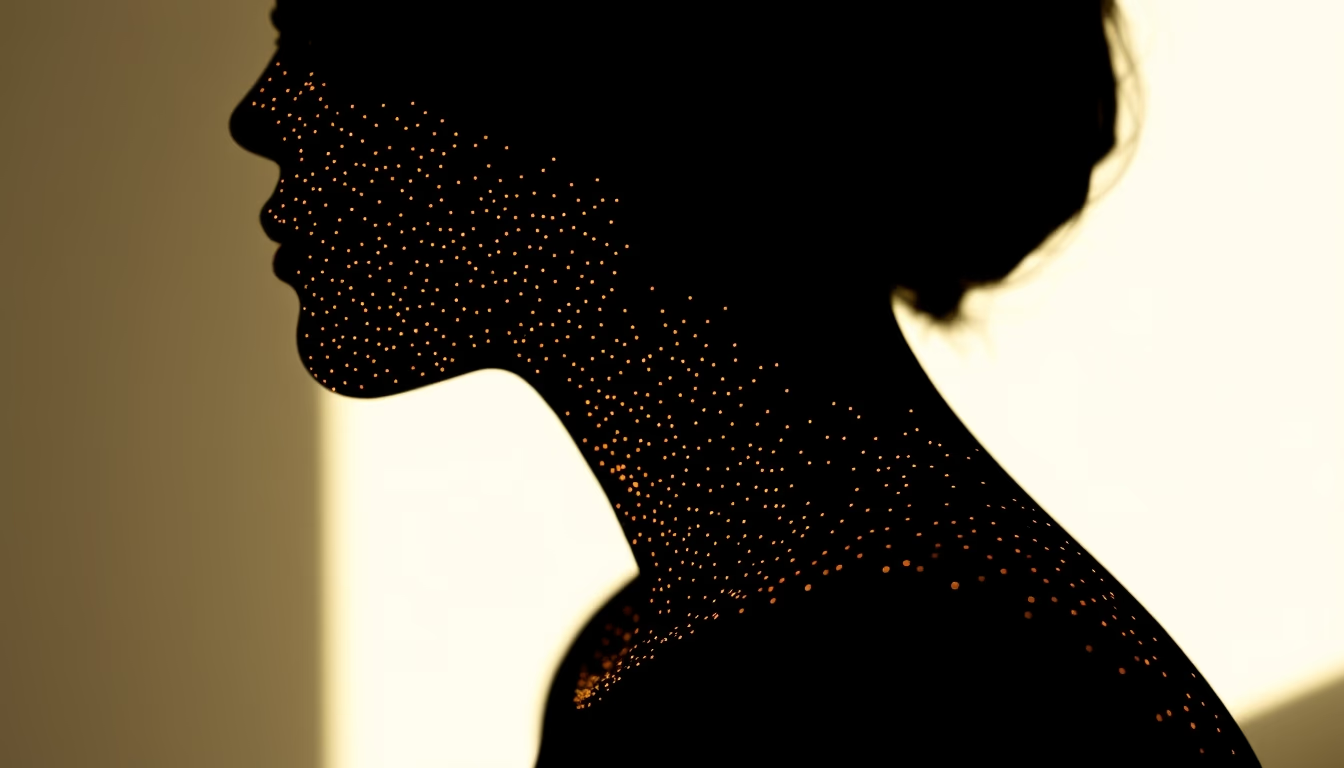
Pointillism, pioneered by Georges Seurat in the 19th century, uses tiny dots of color to form images. This revolutionary technique influenced modern art.
About this subject
Pointillism is a painting technique that emerged in France in the late 19th century, led by Georges Seurat (1859-1891). Seurat developed the method based on scientific studies of color perception, particularly the theories of Michel Eugène Chevreul and Ogden Rood. Instead of mixing pigments on a palette, the artist applies small dots of pure color onto the canvas, which blend optically when viewed from a distance. The most iconic work of this technique is "A Sunday Afternoon on the Island of La Grande Jatte" (1884-1886), which took two years to complete and contains thousands of carefully arranged dots.
The technique was dubbed "pointillism" by art critic Félix Fénéon in 1886, though Seurat preferred the term "divisionism" or "chromoluminarism." Followers included Paul Signac, Camille Pissarro, and in Brazil, Eliseu Visconti. Pointillism influenced not only painting but also other visual arts like photography and graphic design, and inspired later movements such as Fauvism and Cubism. Although often associated with large-scale works, the technique was also applied to portraits, landscapes, and still lifes.
A curious fact: Seurat died prematurely at age 31, leaving unfinished works and a legacy only fully recognized decades later. Today, pointillism is taught in art schools and admired in museums worldwide, such as the Musée d'Orsay in Paris and the Art Institute of Chicago. The technique demands patience and precision, as each dot must be applied with the correct color and density to create the illusion of form and luminosity. This scientific approach to art fascinates both experts and laypeople, demonstrating the intersection of art and science.
Frequently Asked Questions
What is the difference between pointillism and divisionism?
Although often used interchangeably, pointillism specifically refers to the application of dots, while divisionism encompasses the optical theory of separating colors into small touches for visual mixing. Seurat preferred divisionism to emphasize the scientific basis.
How long did Seurat take to paint 'A Sunday Afternoon on the Island of La Grande Jatte'?
Seurat worked on the painting for two years, from 1884 to 1886, producing numerous preparatory oil sketches and drawings. The final canvas measures about 2 x 3 meters and contains dozens of figures.
Did pointillism influence other art movements?
Yes. Pointillism influenced Fauvism, Cubism, and even abstract art. Artists like Vincent van Gogh and Henri Matisse experimented with divisionist techniques. In Brazil, Eliseu Visconti applied pointillism in works such as 'Gioventù'.
Direct URL
https://pub-c7d6a6ea828543ac903a74a341ccb2e1.r2.dev/imagens/pointillism-seurat-dots-minimalist-composition-fresh7.avifHow to credit
Include a visible link back to UtilizAí. Copy one of the snippets below:
<a href="https://xn--utiliza-eza.com/en/midia/imagens/pointillism-seurat-dots-minimalist-composition-fresh7">Pointillism seurat dots</a> by <a href="https://xn--utiliza-eza.com">UtilizAí</a>, licensed under <a href="https://creativecommons.org/licenses/by/4.0/">CC BY 4.0</a>.
[Pointillism seurat dots](https://xn--utiliza-eza.com/en/midia/imagens/pointillism-seurat-dots-minimalist-composition-fresh7) by [UtilizAí](https://xn--utiliza-eza.com), CC BY 4.0
License: CC-BY-4.0