Pluto surface ice
1344×768 · AVIF · CC BY 4.0
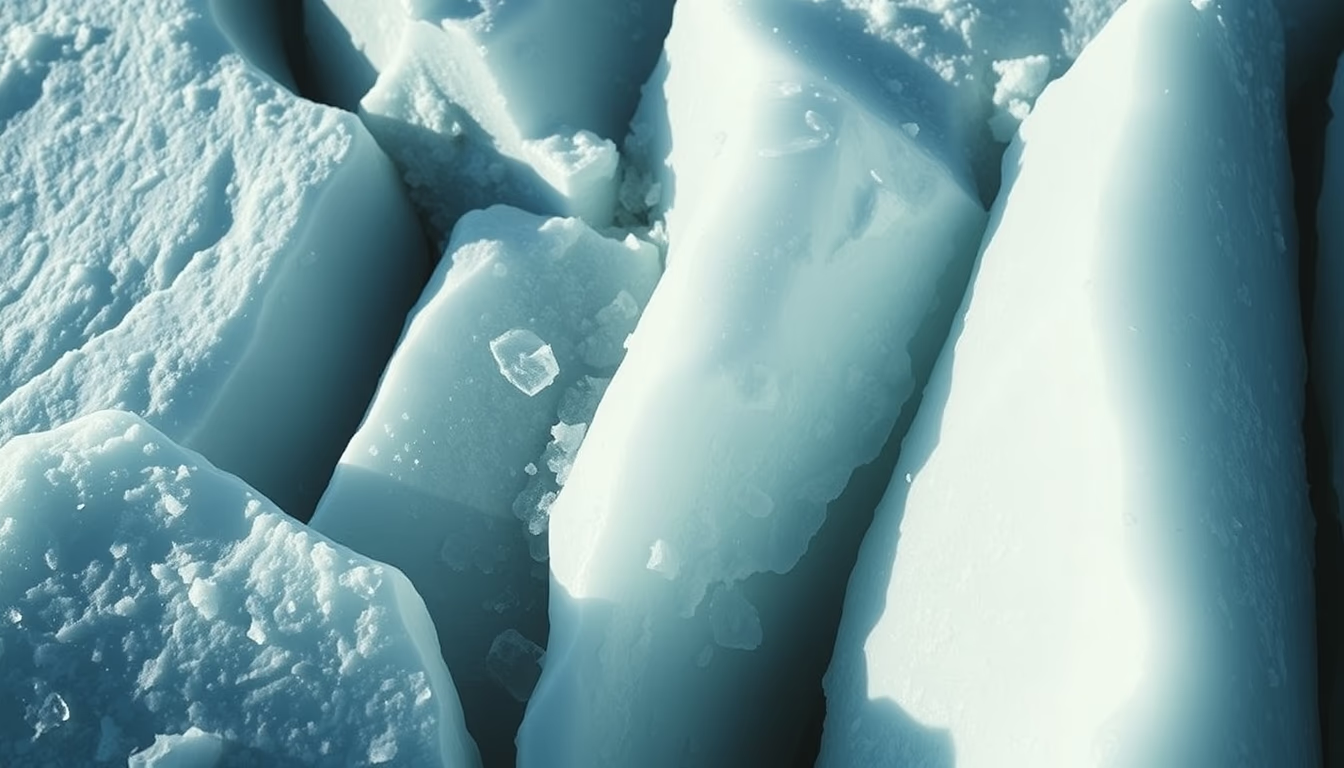
Pluto, reclassified as a dwarf planet in 2006, displays a complex surface composed mainly of nitrogen, methane, and carbon monoxide ices.
About this subject
Pluto's surface is one of the most intriguing environments in the Solar System. Discovered in 1930 by Clyde Tombaugh, the dwarf planet was closely visited only by the New Horizons probe in 2015. Images revealed vast plains of nitrogen ice, such as Sputnik Planitia, an impact basin filled with slowly moving ice, similar to terrestrial glaciers. This ice is so soft that it flows like a viscous liquid over geological timescales, creating convective cellular patterns.
Besides nitrogen, the surface contains methane ice, which gives reddish hues due to interaction with solar radiation, and carbon monoxide ice. Water-ice mountains, harder than nitrogen ice, reach up to 4 km in height, like the al-Idrisi Montes. Pluto's thin atmosphere, composed of nitrogen and methane, forms hazes and possibly methane snow on the mountains. Atmospheric pressure is only about 1/100,000 of Earth's, yet sufficient to support winds and seasonal variations.
Pluto's geology is dynamic: no visible craters in Sputnik Planitia indicate constant surface renewal. Scientists estimate the nitrogen ice may be tens of kilometers thick. The average temperature is -230°C, varying with distance from the Sun in its 248-year elliptical orbit. Spectroscopic studies from New Horizons and ground-based telescopes continue to reveal new compounds, such as ethane and ethylene, formed by methane photolysis.
Frequently Asked Questions
Why was Pluto reclassified as a dwarf planet?
In 2006, the International Astronomical Union defined criteria for planets: orbiting the Sun, having enough mass for a spherical shape, and clearing its orbit of other bodies. Pluto fails the third criterion as it shares its orbit with Kuiper Belt objects.
What is the composition of ice on Pluto's surface?
The surface is dominated by nitrogen ice (N₂), with smaller amounts of methane ice (CH₄) and carbon monoxide ice (CO). Water ice (H₂O) is present in the mountains, which is harder and does not flow.
How did the New Horizons probe contribute to the study of Pluto?
Launched in 2006, New Horizons performed a historic flyby in July 2015, mapping the surface, analyzing composition and atmosphere, and revealing geological features like Sputnik Planitia and possible cryovolcanism.
Direct URL
https://pub-c7d6a6ea828543ac903a74a341ccb2e1.r2.dev/imagens/pluto-surface-ice-magazine-editorial-p5.avifHow to credit
Include a visible link back to UtilizAí. Copy one of the snippets below:
<a href="https://xn--utiliza-eza.com/en/midia/imagens/pluto-surface-ice-magazine-editorial-p5">Pluto surface ice</a> by <a href="https://xn--utiliza-eza.com">UtilizAí</a>, licensed under <a href="https://creativecommons.org/licenses/by/4.0/">CC BY 4.0</a>.
[Pluto surface ice](https://xn--utiliza-eza.com/en/midia/imagens/pluto-surface-ice-magazine-editorial-p5) by [UtilizAí](https://xn--utiliza-eza.com), CC BY 4.0
License: CC-BY-4.0





