Planet jupiter atmosphere
1344×768 · AVIF · CC BY 4.0
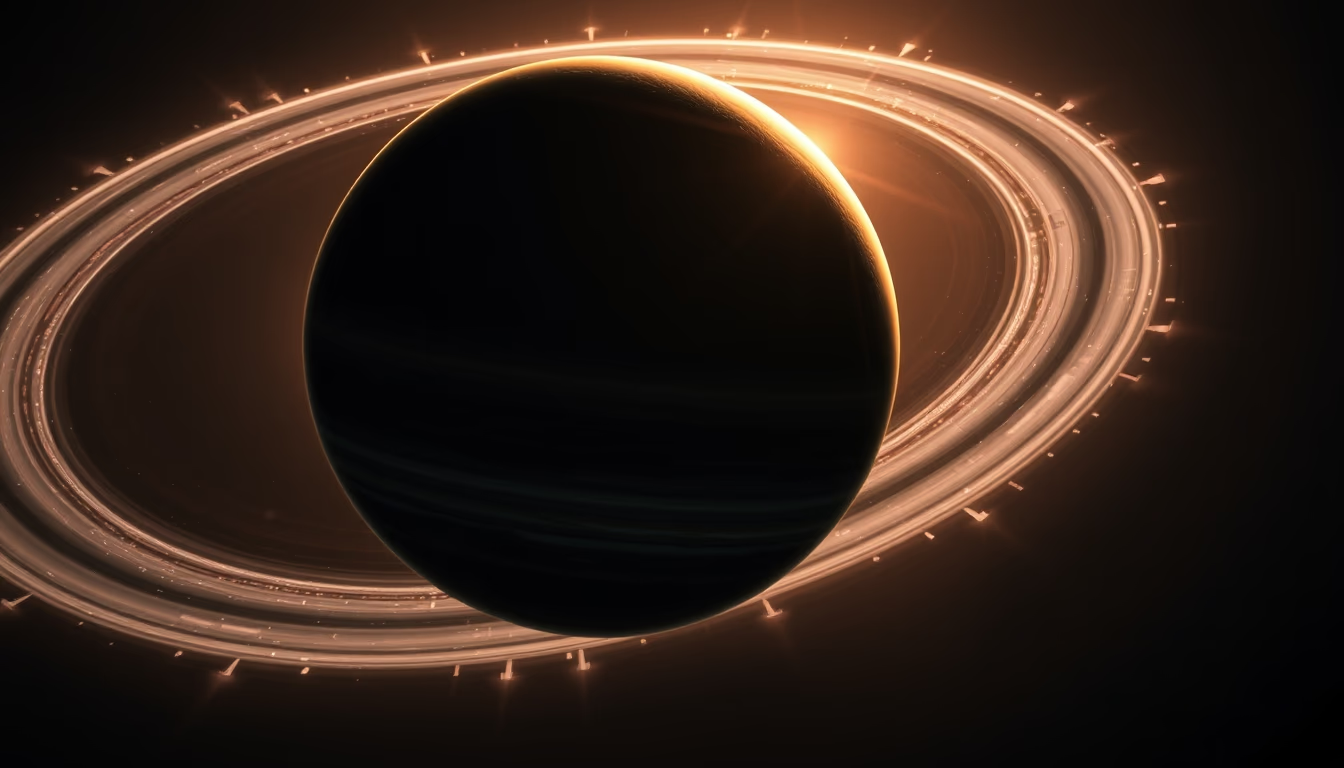
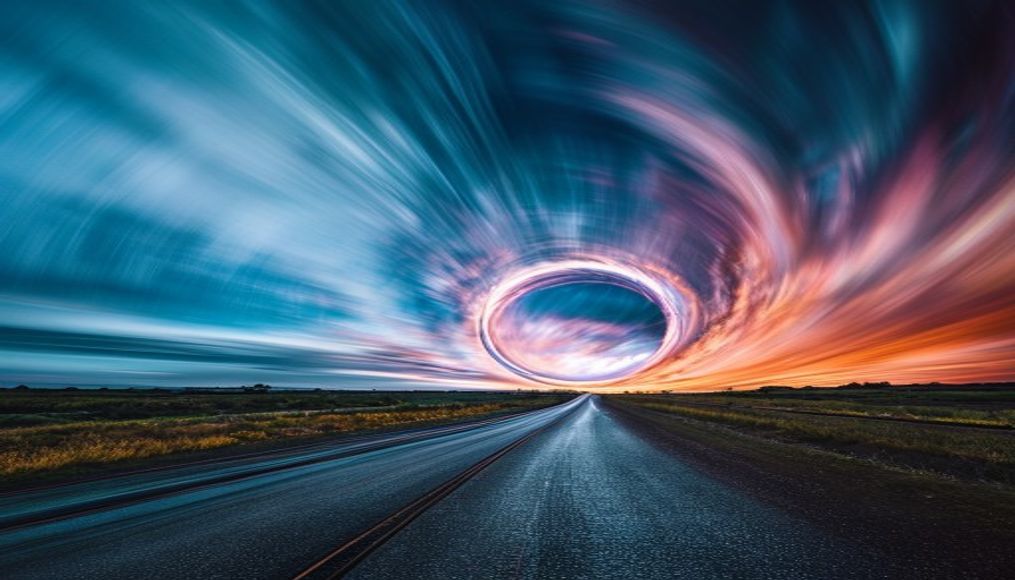
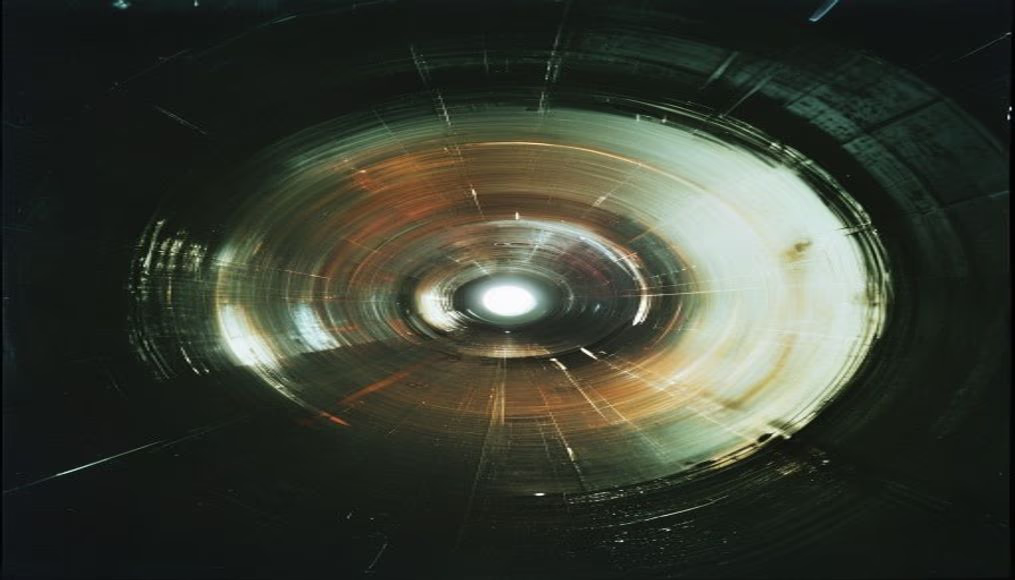
Jupiter, the largest planet in the solar system, has a turbulent atmosphere with colorful bands, giant storms like the Great Red Spot, and winds exceeding 600 km/h.
About this subject
Jupiter's atmosphere is composed primarily of hydrogen (about 90%) and helium (10%), with traces of methane, ammonia, water vapor, and other compounds. These elements, at different altitudes, form the clouds that give the planet its banded appearance. The dark bands, called belts, and the light bands, called zones, are created by jet streams blowing in opposite directions, a pattern stable for decades. Cloud coloration ranges from white to red, influenced by compounds such as phosphorus and sulfur.
The most striking feature is the Great Red Spot, an anticyclonic storm larger than Earth's diameter, active for at least 350 years. Observations from the Juno spacecraft, in orbit since 2016, revealed that the storm extends hundreds of kilometers into the atmosphere, with winds exceeding 400 km/h. Other smaller storms appear and disappear frequently, such as white ovals and disturbances that occasionally merge.
Jupiter's poles host cyclones arranged in geometric patterns, discovered by Juno. At the south pole, five cyclones form a pentagon; at the north pole, eight cyclones surround a central one. These structures are unique in the solar system. The atmosphere also produces intense aurorae, both at the poles and in lower latitudes, fueled by charged particles from the volcanic moon Io.
Pressure and temperature increase dramatically with depth. There is no solid surface: the rocky core, if it exists, is enveloped in metallic hydrogen. Missions such as Pioneer, Voyager, Galileo, and now Juno continue to reveal the complexity of this gas giant.
Frequently Asked Questions
Why does Jupiter have colorful bands?
The bands are caused by jet streams that alternate direction, creating dark belts and light zones. Colors come from compounds like ammonia, phosphorus, and sulfur in clouds at different altitudes.
How long has the Great Red Spot existed?
Continuously observed since the 17th century, the Great Red Spot has existed for at least 350 years. However, its size has been shrinking in recent decades, and it is unclear if it will disappear.
What are the winds like on Jupiter?
Winds in Jupiter's atmosphere can exceed 600 km/h, especially at the boundaries of the bands. The Great Red Spot has winds up to 400 km/h at its periphery.
Direct URL
https://pub-c7d6a6ea828543ac903a74a341ccb2e1.r2.dev/imagens/planet-jupiter-atmosphere-fine-art-photography-p4.avifHow to credit
Include a visible link back to UtilizAí. Copy one of the snippets below:
<a href="https://xn--utiliza-eza.com/en/midia/imagens/planet-jupiter-atmosphere-fine-art-photography-p4">Planet jupiter atmosphere</a> by <a href="https://xn--utiliza-eza.com">UtilizAí</a>, licensed under <a href="https://creativecommons.org/licenses/by/4.0/">CC BY 4.0</a>.
[Planet jupiter atmosphere](https://xn--utiliza-eza.com/en/midia/imagens/planet-jupiter-atmosphere-fine-art-photography-p4) by [UtilizAí](https://xn--utiliza-eza.com), CC BY 4.0
License: CC-BY-4.0