Physical Bitcoin coin on Brazilian Real banknotes with chart in background
1344×768 · AVIF · CC BY 4.0
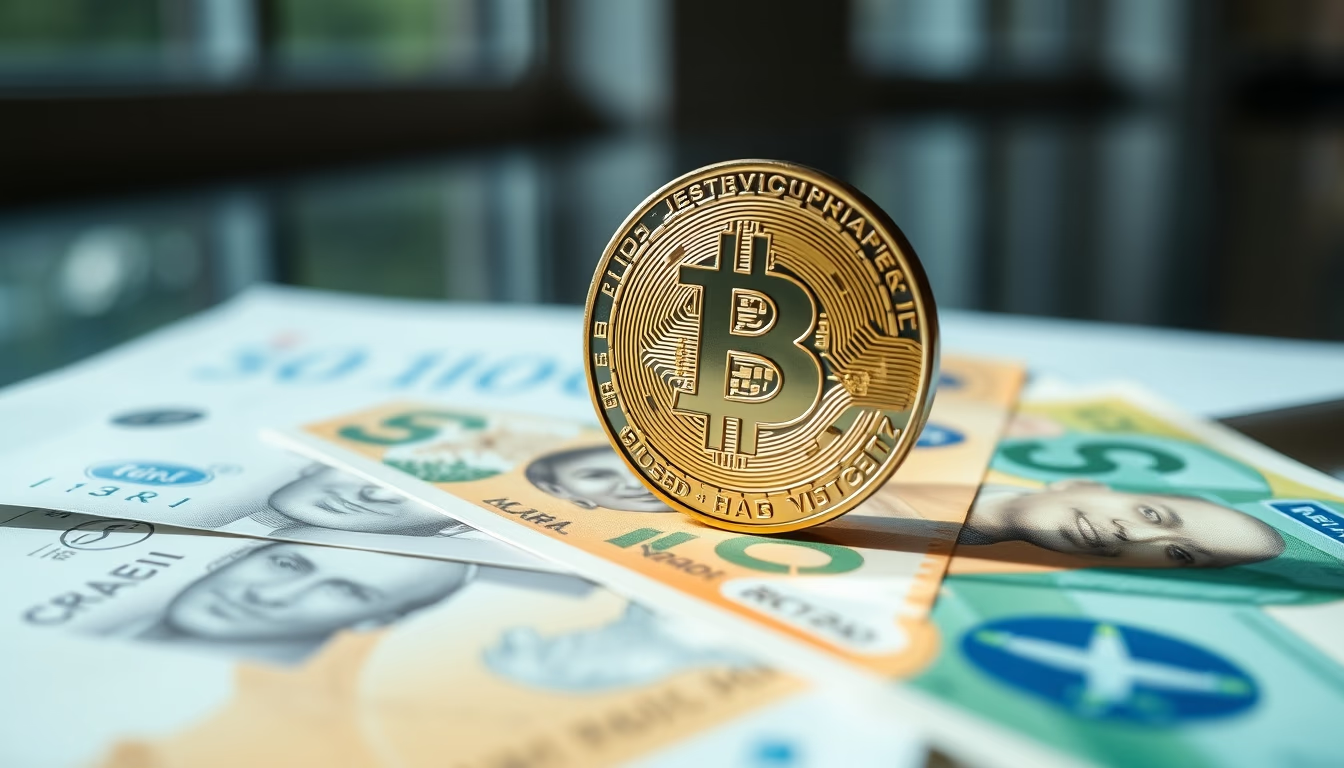
Physical Bitcoin coin on Brazilian Real banknotes with a cryptocurrency chart in the background, symbolizing the intersection of traditional and digital finance.
About this subject
Bitcoin, launched in 2009 by Satoshi Nakamoto, is the world's first decentralized cryptocurrency, operating without central banks or intermediaries. In Brazil, interest in cryptocurrencies has grown rapidly: according to the Federal Revenue Service, over 1.5 million Brazilians declared crypto transactions in 2022. The image shows a physical Bitcoin coin, often used as a symbol or collectible, placed on Brazilian Real banknotes, the official currency of Brazil since 1994. The background features a candlestick chart, a common tool in technical analysis of financial markets, indicating volatility and price trends.
The physical Bitcoin coin has no intrinsic monetary value but serves as a tangible representation of the cryptocurrency. It usually contains an engraved or hidden private key, allowing the holder to access real bitcoins on the blockchain. In contrast, Brazilian Real banknotes feature security elements such as watermarks, magnetic threads, and tactile relief, designed by the Brazilian Mint. The contrast between state-issued physical money and decentralized digital currency illustrates a transitional moment in the global financial system.
Brazil has stood out in cryptocurrency adoption. In 2023, the country approved the Legal Framework for Cryptocurrencies (Law 14.478/2022), which regulates virtual asset services. Additionally, the Central Bank of Brazil is developing Drex, a central bank digital currency (CBDC) based on blockchain, expected to launch in 2025. The image captures this duality: traditional money coexisting with digital innovation, while the background chart suggests the dynamic and speculative nature of the crypto market.
Interestingly, the first physical Bitcoin was created in 2011 by Mike Caldwell under the name Casascius Coin. Each coin contained 1 BTC and a private key protected by a hologram. Today, physical coins are collector's items, and rare specimens can be worth thousands of dollars. The association with the Brazilian Real reinforces the local context, showing how a global technology adapts to national realities.
Frequently Asked Questions
What is a physical Bitcoin coin?
It is a physical object representing Bitcoin, usually containing a private key to access real cryptocurrency on the blockchain. It serves as a collectible or symbol of the cryptocurrency.
How does Brazil regulate cryptocurrencies?
Brazil passed the Legal Framework for Cryptocurrencies (Law 14.478/2022), which sets rules for virtual asset services. Additionally, the Central Bank is developing Drex, an official digital currency.
What is the difference between Bitcoin and the Brazilian Real?
Real is a fiat currency issued by Brazil's Central Bank, backed by the state. Bitcoin is decentralized, with no central issuer, based on blockchain, and has a limited supply of 21 million units.
Direct URL
https://pub-c7d6a6ea828543ac903a74a341ccb2e1.r2.dev/imagens/physical-bitcoin-coin-on-brazilian-real-banknotes-with-chart-in-background-documentary-morning-3.avifHow to credit
Include a visible link back to UtilizAí. Copy one of the snippets below:
<a href="https://xn--utiliza-eza.com/en/midia/imagens/physical-bitcoin-coin-on-brazilian-real-banknotes-with-chart-in-background-documentary-morning-3">Physical Bitcoin coin on Brazilian Real banknotes with chart in background</a> by <a href="https://xn--utiliza-eza.com">UtilizAí</a>, licensed under <a href="https://creativecommons.org/licenses/by/4.0/">CC BY 4.0</a>.
[Physical Bitcoin coin on Brazilian Real banknotes with chart in background](https://xn--utiliza-eza.com/en/midia/imagens/physical-bitcoin-coin-on-brazilian-real-banknotes-with-chart-in-background-documentary-morning-3) by [UtilizAí](https://xn--utiliza-eza.com), CC BY 4.0
License: CC-BY-4.0