Photosynthesis chloroplast
1344×768 · AVIF · CC BY 4.0
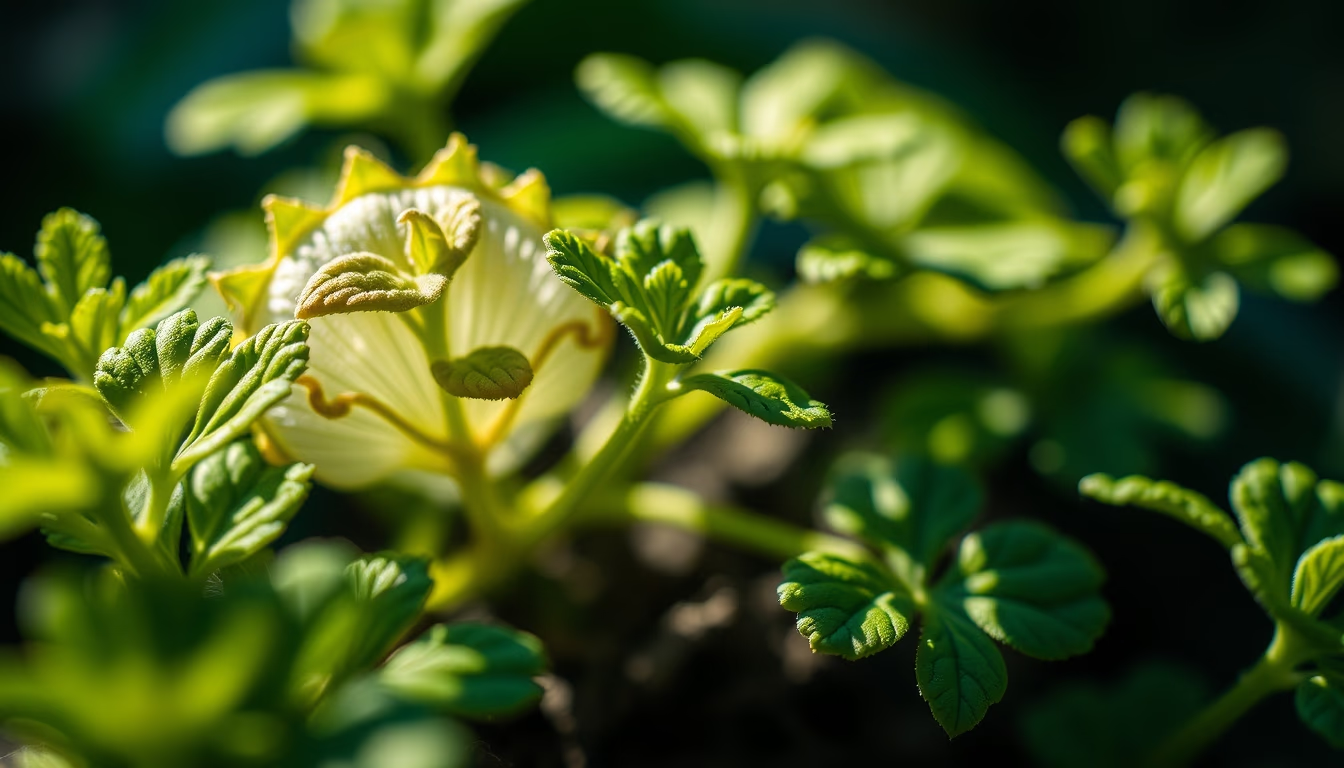
Chloroplasts are organelles responsible for photosynthesis, the process that converts sunlight into chemical energy in plants, algae, and some protists.
About this subject
Chloroplasts are organelles found in plant and algal cells, where photosynthesis takes place. They have a double membrane structure and contain thylakoids, disk-shaped membranes where chlorophyll captures sunlight. Photosynthesis is divided into two stages: the light-dependent reactions, which produce ATP and NADPH, and the Calvin cycle, which fixes carbon dioxide into glucose. This process is essential for life on Earth, producing oxygen and forming the basis of food chains.
Chloroplasts are thought to have an endosymbiotic origin, evolving from cyanobacteria engulfed by early eukaryotic cells. This explains why they have their own circular DNA and bacterial-like ribosomes. Beyond chlorophyll, chloroplasts contain accessory pigments such as carotenoids, which protect against light damage and give color to fruits and flowers.
In higher plants, chloroplasts are most abundant in leaves, especially in the mesophyll. Photosynthetic efficiency varies with factors like light intensity, CO2 concentration, and temperature. Studies estimate that global photosynthesis fixes about 100 billion tons of carbon per year, regulating climate and providing biomass.
Interestingly, some plants like succulents use CAM metabolism, adapting photosynthesis to arid environments. Green algae have differently stacked thylakoids. Current research aims to improve photosynthetic efficiency in crops to boost food productivity.
Frequently Asked Questions
What are chloroplasts?
Chloroplasts are organelles in plant and algal cells that perform photosynthesis, converting light energy into chemical energy (glucose) and releasing oxygen.
How did chloroplasts originate?
According to the endosymbiotic theory, chloroplasts evolved from cyanobacteria engulfed by early eukaryotic cells, forming a permanent symbiotic relationship.
Why are pigments important in chloroplasts?
Besides chlorophyll, pigments like carotenoids absorb light at complementary wavelengths and protect cells from oxidative damage caused by excess light.
Direct URL
https://pub-c7d6a6ea828543ac903a74a341ccb2e1.r2.dev/imagens/photosynthesis-chloroplast-magazine-editorial-p0.avifHow to credit
Include a visible link back to UtilizAí. Copy one of the snippets below:
<a href="https://xn--utiliza-eza.com/en/midia/imagens/photosynthesis-chloroplast-magazine-editorial-p0">Photosynthesis chloroplast</a> by <a href="https://xn--utiliza-eza.com">UtilizAí</a>, licensed under <a href="https://creativecommons.org/licenses/by/4.0/">CC BY 4.0</a>.
[Photosynthesis chloroplast](https://xn--utiliza-eza.com/en/midia/imagens/photosynthesis-chloroplast-magazine-editorial-p0) by [UtilizAí](https://xn--utiliza-eza.com), CC BY 4.0
License: CC-BY-4.0