Photosynthesis chloroplast
1344×768 · AVIF · CC BY 4.0
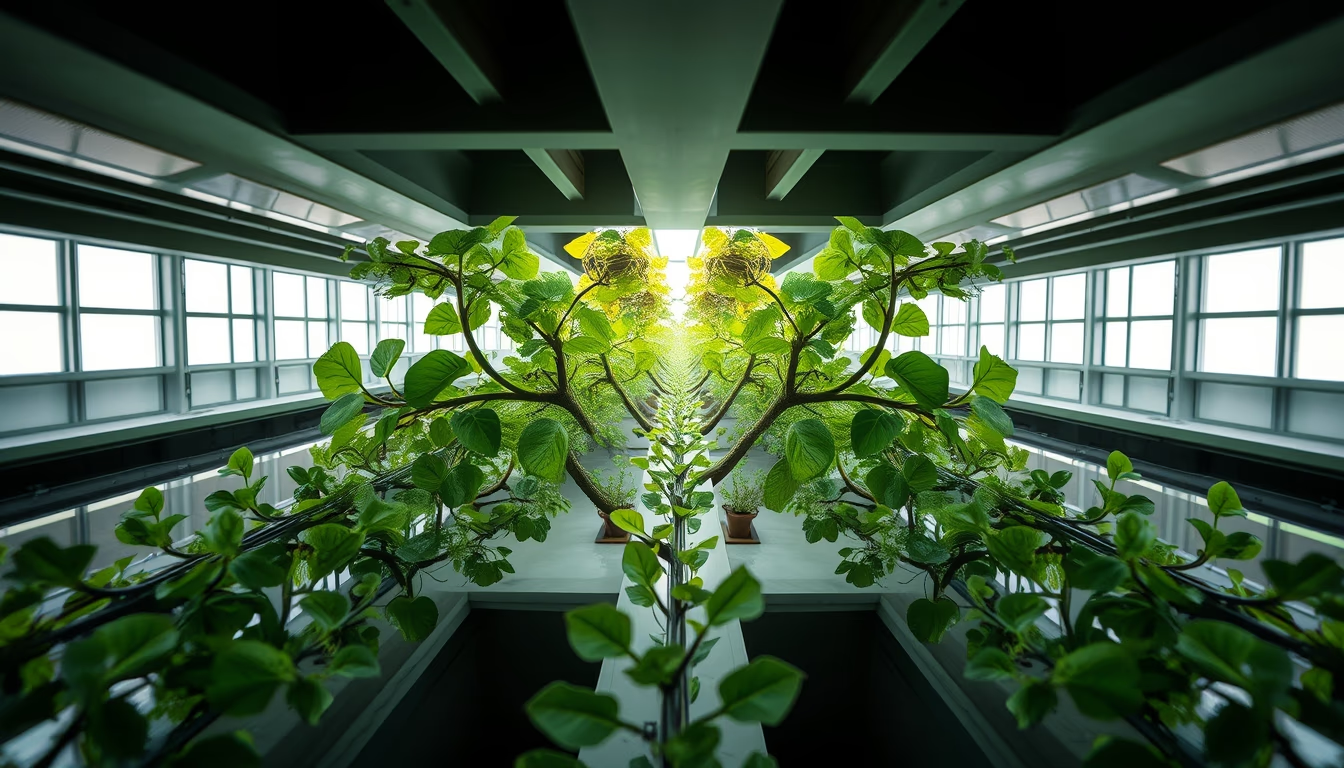
Chloroplasts are organelles responsible for photosynthesis, converting sunlight into chemical energy. Found in plants and algae, they are essential for life on Earth.
About this subject
Chloroplasts are cell organelles found in plant and algal eukaryotic cells, where they perform photosynthesis. This process converts light energy into chemical energy stored in glucose, releasing oxygen as a byproduct. The chloroplast structure consists of an outer membrane, an inner membrane, and a system of thylakoids, which are disc-shaped membrane stacks called grana. Chlorophyll, the green pigment, is located in the thylakoids and absorbs light to initiate photochemical reactions.
Photosynthesis occurs in two main stages: the light-dependent reactions and the Calvin cycle. In the former, light is captured by chlorophyll and converted into ATP and NADPH, with oxygen released. In the Calvin cycle, occurring in the stroma of the chloroplast, CO2 is fixed into organic molecules using energy from ATP and NADPH. This process is the basis of the global food chain, as the glucose produced sustains most living organisms.
Chloroplasts have their own DNA and ribosomes, similar to those of bacteria, supporting the endosymbiotic theory that they evolved from ancestral cyanobacteria incorporated by primitive eukaryotic cells. This symbiotic relationship was crucial for the increase in atmospheric oxygen billions of years ago, enabling the emergence of aerobic organisms. Today, the photosynthetic efficiency of chloroplasts is studied to improve agricultural productivity and develop renewable energy sources.
In addition to plants, algae such as green and red algae also possess chloroplasts, with variations in pigmentation. In aquatic environments, algae significantly contribute to oxygen production and form the base of the marine food web. Understanding how chloroplasts function is essential for fields like cell biology, ecology, and biotechnology, including efforts to artificially replicate photosynthesis for carbon capture.
Frequently Asked Questions
What is the endosymbiotic theory of chloroplasts?
The endosymbiotic theory proposes that chloroplasts evolved from cyanobacteria engulfed by primitive eukaryotic cells, establishing a symbiotic relationship. Evidence includes their own circular DNA and ribosomes similar to bacteria.
Why are chloroplasts important for the planet?
Chloroplasts perform photosynthesis, producing oxygen and organic matter. Without them, Earth's atmosphere would lack adequate oxygen and the food chain would be unsustainable.
How do chloroplasts capture sunlight?
They contain chlorophyll and other pigments in the thylakoids. Chlorophyll absorbs light mainly in blue and red wavelengths, reflecting green, and the energy is transferred to reaction centers for photochemistry.
Direct URL
https://pub-c7d6a6ea828543ac903a74a341ccb2e1.r2.dev/imagens/photosynthesis-chloroplast-architectural-photography-p5.avifHow to credit
Include a visible link back to UtilizAí. Copy one of the snippets below:
<a href="https://xn--utiliza-eza.com/en/midia/imagens/photosynthesis-chloroplast-architectural-photography-p5">Photosynthesis chloroplast</a> by <a href="https://xn--utiliza-eza.com">UtilizAí</a>, licensed under <a href="https://creativecommons.org/licenses/by/4.0/">CC BY 4.0</a>.
[Photosynthesis chloroplast](https://xn--utiliza-eza.com/en/midia/imagens/photosynthesis-chloroplast-architectural-photography-p5) by [UtilizAí](https://xn--utiliza-eza.com), CC BY 4.0
License: CC-BY-4.0