Photon wave particle
1344×768 · AVIF · CC BY 4.0
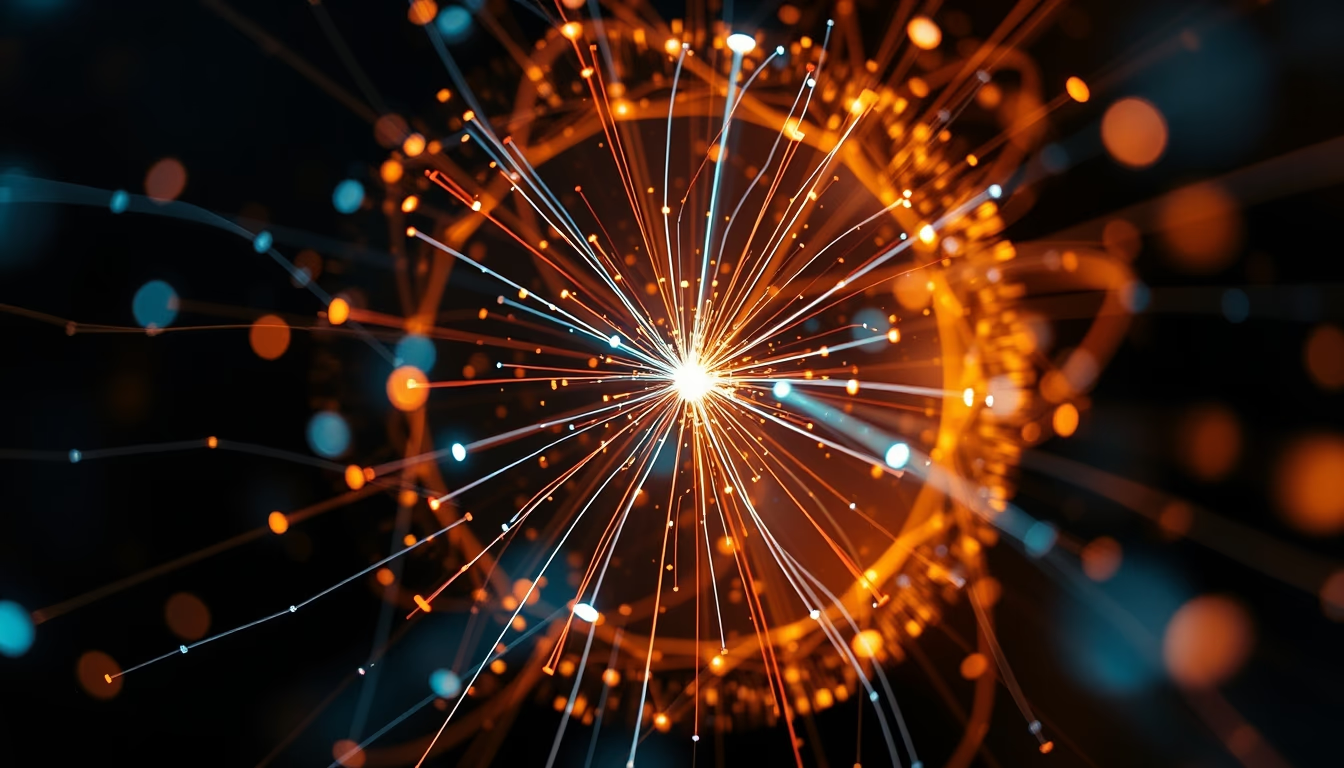
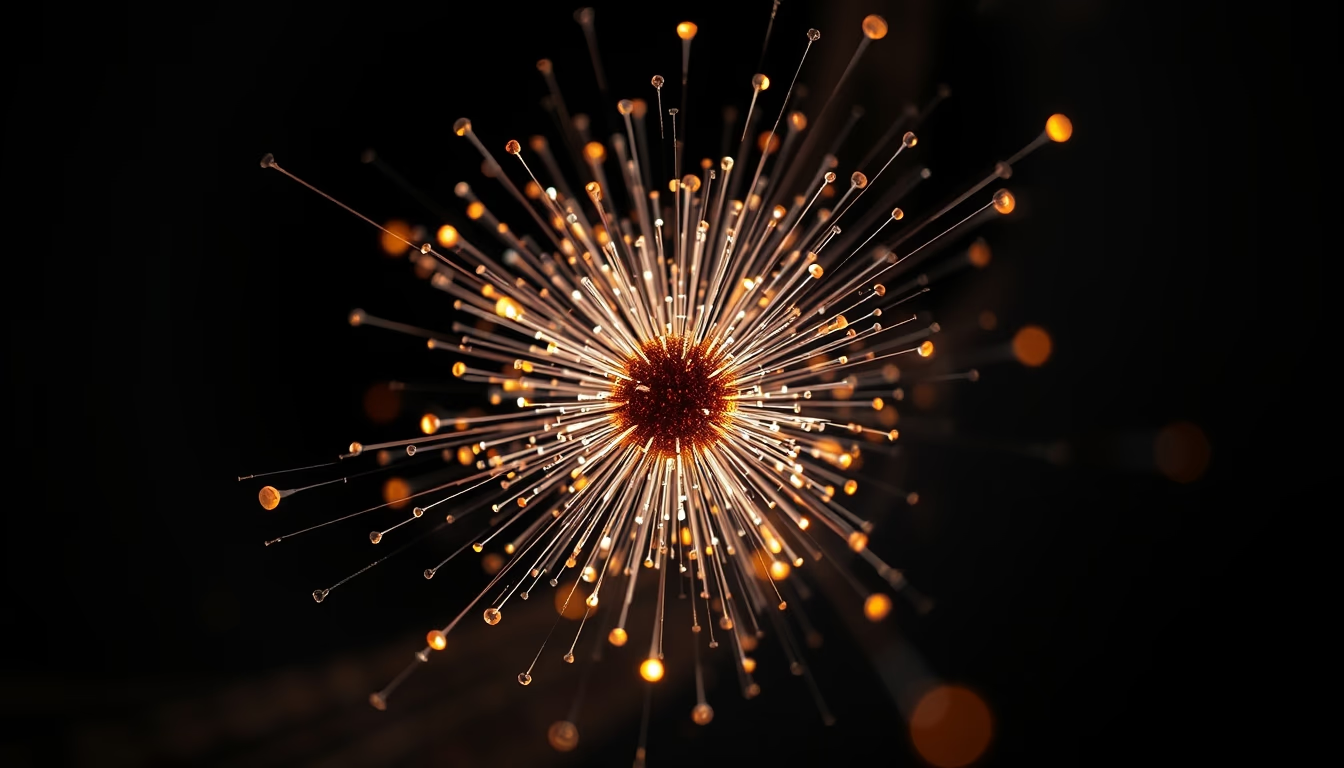
Photon exhibits wave-particle duality, a cornerstone of quantum mechanics that transformed our understanding of light and matter.
About this subject
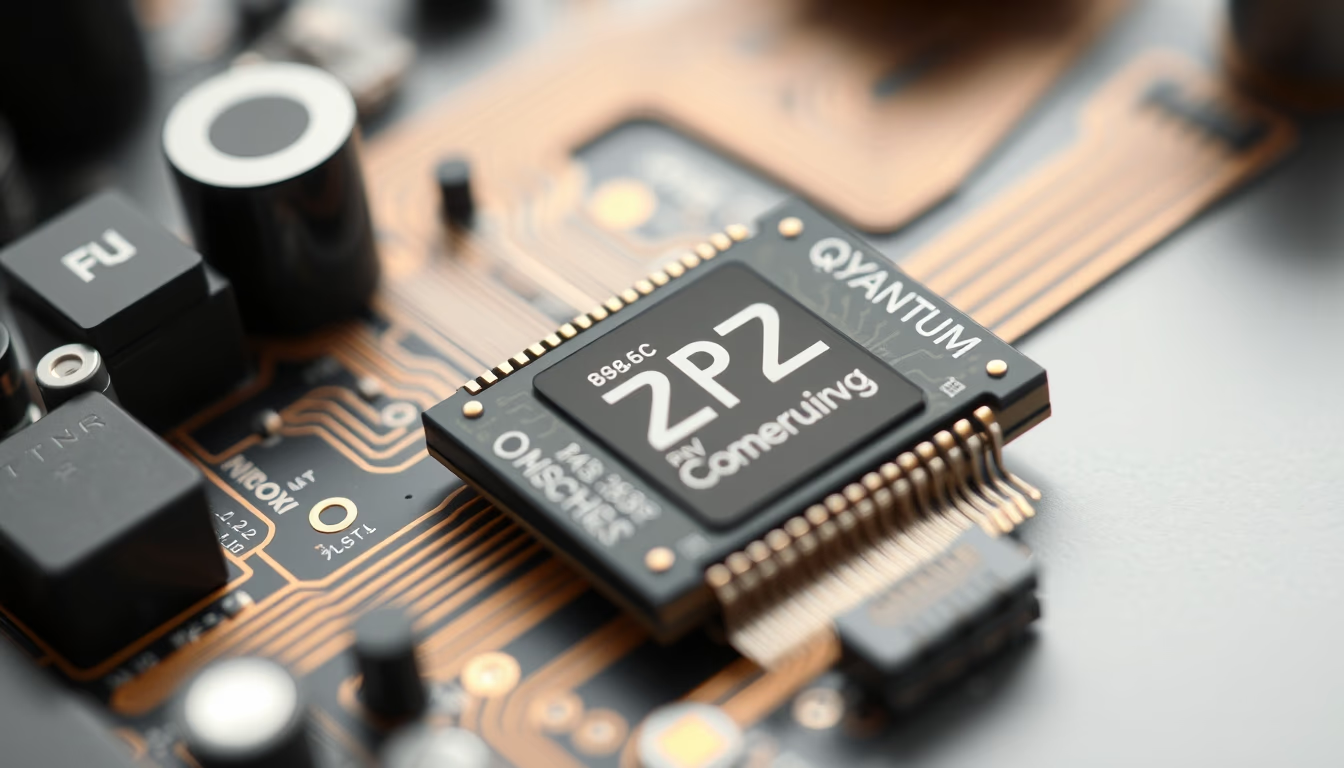
The wave-particle duality of the photon is a fundamental concept in quantum physics, where light behaves both as a wave and as a particle depending on how it is measured. Historically, Thomas Young's double-slit experiment in 1801 demonstrated the wave-like nature of light through interference patterns. In contrast, the photoelectric effect, explained by Albert Einstein in 1905, confirmed the particle nature of photons, as the energy of ejected electrons depended on light frequency, not intensity. This work earned Einstein the Nobel Prize in Physics in 1921 and established that light consists of discrete energy quanta.
In modern science, photon duality underpins numerous technologies. Lasers, semiconductors, solar cells, and digital cameras all rely on the interaction between photons and matter. Niels Bohr's complementarity principle states that wave and particle aspects are mutually exclusive yet both necessary for a complete description of quantum phenomena. In quantum computing, photons serve as qubits for information processing, and in quantum cryptography, the property that measuring a photon alters its state ensures secure communication.
Remarkably, even with a single photon at a time in the double-slit experiment, the interference pattern still emerges, implying that each photon interferes with itself. This raises profound questions about the nature of reality and the role of the observer. The photon is the mediator of the electromagnetic force, with zero rest mass, always traveling at the speed of light in vacuum. Wave-particle duality is not exclusive to light; electrons, neutrons, and other particles also exhibit wave-like behavior, as demonstrated by the Davisson-Germer experiment in 1927 showing electron diffraction.
The interpretation of quantum mechanics remains debated. While the Copenhagen interpretation posits that duality reflects a probabilistic reality, other interpretations like the many-worlds hypothesis suggest all possible outcomes coexist. Regardless, the wave-particle duality of the photon remains a cornerstone of modern physics, with profound philosophical and technological implications.
Frequently Asked Questions
What is wave-particle duality of the photon?
It is the property that the photon, a quantum of light, behaves as a wave (interference, diffraction) and as a particle (photoelectric effect, momentum) depending on the experiment. This concept is central to quantum mechanics.
How does the double-slit experiment demonstrate duality?
In the experiment, photons (or other particles) passing through two slits create an interference pattern characteristic of waves, even when fired one at a time. This pattern is possible only if each photon behaves as a wave and interferes with itself.
What is the practical importance of wave-particle duality?
Duality enables technologies such as lasers, semiconductors, digital cameras, and quantum computing. In quantum cryptography, the change in photon state upon measurement ensures secure data transmission.
Direct URL
https://pub-c7d6a6ea828543ac903a74a341ccb2e1.r2.dev/imagens/photon-wave-particle-national-geographic-style-p1.avifHow to credit
Include a visible link back to UtilizAí. Copy one of the snippets below:
<a href="https://xn--utiliza-eza.com/en/midia/imagens/photon-wave-particle-national-geographic-style-p1">Photon wave particle</a> by <a href="https://xn--utiliza-eza.com">UtilizAí</a>, licensed under <a href="https://creativecommons.org/licenses/by/4.0/">CC BY 4.0</a>.
[Photon wave particle](https://xn--utiliza-eza.com/en/midia/imagens/photon-wave-particle-national-geographic-style-p1) by [UtilizAí](https://xn--utiliza-eza.com), CC BY 4.0
License: CC-BY-4.0