Periodic table elements glow
1344×768 · AVIF · CC BY 4.0

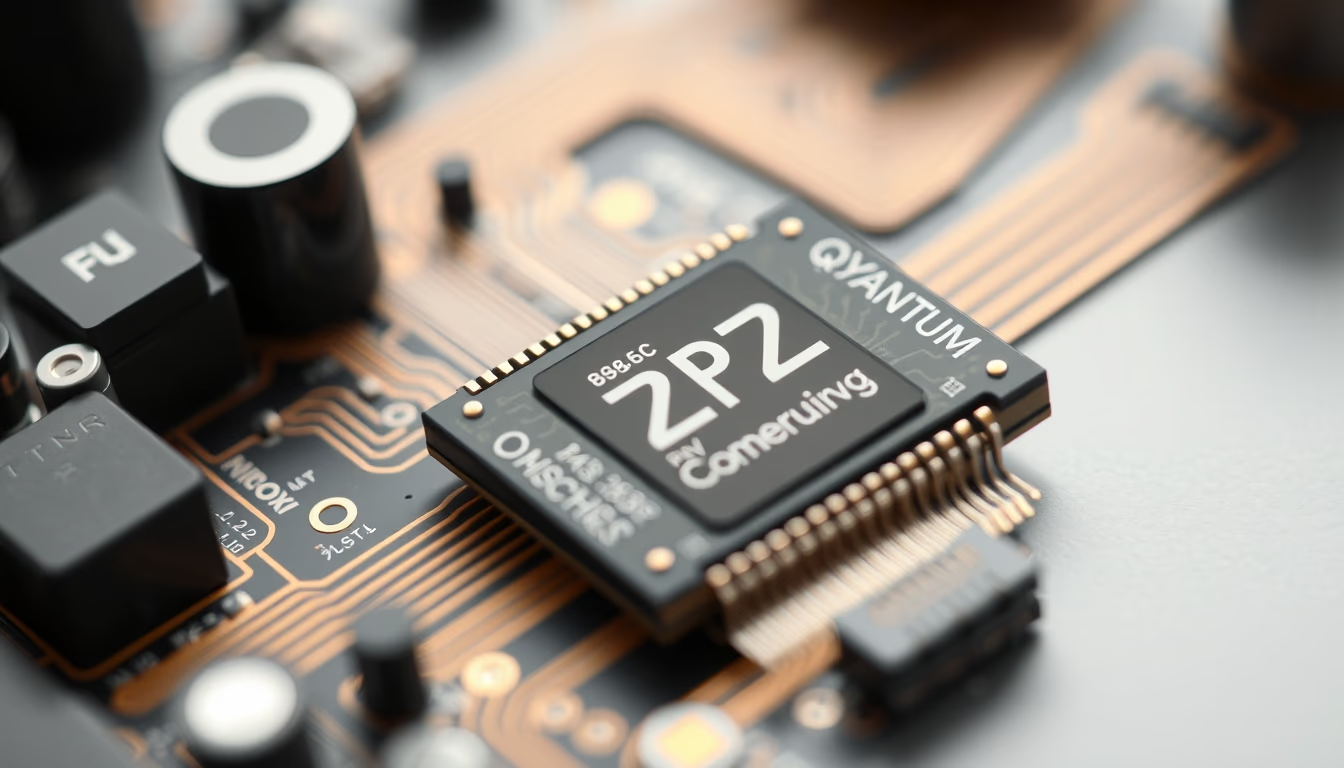
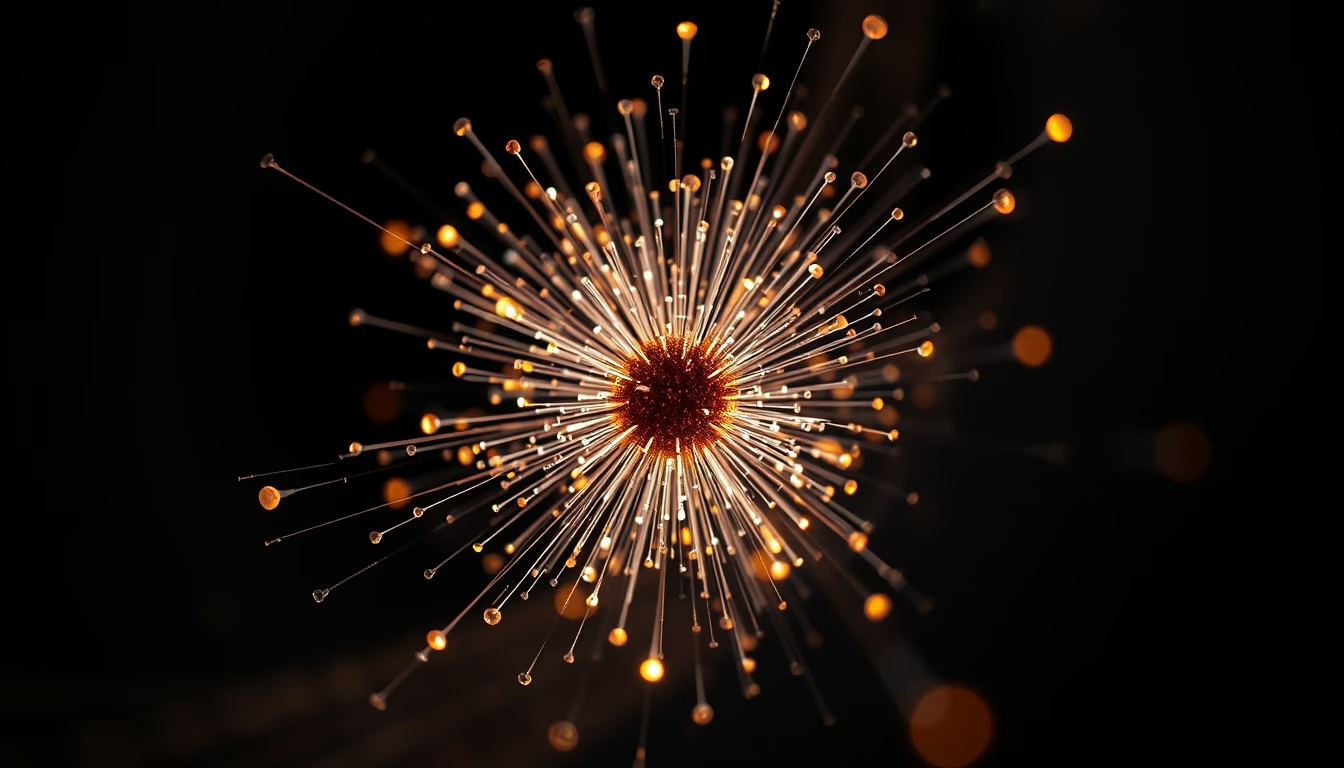
Some elements in the periodic table glow due to luminescence, a phenomenon that occurs through fluorescence, phosphorescence, or radioactivity.
About this subject
In the periodic table, several elements exhibit the ability to emit visible light without heating, a phenomenon known as luminescence. This glow can be classified into fluorescence (immediate emission after light absorption), phosphorescence (delayed emission), and chemiluminescence (emission from a chemical reaction). Elements such as white phosphorus (P) glow in the dark due to chemiluminescence, slowly oxidizing upon contact with air. Radon (Rn) and radium (Ra) emit light through radioactive decay, exciting neighboring atoms.
Noble gases like neon (Ne), argon (Ar), krypton (Kr), and xenon (Xe) glow brightly when subjected to electrical discharges, a principle used in fluorescent lamps and signage. Each gas produces a characteristic color: neon emits reddish-orange light, while argon produces bluish tones. Additionally, rare earth elements such as europium (Eu) and terbium (Tb) are essential in phosphors for screens and LEDs, converting ultraviolet radiation into visible light.
Luminescence also has historical importance: zinc sulfide (ZnS) doped with copper was used in early watch dials that glowed in the dark. Today, compounds based on aluminum, strontium, and calcium produce long-lasting photoluminescent pigments, applied in safety signage. It is important to note that luminescence is not a general property of elements, but rather of specific isotopes or compounds, influenced by electronic structure and material purity.
Frequently Asked Questions
Why do some elements glow in the dark?
Some elements glow due to luminescence, which can be caused by chemical reactions (as in white phosphorus), radioactive decay (as in radium), or electronic excitation by light or electricity (as in noble gases).
Is the luminescence of elements dangerous?
It depends on the element. White phosphorus is toxic and flammable, while radium is radioactive and hazardous. Modern photoluminescent pigments based on strontium and aluminum are safe and non-toxic.
Which elements are used in neon lights?
Neon (Ne) produces reddish-orange light, argon (Ar) blue, krypton (Kr) green, and xenon (Xe) blue-purple. Gas mixtures and phosphor coatings produce other colors.
Direct URL
https://pub-c7d6a6ea828543ac903a74a341ccb2e1.r2.dev/imagens/periodic-table-elements-glow-film-grain-authentic-p6.avifHow to credit
Include a visible link back to UtilizAí. Copy one of the snippets below:
<a href="https://xn--utiliza-eza.com/en/midia/imagens/periodic-table-elements-glow-film-grain-authentic-p6">Periodic table elements glow</a> by <a href="https://xn--utiliza-eza.com">UtilizAí</a>, licensed under <a href="https://creativecommons.org/licenses/by/4.0/">CC BY 4.0</a>.
[Periodic table elements glow](https://xn--utiliza-eza.com/en/midia/imagens/periodic-table-elements-glow-film-grain-authentic-p6) by [UtilizAí](https://xn--utiliza-eza.com), CC BY 4.0
License: CC-BY-4.0