Periodic table elements glow
1344×768 · AVIF · CC BY 4.0
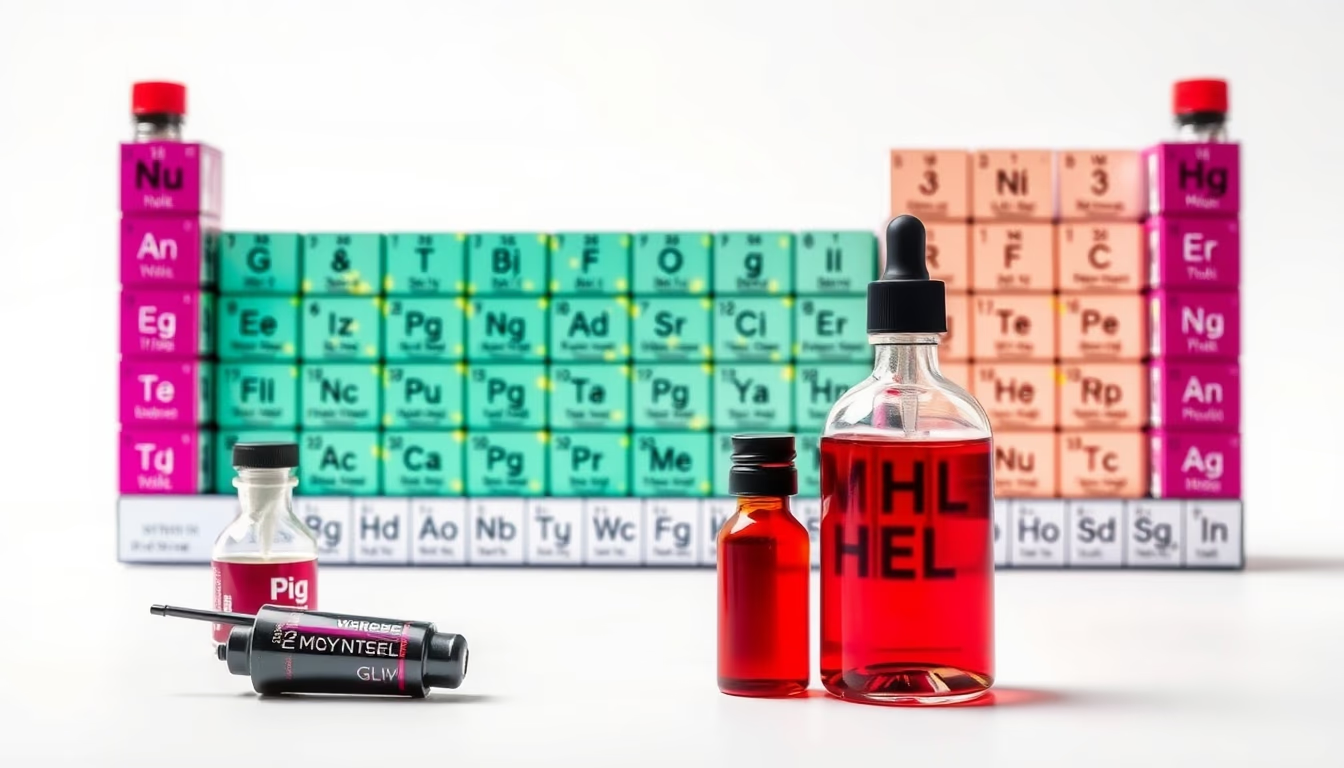
Chemical elements that glow in the dark reveal fascinating properties of matter, from phosphorescence to radioactivity of heavy metals.
About this subject
The ability of a chemical element to emit visible light without being heated is associated with phenomena such as luminescence and radioactivity. White phosphorus, for example, oxidizes slowly in air and emits a pale green glow, a process known as chemiluminescence. Radioactive elements like radium and plutonium emit light due to the excitation of neighboring atoms by alpha or beta particles, generating scintillation. In the periodic table, f-block elements (lanthanides and actinides) are particularly prone to luminescence when doped into crystals, such as europium in television screens and terbium in fluorescent lamps.
Luminescence is also linked to electronic structure: certain transition metal compounds, like zinc sulfide activated with copper, store light energy and release it slowly (phosphorescence). This is used in 'glow-in-the-dark' stickers and safety signs. Tritium, a radioactive isotope of hydrogen, is mixed with phosphors to create self-powered light sources in watches and weapon sights, requiring no electricity.
Interestingly, the glow of some elements is not merely aesthetic: spectral analysis of the emitted light allows identification of the composition of stars and minerals. Every element on the periodic table has a unique emission spectrum, like a fingerprint. Laboratories use this property to detect traces of elements in samples, a technique called atomic emission spectroscopy.
In popular culture, images of glowing elements evoke both the danger of radiation and the magic of chemistry. Science museums often display fluorescent mineral samples under UV light, showing how the periodic table comes alive with vibrant colors that reveal its atomic structure.
Frequently Asked Questions
Why do some chemical elements glow in the dark?
The glow can occur due to luminescence (cold light emission) or radioactivity. In luminescence, excited electrons return to the ground state releasing photons. In radioactivity, energetic particles excite neighboring atoms, which then emit light.
Which element is most famous for glowing in the dark?
White phosphorus is famous for its chemiluminescence, but radium (historically used in watch dials) and tritium (in self-powered light sources) are classic examples.
Is the glow from radioactive elements dangerous?
Yes, the radioactivity causing the glow can be harmful. Radium, for instance, emits alpha radiation that damages biological tissues if ingested or inhaled, which led to its restricted use.
Direct URL
https://pub-c7d6a6ea828543ac903a74a341ccb2e1.r2.dev/imagens/periodic-table-elements-glow-commercial-product-photography-p1.avifHow to credit
Include a visible link back to UtilizAí. Copy one of the snippets below:
<a href="https://xn--utiliza-eza.com/en/midia/imagens/periodic-table-elements-glow-commercial-product-photography-p1">Periodic table elements glow</a> by <a href="https://xn--utiliza-eza.com">UtilizAí</a>, licensed under <a href="https://creativecommons.org/licenses/by/4.0/">CC BY 4.0</a>.
[Periodic table elements glow](https://xn--utiliza-eza.com/en/midia/imagens/periodic-table-elements-glow-commercial-product-photography-p1) by [UtilizAí](https://xn--utiliza-eza.com), CC BY 4.0
License: CC-BY-4.0