Pencil sharpener vintage
1344×768 · AVIF · CC BY 4.0
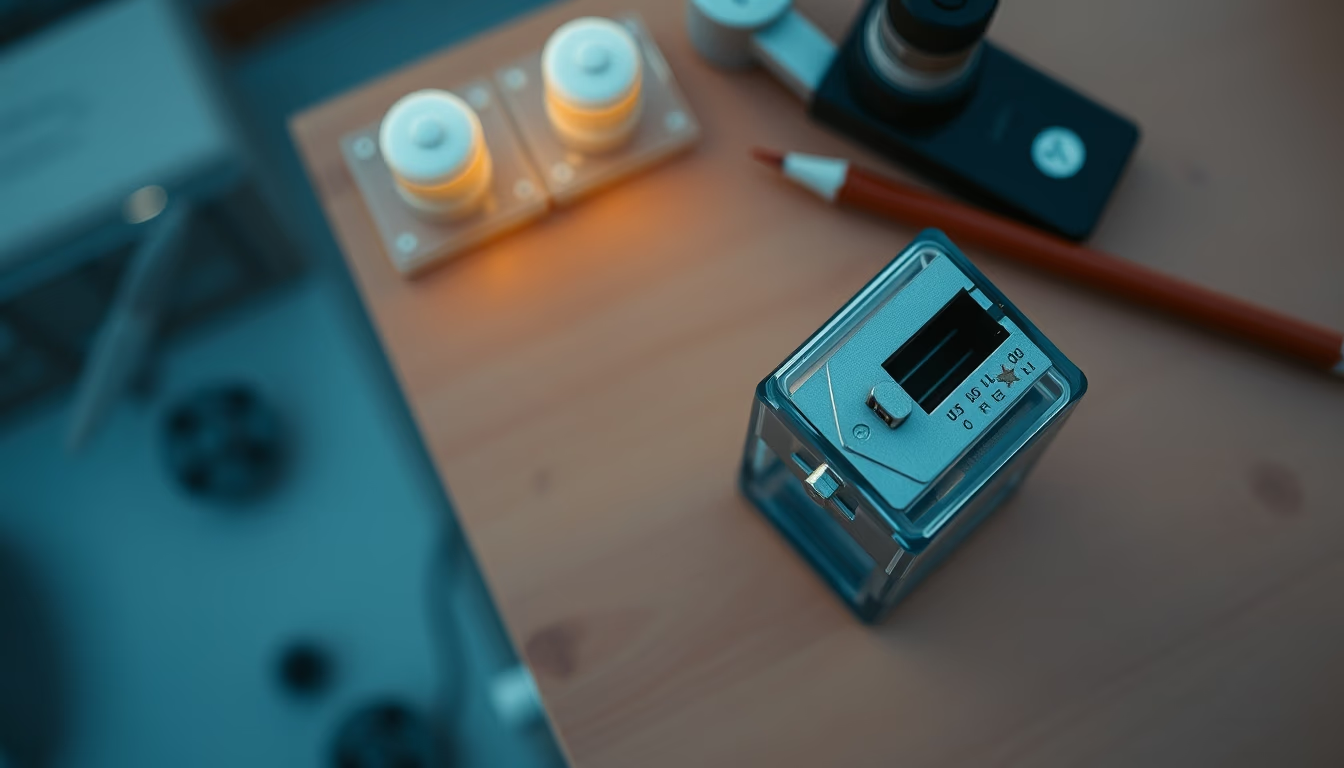
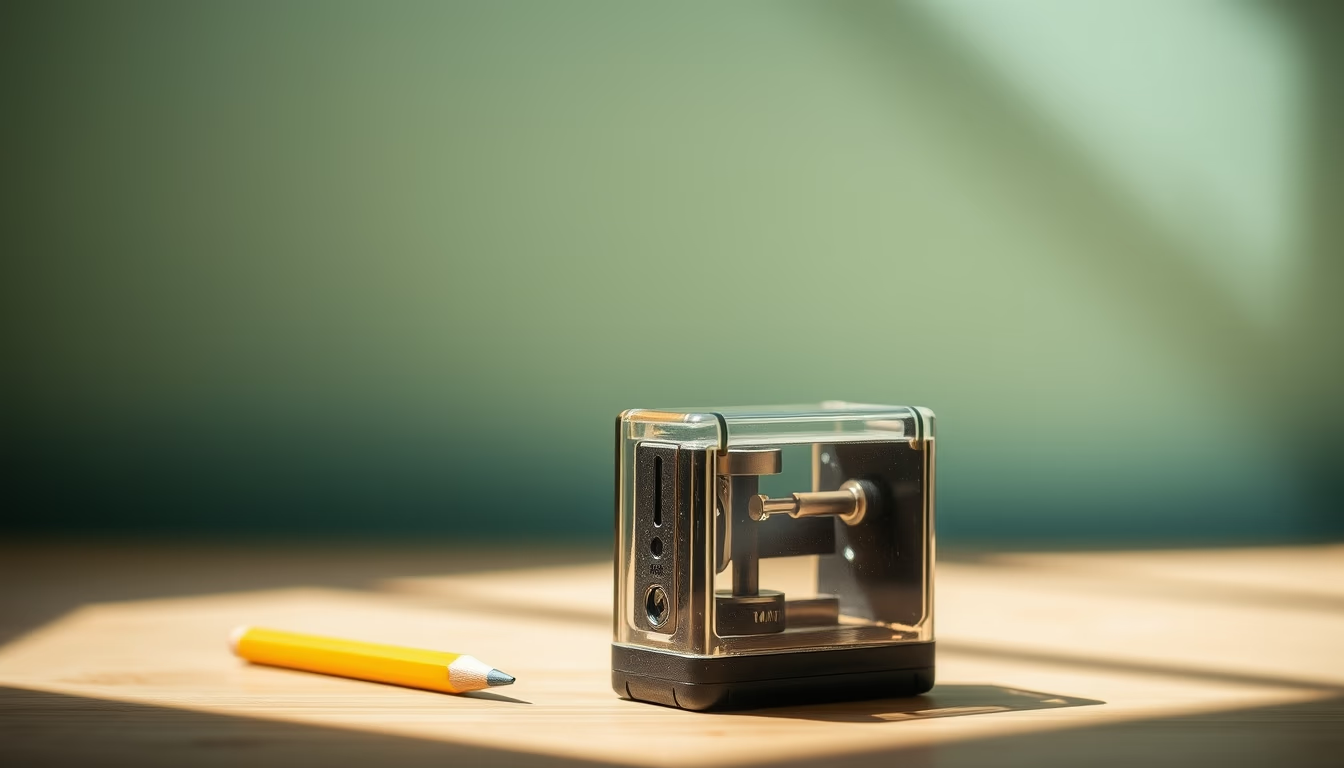
Vintage pencil sharpeners: design and functionality objects that marked an era in offices and schools.
About this subject
The pencil sharpener, a seemingly simple device, has a rich history dating back to the 19th century. Before its invention, people used knives or blades to sharpen pencils, a process that was imprecise and hazardous. The Frenchman Bernard Lassimonne patented the first sharpener in 1828, but it was John Lee Love, an African American inventor, who created the portable 'Love Sharpener' in 1897, featuring a container for shavings. Vintage sharpeners, particularly those from the late 1800s to mid-1900s, are now collector's items valued for their design, materials, and mechanical ingenuity.
Common vintage types include manual sharpeners mounted on desks or walls, operated by a crank that rotates a cylindrical blade. Brands like Apsco, Boston, and Panasonic produced sturdy models, often enameled in bright colors or set on wooden bases. Pocket sharpeners, such as the Lovett model, were compact and crafted from chromed metal or plastic. Designs range from simple geometric shapes to whimsical characters, like those made by the Empire Pencil Company. Some sharpeners were even integrated into combination tools, featuring erasers or compasses.
Culturally, vintage sharpeners represent more than utility; they embody the evolution of industrial design and the material culture of education and office work. In schools, sharpening a pencil was a daily ritual, and wall-mounted sharpeners became social gathering spots. Today, these artifacts are sought by collectors of vintage office supplies, retro design enthusiasts, and those nostalgic for an era of durable goods. Rare models, such as the globe-shaped sharpener or the automatic one that stops when the point is perfect, can fetch hundreds of dollars at auction.
Frequently Asked Questions
How does a vintage manual pencil sharpener work?
The manual sharpener has a hole where the pencil is inserted. Turning the crank rotates a cylindrical blade that shaves the wood around the graphite, forming a conical point. Shavings fall into an internal compartment.
What materials were used in vintage pencil sharpeners?
Vintage sharpeners were made primarily of metal (iron, steel, brass, chrome), wood (like oak or walnut), and from the 1930s, plastics such as Bakelite or celluloid. Blades were tempered steel.
Why are vintage pencil sharpeners collectible?
Due to their unique design, durability, and historical value. Rare models, specific colors, or iconic brands (Apsco, Boston) are highly prized. Condition, rarity, and original packaging influence price.
Direct URL
https://pub-c7d6a6ea828543ac903a74a341ccb2e1.r2.dev/imagens/pencil-sharpener-vintage-aerial-drone-shot-fresh16.avifHow to credit
Include a visible link back to UtilizAí. Copy one of the snippets below:
<a href="https://xn--utiliza-eza.com/en/midia/imagens/pencil-sharpener-vintage-aerial-drone-shot-fresh16">Pencil sharpener vintage</a> by <a href="https://xn--utiliza-eza.com">UtilizAí</a>, licensed under <a href="https://creativecommons.org/licenses/by/4.0/">CC BY 4.0</a>.
[Pencil sharpener vintage](https://xn--utiliza-eza.com/en/midia/imagens/pencil-sharpener-vintage-aerial-drone-shot-fresh16) by [UtilizAí](https://xn--utiliza-eza.com), CC BY 4.0
License: CC-BY-4.0