Pearl strand south sea natural
1344×768 · AVIF · CC BY 4.0
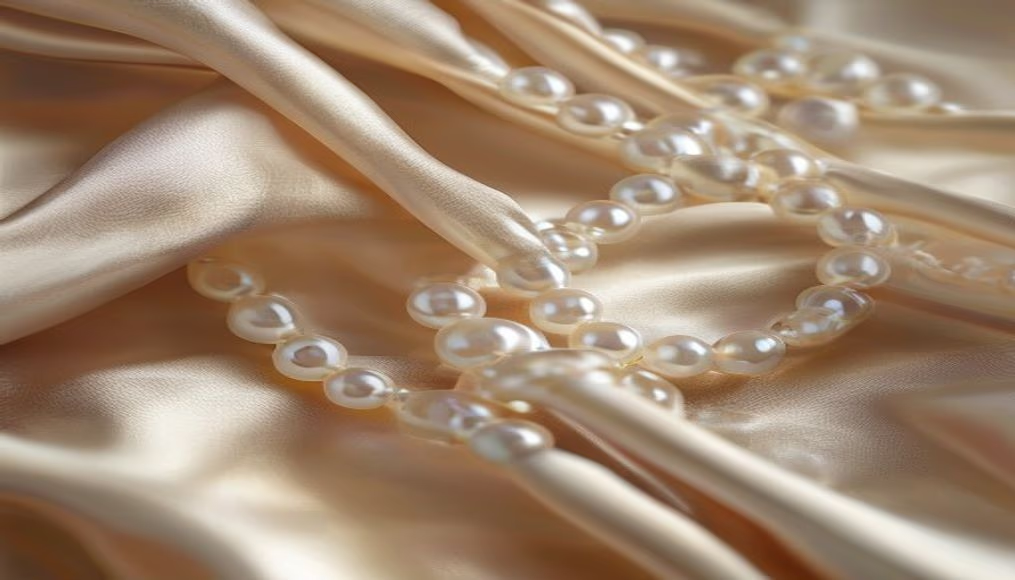
Natural South Sea pearl strand, a rare and valuable gem cultivated in tropical waters of Australia and Indonesia.
About this subject
Natural South Sea pearls are among the most coveted gems in the world, renowned for their large size, silky luster, and colors ranging from white to golden. Unlike freshwater pearls, these gems are cultivated in Pinctada maxima oysters, which can produce pearls up to 20 millimeters in diameter. The cultivation process is long and delicate, taking two to four years for a pearl to reach its ideal size, contributing to its rarity and high market value.
Originating mainly from the northern coast of Australia, Indonesia, and the Philippines, South Sea pearls are grown in marine farms that require clean, warm waters with low pollution. Pinctada maxima, the largest pearl-producing oyster in the world, is highly sensitive to environmental changes, making production even more challenging. Each pearl is unique in shape, color, and luster, with spherical and golden specimens being the most valued. The Asian luxury market, especially in Japan and China, is the primary consumer of these gems.
In jewelry, a South Sea pearl strand is a symbol of status and timeless elegance. Unlike freshwater cultured pearls, which are often smaller and more affordable, South Sea pearls stand out for their thick nacre, which imparts an intense and lasting shine. Assembling such a necklace can take months, as pearls must be carefully matched in color, size, and shape. Perfectly uniform sets are extremely rare and fetch exorbitant prices at auctions.
Culturally, South Sea pearls have been associated with royalty and high society since the 19th century when they were introduced to the West by European traders. In Australia, the pearl industry is a century-old tradition, with entire towns dedicated to cultivation in regions like Broome and Darwin. Today, sustainability is a growing focus: certified farms adopt practices that respect the marine ecosystem, ensuring the continuity of this ancient art for future generations.
Frequently Asked Questions
What is the difference between South Sea pearls and freshwater pearls?
South Sea pearls are cultivated in saltwater oysters (Pinctada maxima) and are typically larger (10-20 mm) with thicker nacre and more intense luster. Freshwater pearls are produced in mussels, are smaller and more affordable, and often have less spherical shapes.
Why are South Sea pearls so expensive?
They are rare due to the long cultivation time (2-4 years), the sensitivity of the oysters, and the low yield of high-quality pearls. Additionally, their exceptional size and luster make them highly sought after in the luxury market.
How can you identify a genuine natural South Sea pearl?
A genuine pearl feels slightly gritty when rubbed against teeth, has a deep luster, and displays natural colors (white, silver, golden). Certification from a gemological laboratory, such as GIA, is essential to confirm origin and authenticity.
Direct URL
https://pub-c7d6a6ea828543ac903a74a341ccb2e1.r2.dev/imagens/pearl-strand-south-sea-natural-silk-drapery-background-luxo1.avifHow to credit
Include a visible link back to UtilizAí. Copy one of the snippets below:
<a href="https://xn--utiliza-eza.com/en/midia/imagens/pearl-strand-south-sea-natural-silk-drapery-background-luxo1">Pearl strand south sea natural</a> by <a href="https://xn--utiliza-eza.com">UtilizAí</a>, licensed under <a href="https://creativecommons.org/licenses/by/4.0/">CC BY 4.0</a>.
[Pearl strand south sea natural](https://xn--utiliza-eza.com/en/midia/imagens/pearl-strand-south-sea-natural-silk-drapery-background-luxo1) by [UtilizAí](https://xn--utiliza-eza.com), CC BY 4.0
License: CC-BY-4.0