Patch cable bundle
1344×768 · AVIF · CC BY 4.0
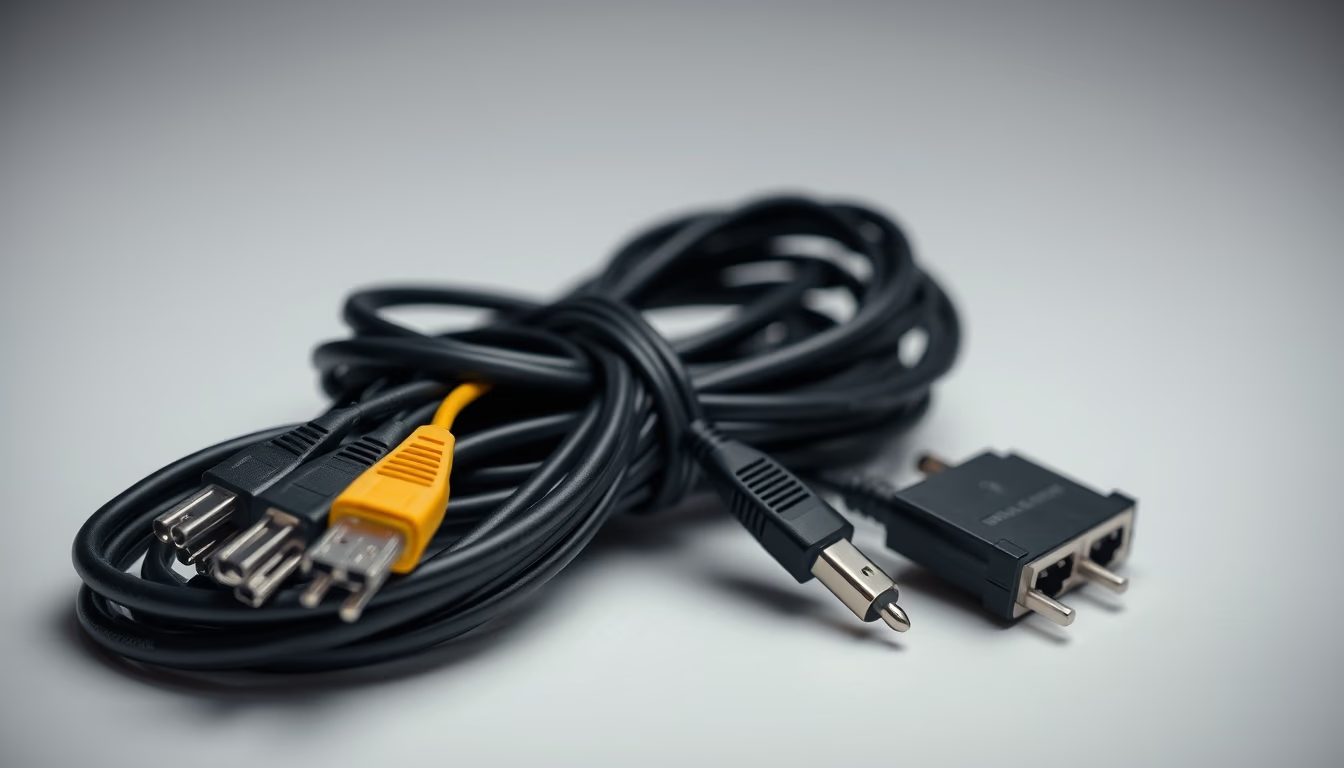
Learn what patch cables are, network cables used to connect devices in local networks and data centers.
About this subject
Patch cables, also known as network cables or patch cords, are twisted pair cables used to connect network devices such as computers, switches, routers, and servers. They are essential in local area networks (LAN) and data centers, where reliability and data transmission speed are critical. The name "patch" originates from the idea of a temporary or quick connection, but today they are used permanently in many installations.
These cables follow standards like Cat5e, Cat6, and Cat6a, which determine the maximum speed and supported frequency. Cat5e supports up to 1 Gbps at 100 MHz, while Cat6a reaches 10 Gbps at 500 MHz. Construction includes four twisted pairs of copper wires to reduce electromagnetic interference, plus RJ45 connectors at each end. Patch cables are made in various lengths, from 0.5 meter to dozens of meters, and in different colors (blue, gray, yellow, red) to help with visual cable management.
In data centers, high-quality patch cables are crucial to prevent packet loss and ensure low latency. A common feature is the locking tab on the RJ45 connector that prevents accidental disconnection. The modularity of patch cables allows quick network reconfiguration by swapping or adding connections without special tools. With the rise of fiber optics, some patch cables now use fiber connectors, but copper twisted pair remains dominant for short distances due to cost and ease of use.
Frequently Asked Questions
What is the difference between Cat5e and Cat6 patch cables?
Cat5e supports up to 1 Gbps at 100 MHz, while Cat6 supports up to 10 Gbps at 250 MHz (over short distances up to 55 meters). Cat6 has stricter specifications for crosstalk and noise, making it better for Gigabit Ethernet networks.
Can I use a patch cable to connect two computers directly?
Yes, but you need a crossover cable or a switch/router/hub. Standard patch cables are straight-through and connect different devices (e.g., PC to switch). Many modern devices support Auto-MDIX, which automatically adjusts the pinout.
What is the maximum length of a patch cable without signal loss?
For twisted pair cables, the theoretical limit is 100 meters (including internal patch cords). Beyond that, signal degradation may occur. For longer distances, use intermediate switches or fiber optics.
Direct URL
https://pub-c7d6a6ea828543ac903a74a341ccb2e1.r2.dev/imagens/patch-cable-bundle-studio-still-life-fresh10.avifHow to credit
Include a visible link back to UtilizAí. Copy one of the snippets below:
<a href="https://xn--utiliza-eza.com/en/midia/imagens/patch-cable-bundle-studio-still-life-fresh10">Patch cable bundle</a> by <a href="https://xn--utiliza-eza.com">UtilizAí</a>, licensed under <a href="https://creativecommons.org/licenses/by/4.0/">CC BY 4.0</a>.
[Patch cable bundle](https://xn--utiliza-eza.com/en/midia/imagens/patch-cable-bundle-studio-still-life-fresh10) by [UtilizAí](https://xn--utiliza-eza.com), CC BY 4.0
License: CC-BY-4.0