Patch cable bundle
1344×768 · AVIF · CC BY 4.0
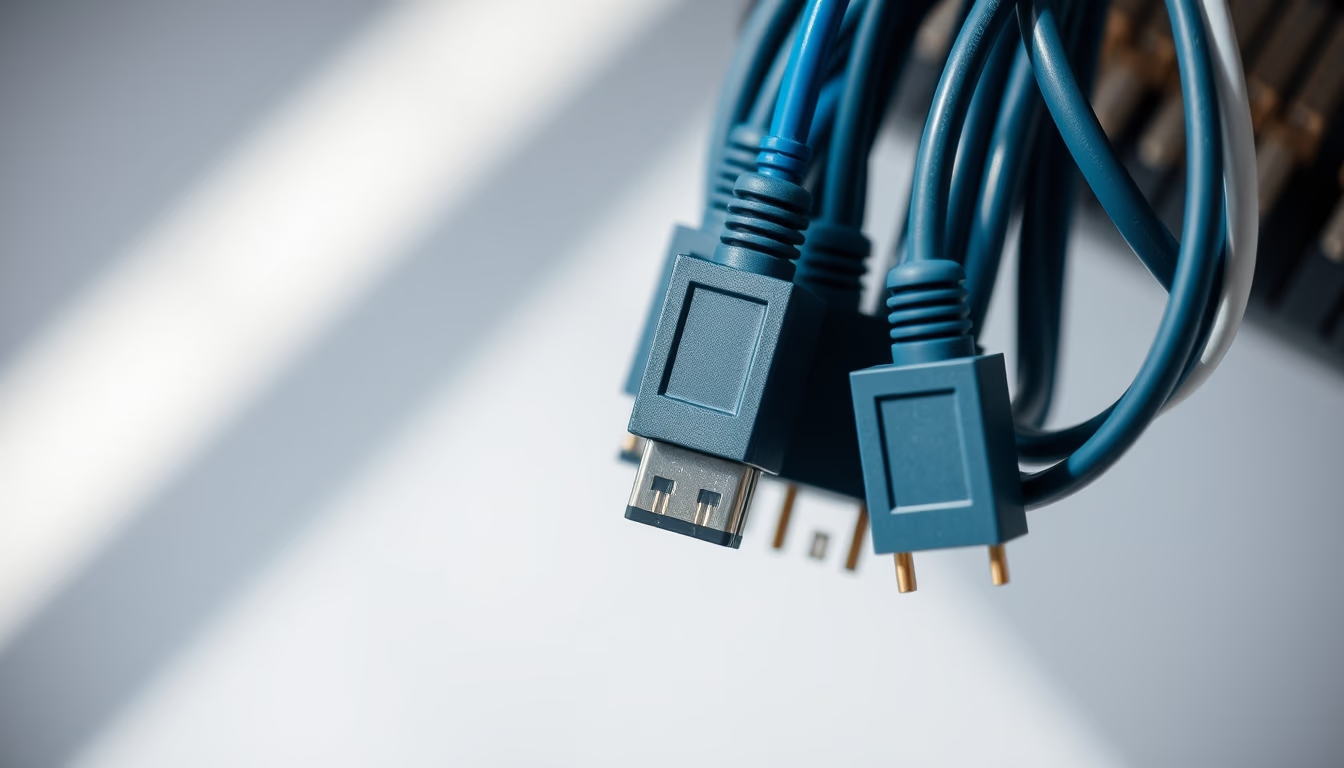
A bundle of network patch cables with colorful RJ45 connectors, essential for connecting devices in local area networks and data centers.
About this subject
Patch cables are short, flexible network cables typically terminated with RJ45 connectors on both ends. Unlike solid core installation cables, patch cables use stranded conductors for increased flexibility and resistance to repeated bending, making them easier to manage in racks and patch panels. They serve as the final link between structured cabling infrastructure and active devices such as computers, switches, and routers.
Available in categories like Cat5e, Cat6, Cat6a, and Cat7, each supports different speeds and frequencies. For instance, a Cat6 patch cable can transmit up to 10 Gbps over distances up to 55 meters, while Cat6a achieves the same 10 Gbps up to 100 meters. Shielding (STP, FTP, S/FTP) is common in environments with electromagnetic interference, such as hospitals and factories, while unshielded UTP cables are standard in offices.
Cable color is not globally standardized, but blue is often used for data networks, red for emergency or Power over Ethernet (PoE), and yellow for crossover cables (though modern switches have made crossover obsolete). In Brazil, ABNT NBR 14565 guides structured cabling, recommending certified patch cords to ensure performance and avoid signal loss.
A practical note: the maximum length for a patch cable per TIA/EIA-568 is 5 meters when used in a telecommunications channel, but they can be purchased up to 30 meters for direct connections. Typical applications include connecting computers to wall outlets or linking switches in a patch panel, making them indispensable in any server room or home office.
Frequently Asked Questions
What is the difference between a patch cable and a regular network cable?
Patch cables are flexible with stranded conductors, designed for short connections between devices and panels. Regular network cables (solid core) are rigid and used for permanent installations inside walls or conduits.
Can I use a Cat6 patch cable to connect my computer to a router?
Yes, Cat6 patch cables are ideal for connecting computers to routers, switches, or wall outlets. They support speeds up to 10 Gbps over short distances.
What does the blue color on patch cables mean?
There is no universal standard, but blue is widely used for data network (Ethernet) cables. Red may indicate PoE or emergency, and yellow was common for crossover cables.
Direct URL
https://pub-c7d6a6ea828543ac903a74a341ccb2e1.r2.dev/imagens/patch-cable-bundle-magazine-editorial-fresh3.avifHow to credit
Include a visible link back to UtilizAí. Copy one of the snippets below:
<a href="https://xn--utiliza-eza.com/en/midia/imagens/patch-cable-bundle-magazine-editorial-fresh3">Patch cable bundle</a> by <a href="https://xn--utiliza-eza.com">UtilizAí</a>, licensed under <a href="https://creativecommons.org/licenses/by/4.0/">CC BY 4.0</a>.
[Patch cable bundle](https://xn--utiliza-eza.com/en/midia/imagens/patch-cable-bundle-magazine-editorial-fresh3) by [UtilizAí](https://xn--utiliza-eza.com), CC BY 4.0
License: CC-BY-4.0