Patch cable bundle
1344×768 · AVIF · CC BY 4.0
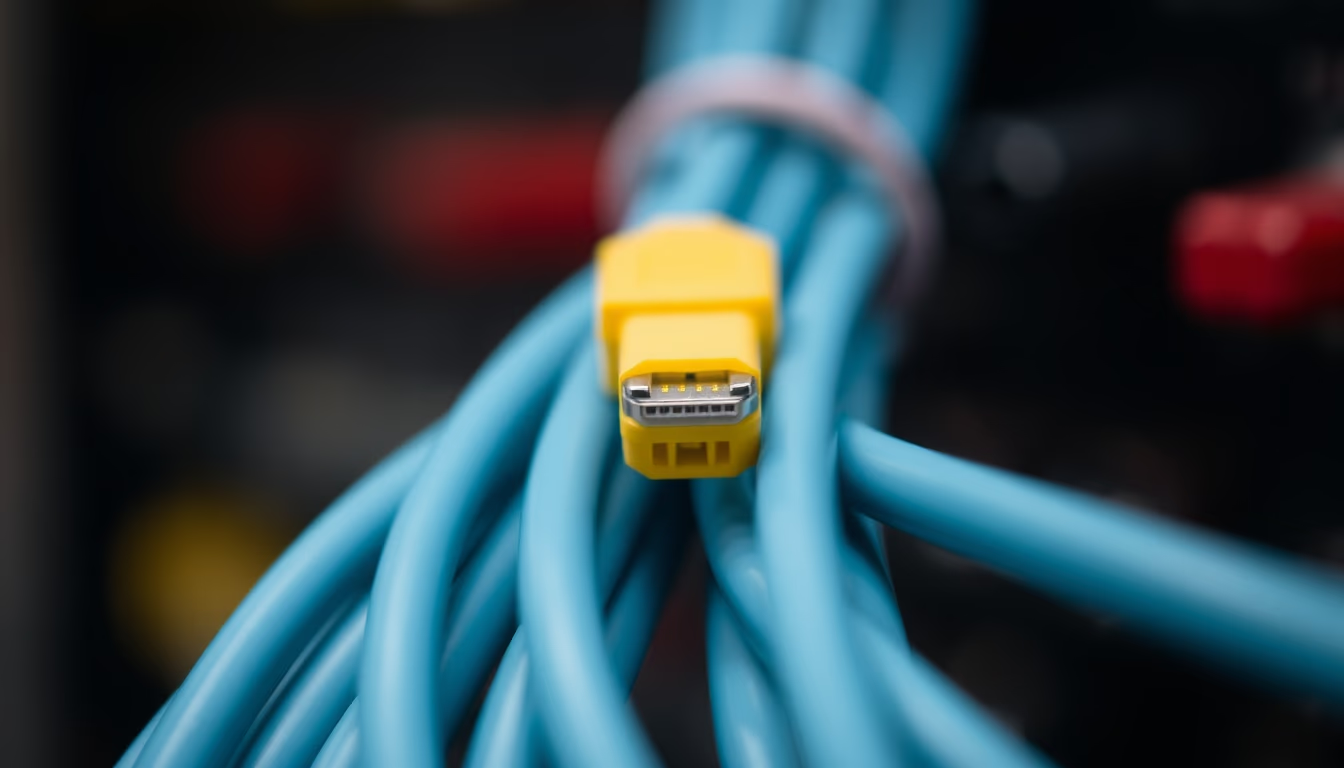
Macro closeup of a patch cable bundle, revealing connector details and cable braiding.
About this subject
Patch cables, also known as network patch leads or interconnect cables, are short lengths of network cable with connectors on both ends. They are widely used in data centers, offices, and homes to connect network devices such as computers, switches, routers, and patch panels. The most common standard is twisted pair Ethernet cable, categorized as Cat5e, Cat6, Cat6a, or Cat7, each with different frequency and transmission speed specifications. Connectors are typically RJ45, featuring eight pins and following either T568A or T568B wiring standards.
The widespread use of patch cables is due to the flexibility they offer in network organization. In server racks, cables are often bundled to facilitate management and improve airflow. The cable seen in macro closeup is likely Cat6, with solid or stranded copper conductors, plastic insulation, and an outer shield that reduces electromagnetic interference. Cable color may indicate a specific function, such as blue for data networks, yellow for wireless networks, or red for IP cameras.
Interestingly, the term "patch cable" originates from "patch" (a temporary connection), but today they are permanent in network infrastructure. Proper bundling, as in the image, is crucial to avoid sharp bends that can degrade signal quality. Industry standards such as TIA/EIA-568 ensure interoperability. In test laboratories, these cables undergo validation of return loss, NEXT, and PSNEXT before certification.
Frequently Asked Questions
What is the difference between a patch cable and a regular network cable?
Patch cables are network cables with connectors already attached at both ends, typically in standard lengths (0.5m, 1m, 2m etc.). Regular network cables are sold in bulk rolls for in-wall installation and require crimping of connectors. Patch cables are flexible and used for short connections between devices.
How can I identify the category of a patch cable (Cat5e, Cat6 etc.)?
The category is usually printed on the outer jacket, e.g., "Cat6" or "Cat5e." Additionally, Cat6 connectors often have internal plastic separators between the pairs. Supported speeds vary: Cat5e up to 1 Gbps, Cat6 up to 10 Gbps over short distances.
Why are patch cables bundled together?
Bundling organizes cables in racks, improves airflow, and eases identification. The technique uses velcro or cable ties to keep cables together, preventing tangles and reducing the risk of interference between power and data cables.
Direct URL
https://pub-c7d6a6ea828543ac903a74a341ccb2e1.r2.dev/imagens/patch-cable-bundle-macro-closeup-fresh0.avifHow to credit
Include a visible link back to UtilizAí. Copy one of the snippets below:
<a href="https://xn--utiliza-eza.com/en/midia/imagens/patch-cable-bundle-macro-closeup-fresh0">Patch cable bundle</a> by <a href="https://xn--utiliza-eza.com">UtilizAí</a>, licensed under <a href="https://creativecommons.org/licenses/by/4.0/">CC BY 4.0</a>.
[Patch cable bundle](https://xn--utiliza-eza.com/en/midia/imagens/patch-cable-bundle-macro-closeup-fresh0) by [UtilizAí](https://xn--utiliza-eza.com), CC BY 4.0
License: CC-BY-4.0