Patch cable bundle
1344×768 · AVIF · CC BY 4.0
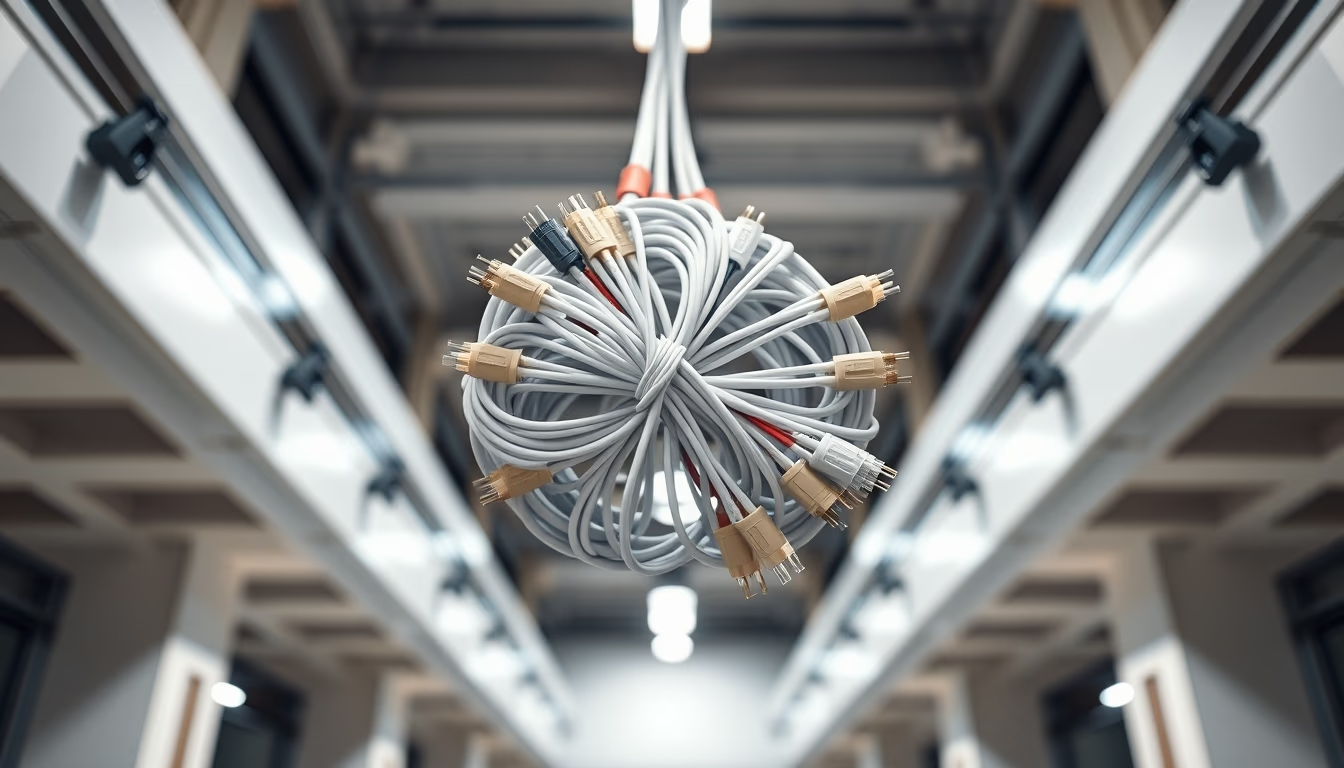
A bundle of organized patch cables, typical of IT infrastructure and data centers.
About this subject
Patch cables, also known as patch cords, are short segments of network cable with RJ45 connectors on both ends, used to connect network devices to patch panels, switches, or routers. They are essential for local area network (LAN) cabling and come in various categories such as Cat5e, Cat6, Cat6a, and Cat7, which determine bandwidth and speed, for instance, Cat6a supports up to 10 Gbps over 100 meters.
In data centers and server rooms, patch cables are often grouped into bundles color-coded to identify different connection types: blue for data network, yellow for security connections, red for critical cross-connects, and so on. This follows standards like TIA/EIA-606 for cable management, easing maintenance and troubleshooting. Bundling also improves airflow and reduces accidental disconnections.
Typical patch cable lengths range from 0.5 to 10 meters, with 1-3 meters being most common. They can be made with shielded twisted pair (STP) or unshielded twisted pair (UTP) cables. In environments with high electromagnetic interference, such as factories, shielded cables are preferred. The term "patch cable" comes from the patch panel, where cables are "patched" to establish circuits.
Besides computer networks, patch cables are used in telephone systems, CCTV, and building automation. The growing demand for high-speed enterprise networks drives the evolution to higher category cables like Cat8, supporting up to 40 Gbps. Proper bundling and labeling of cables is a recommended practice in structured cabling standards, ensuring scalability and reduced operational errors.
Frequently Asked Questions
What is the difference between a patch cable and a regular network cable?
A patch cable is a short, flexible network cable with pre-terminated RJ45 connectors, used for temporary connections or within racks. A regular network cable (bulk cable) is sold in spools without connectors and is used for horizontal cabling in walls and conduits.
Can I use a Cat6 patch cable on a Gigabit network?
Yes, Cat6 patch cables are compatible with Gigabit networks and support speeds up to 1 Gbps, as well as frequencies up to 250 MHz, surpassing the 100 MHz of Cat5e.
Why are patch cables organized in color-coded bundles?
Color coding facilitates visual identification of different network functions or segments, reducing maintenance errors and speeding up troubleshooting. It is a recommended practice in international structured cabling standards.
Direct URL
https://pub-c7d6a6ea828543ac903a74a341ccb2e1.r2.dev/imagens/patch-cable-bundle-architectural-photography-fresh7.avifHow to credit
Include a visible link back to UtilizAí. Copy one of the snippets below:
<a href="https://xn--utiliza-eza.com/en/midia/imagens/patch-cable-bundle-architectural-photography-fresh7">Patch cable bundle</a> by <a href="https://xn--utiliza-eza.com">UtilizAí</a>, licensed under <a href="https://creativecommons.org/licenses/by/4.0/">CC BY 4.0</a>.
[Patch cable bundle](https://xn--utiliza-eza.com/en/midia/imagens/patch-cable-bundle-architectural-photography-fresh7) by [UtilizAí](https://xn--utiliza-eza.com), CC BY 4.0
License: CC-BY-4.0