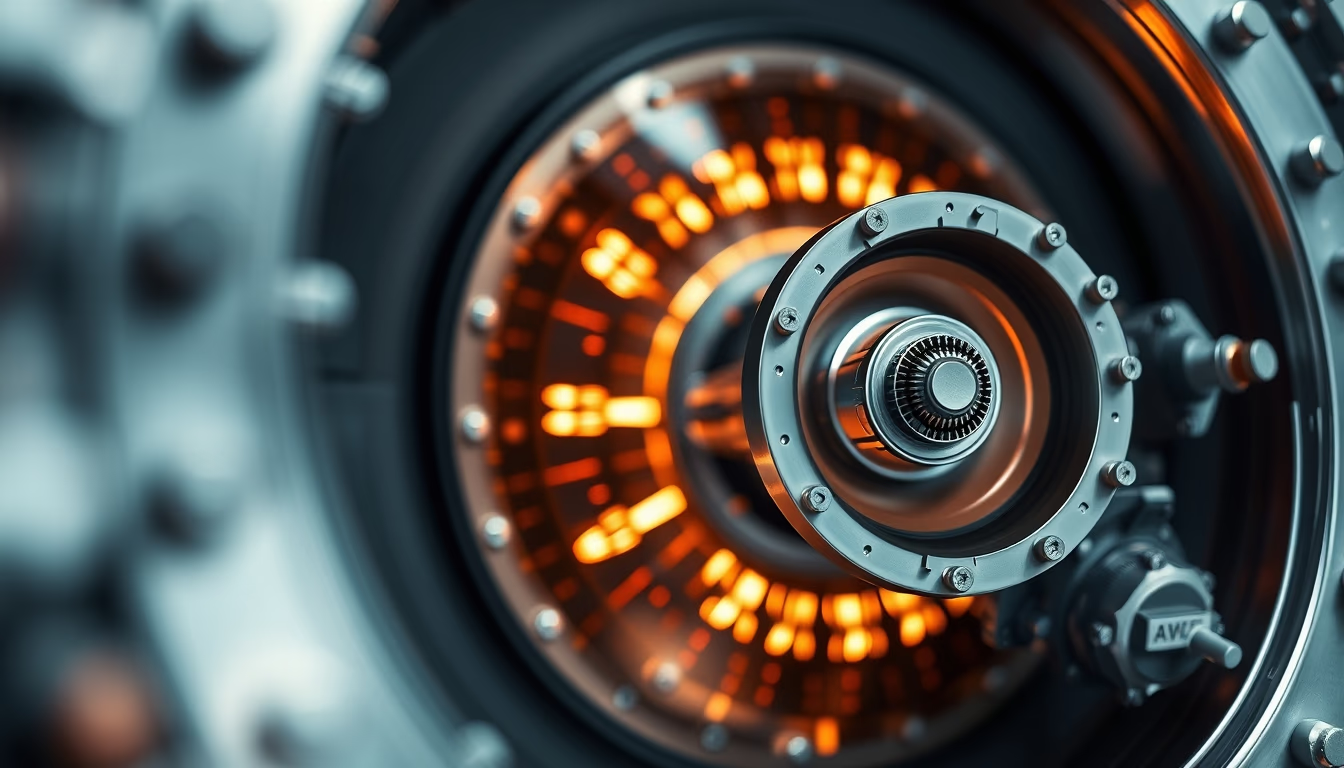
Particle accelerator interior cern
1344×768 · AVIF · CC BY 4.0
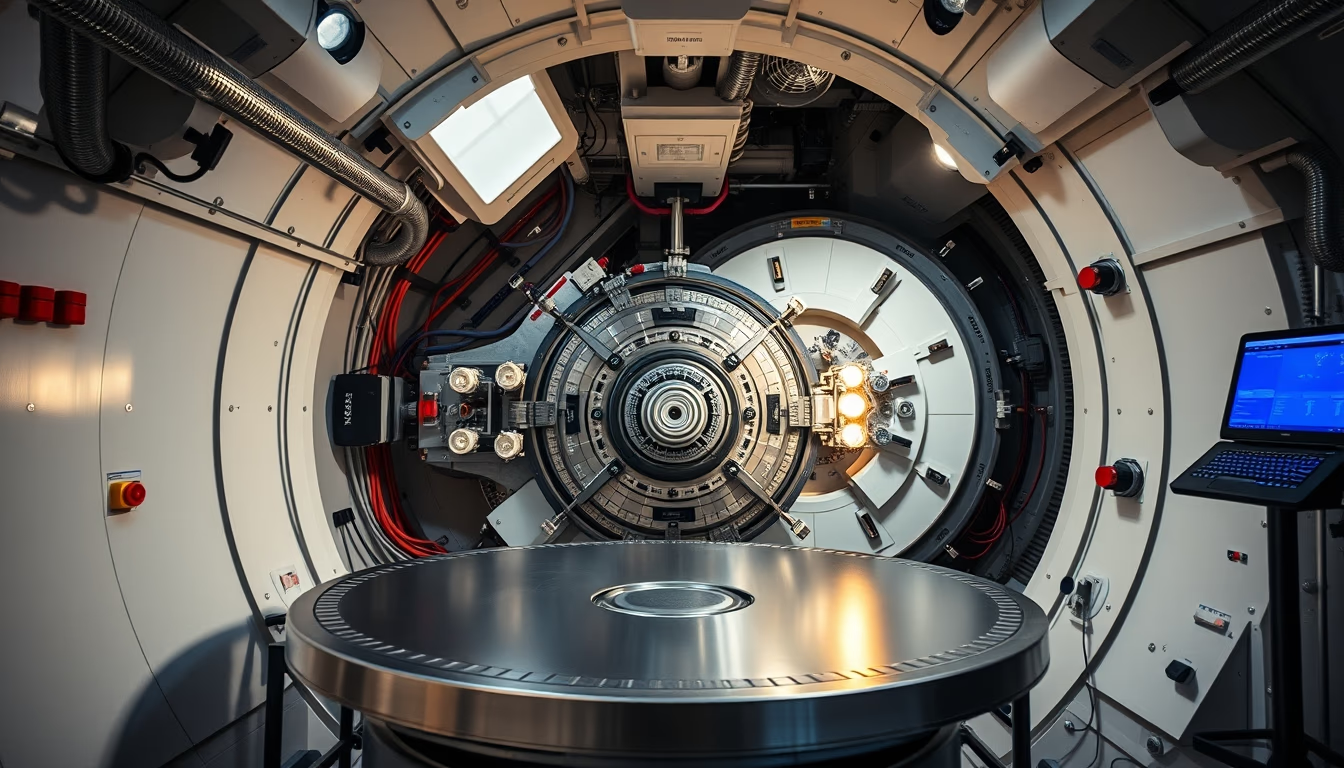
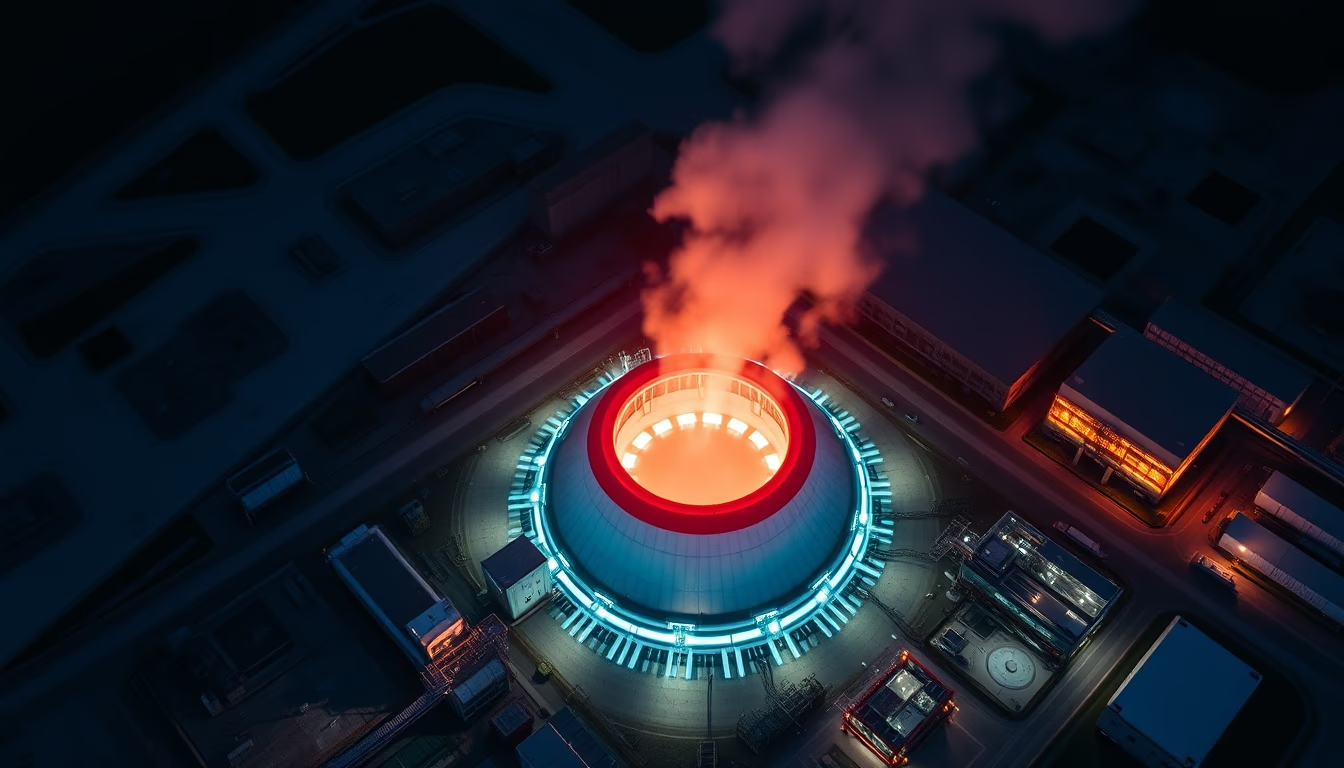
The interior of a CERN particle accelerator reveals the complexity of equipment used to study subatomic particles and the fundamental laws of the universe.
About this subject
CERN, the European Organization for Nuclear Research, houses the world's largest and most powerful particle accelerator: the Large Hadron Collider (LHC). Located on the border between France and Switzerland, the LHC is a 27-kilometer underground ring about 100 meters deep. Its interior consists of thousands of superconducting magnets, radiofrequency cavities, and detectors that accelerate protons or heavy ions to speeds near the speed of light.
The operating principle is based on accelerating particles using alternating electric fields, while magnetic fields bend their trajectories to keep them within the ring. At the LHC, particles travel in opposite beams and collide at specific points, where massive detectors such as ATLAS and CMS record the events. These collisions recreate conditions similar to those just after the Big Bang, allowing scientists to investigate dark matter, antimatter, and the origin of mass.
One of CERN's greatest discoveries is the Higgs boson, announced in 2012, which earned the Nobel Prize for Peter Higgs and François Englert. Besides the LHC, the complex includes other accelerators like the Proton Synchrotron and the Super Proton Synchrotron, which feed particles into the LHC. The interior of these machines requires ultra-high vacuum and temperatures near absolute zero to ensure the operation of the superconducting magnets.
CERN is also known for its technological impact: the World Wide Web was created there in 1989 to facilitate data sharing among scientists. Today, over 10,000 researchers from 100 countries collaborate on experiments, generating massive data volumes analyzed by a global computing grid. The interior of the accelerators, with its cables, tubes, and cooling systems, represents the precision engineering needed to expand our understanding of the cosmos.
Frequently Asked Questions
What is CERN and where is it located?
CERN is the European Organization for Nuclear Research, located on the border between France and Switzerland near Geneva. It is the world's largest particle physics laboratory.
How does the Large Hadron Collider work?
The LHC accelerates protons or ions in a 27 km ring using electric and magnetic fields. The particles collide at specific points, and detectors record the results for study.
What was CERN's main discovery?
The discovery of the Higgs boson in 2012 was a milestone, confirming the mechanism that gives mass to particles. CERN is also famous for creating the World Wide Web.
Direct URL
https://pub-c7d6a6ea828543ac903a74a341ccb2e1.r2.dev/imagens/particle-accelerator-interior-cern-studio-still-life-p10.avifHow to credit
Include a visible link back to UtilizAí. Copy one of the snippets below:
<a href="https://xn--utiliza-eza.com/en/midia/imagens/particle-accelerator-interior-cern-studio-still-life-p10">Particle accelerator interior cern</a> by <a href="https://xn--utiliza-eza.com">UtilizAí</a>, licensed under <a href="https://creativecommons.org/licenses/by/4.0/">CC BY 4.0</a>.
[Particle accelerator interior cern](https://xn--utiliza-eza.com/en/midia/imagens/particle-accelerator-interior-cern-studio-still-life-p10) by [UtilizAí](https://xn--utiliza-eza.com), CC BY 4.0
License: CC-BY-4.0