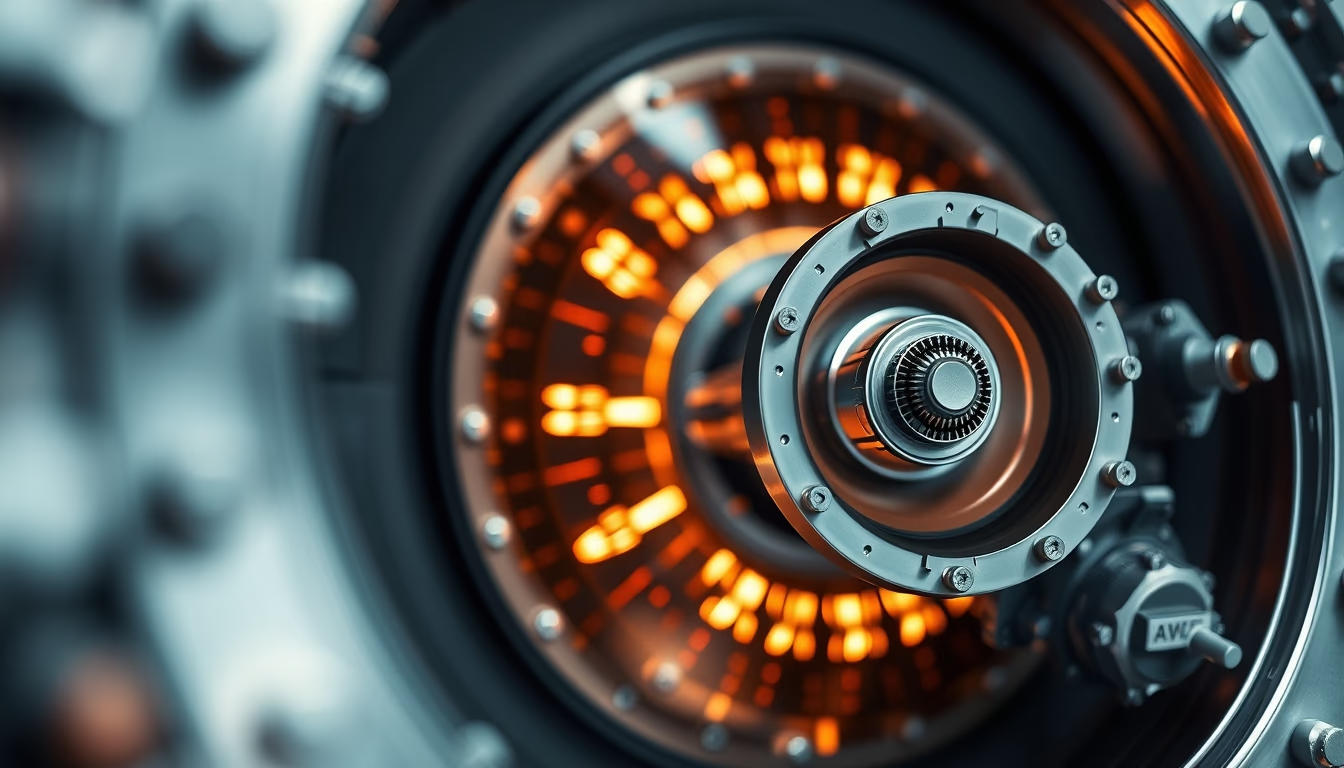
Particle accelerator interior cern
1344×768 · AVIF · CC BY 4.0
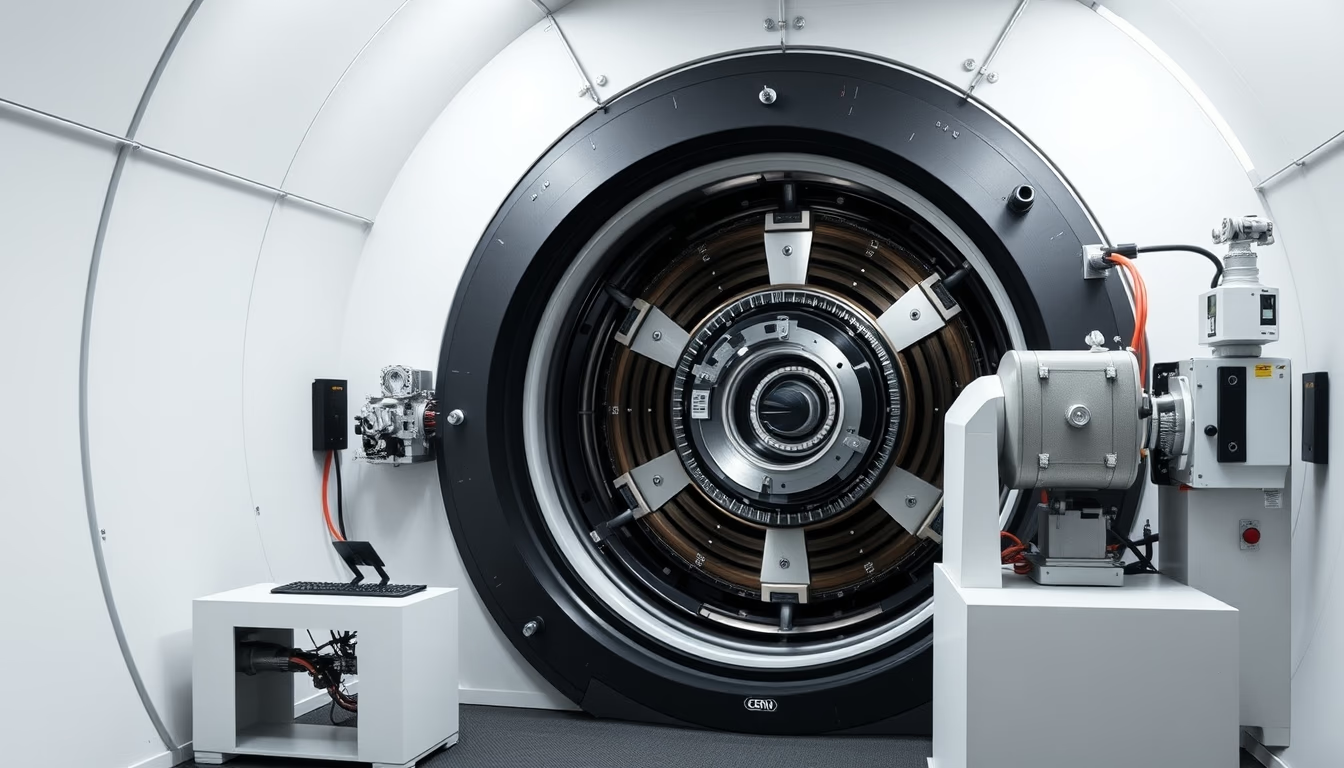
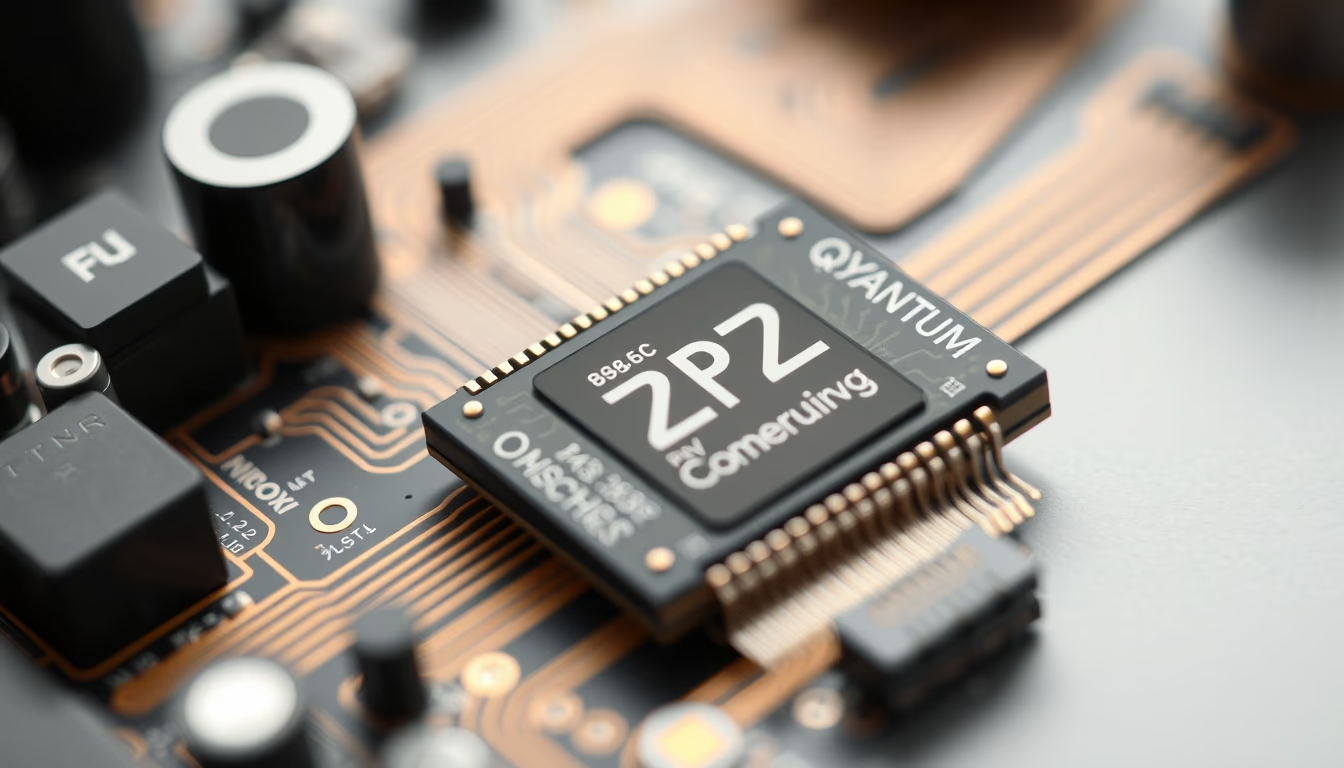
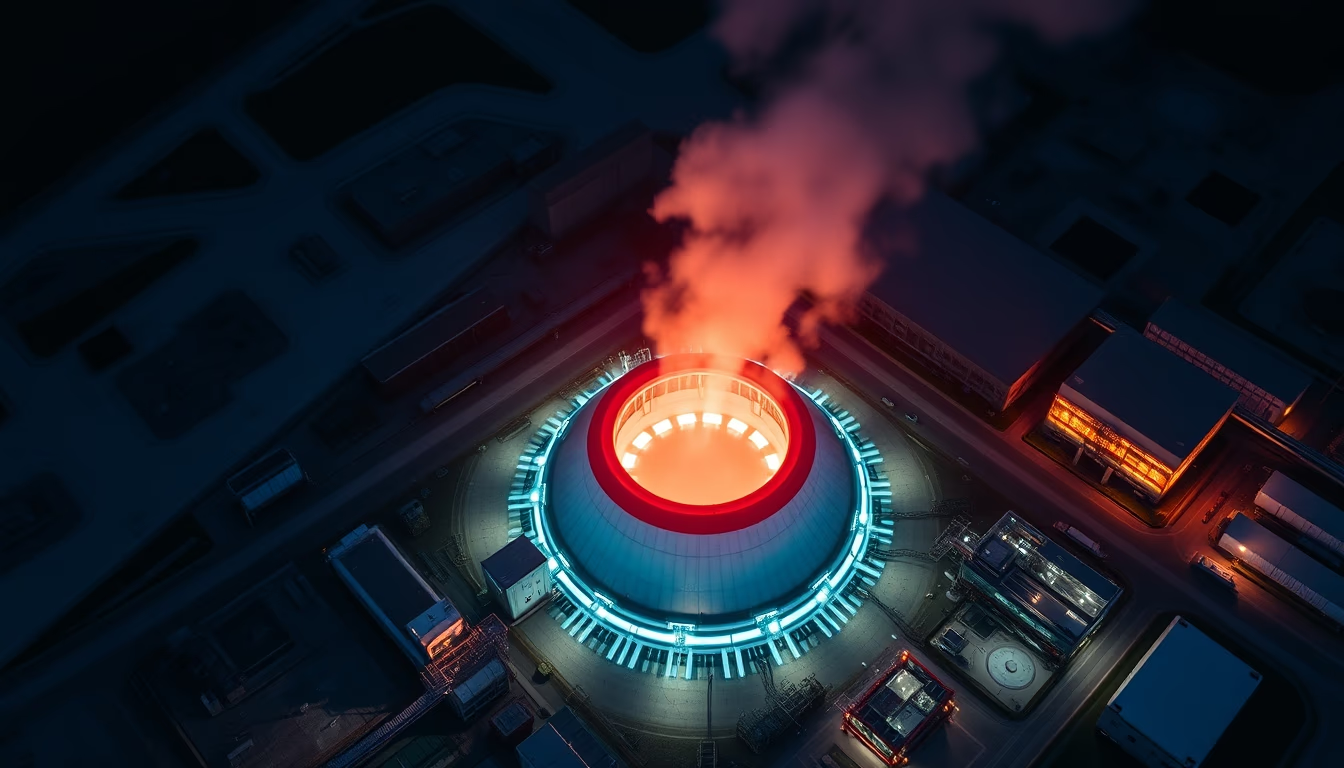
The interior of a CERN particle accelerator, such as the LHC, reveals the complex engineering behind colliding protons at near-light speeds.
About this subject
The Large Hadron Collider (LHC) at CERN, straddling the French-Swiss border, is the world's largest and most powerful particle accelerator. Its interior is a 27-kilometer circular tunnel lined with thousands of superconducting magnets that guide and accelerate particle beams. These magnets, cooled to temperatures colder than outer space using liquid helium, generate intense magnetic fields to bend the protons' trajectory.
Inside the accelerator, protons travel in opposite beams, each reaching energies of up to 6.5 TeV (tera-electronvolts). At specific points, such as the ATLAS and CMS detectors, the beams collide about 40 million times per second, recreating conditions similar to those just after the Big Bang. The internal structure includes ultra-high vacuum chambers to prevent collisions with air molecules, and radiofrequency cavities that boost the particles.
The LHC interior is a highly controlled environment where each component is designed for maximum efficiency and safety. The vacuum inside the beam pipes reaches pressures 100 times lower than on the Moon. In addition to subatomic particles, the LHC generates an immense amount of data: each experiment produces petabytes of information per year, analyzed by a global computing grid. The discovery of the Higgs boson in 2012 was one of the greatest achievements of this apparatus, validating the Standard Model of particle physics.
Frequently Asked Questions
How does the interior of a CERN particle accelerator work?
The interior uses superconducting magnets to guide and accelerate particles, such as protons, in a vacuum ring. They gain energy in radiofrequency cavities and collide in detectors for study.
What is the temperature inside the LHC?
The magnets operate at 1.9 K (about -271 °C), colder than interstellar space. The vacuum and detectors maintain various temperatures, but the beam temperature is not directly measured.
What particles have been discovered at the LHC?
The LHC confirmed the Higgs boson in 2012 and discovered several exotic hadrons, such as pentaquarks and tetraquarks, and has extensively studied the top quark and other fundamental particles.
Direct URL
https://pub-c7d6a6ea828543ac903a74a341ccb2e1.r2.dev/imagens/particle-accelerator-interior-cern-minimalist-composition-p0.avifHow to credit
Include a visible link back to UtilizAí. Copy one of the snippets below:
<a href="https://xn--utiliza-eza.com/en/midia/imagens/particle-accelerator-interior-cern-minimalist-composition-p0">Particle accelerator interior cern</a> by <a href="https://xn--utiliza-eza.com">UtilizAí</a>, licensed under <a href="https://creativecommons.org/licenses/by/4.0/">CC BY 4.0</a>.
[Particle accelerator interior cern](https://xn--utiliza-eza.com/en/midia/imagens/particle-accelerator-interior-cern-minimalist-composition-p0) by [UtilizAí](https://xn--utiliza-eza.com), CC BY 4.0
License: CC-BY-4.0