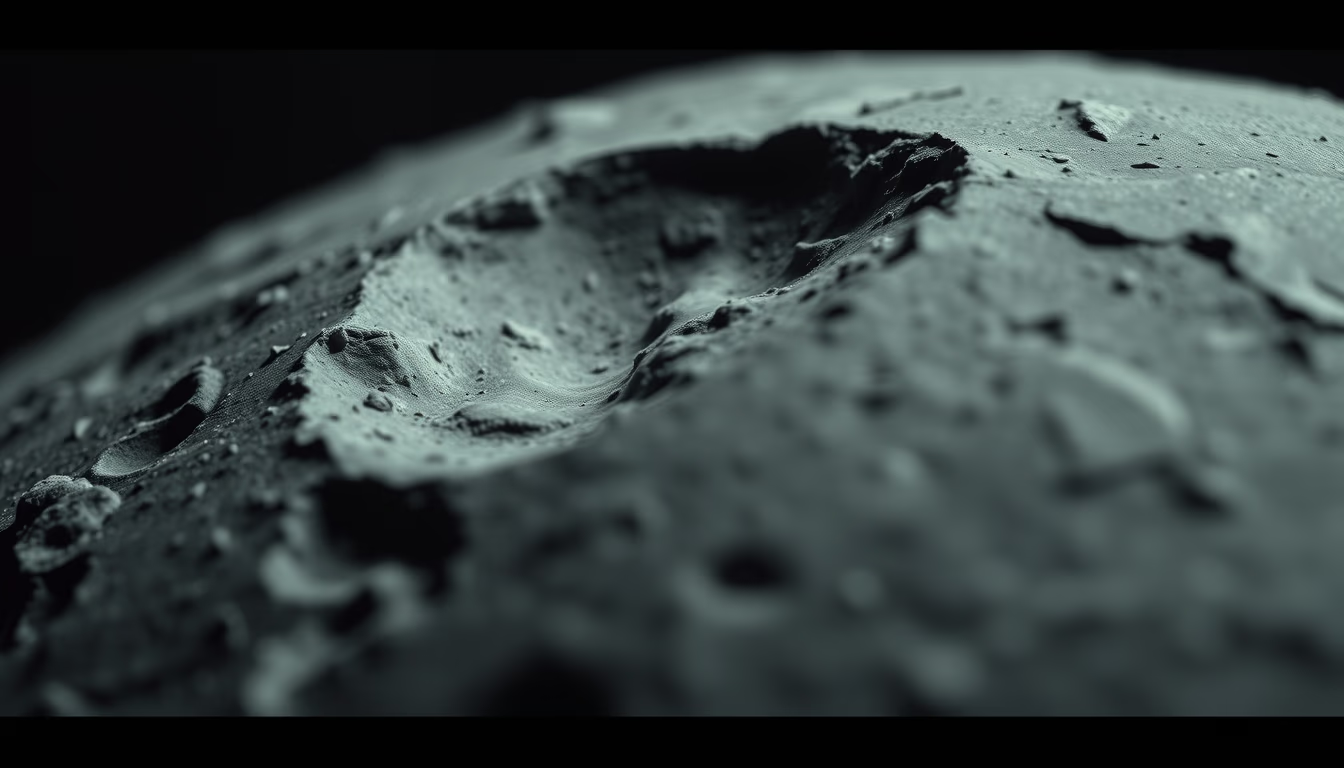
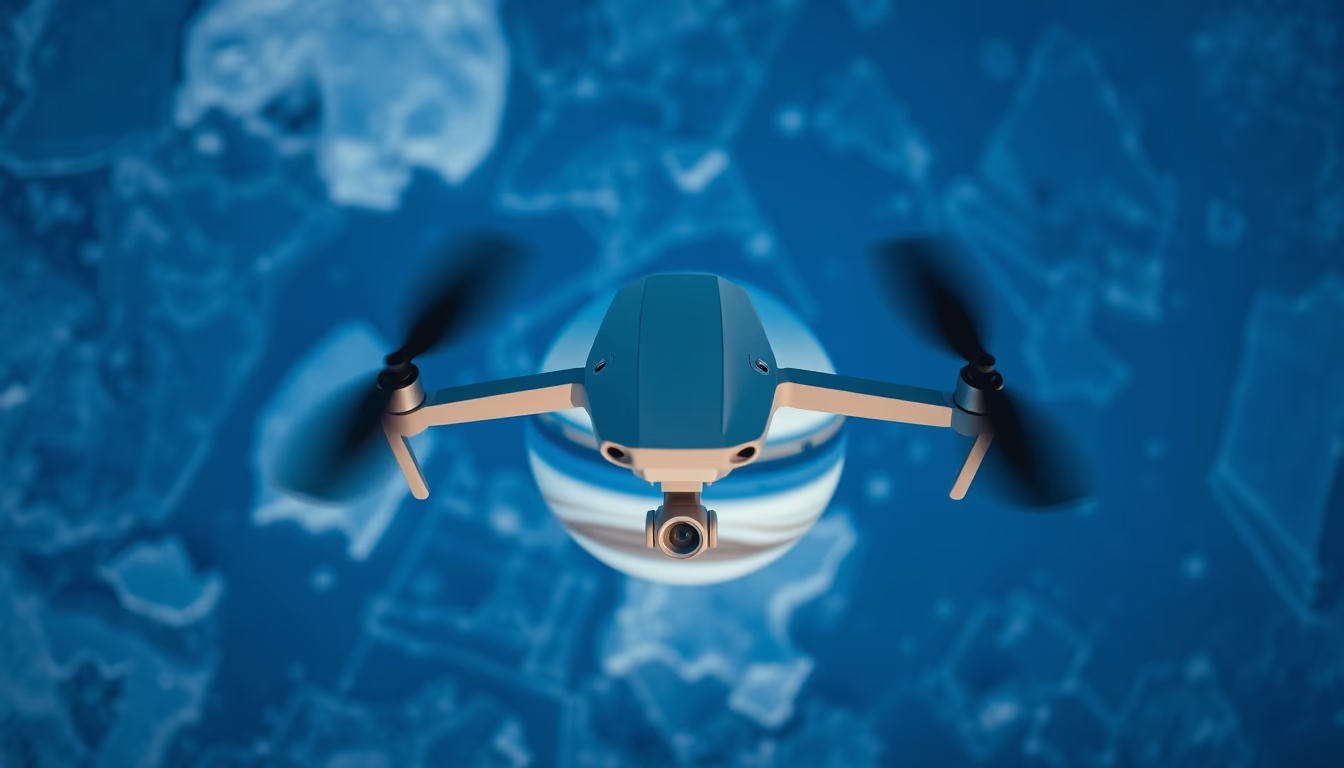
Parker solar probe sun
1344×768 · AVIF · CC BY 4.0

The Parker Solar Probe is the first spacecraft to touch the Sun, revolutionizing our understanding of the star and space weather.
About this subject
The Parker Solar Probe, launched by NASA in 2018, is the fastest spacecraft ever built and the first to fly through the Sun's outer atmosphere, the corona. Its primary goal is to solve two fundamental mysteries: why the corona is millions of degrees hotter than the solar surface (photosphere) and how the solar wind is accelerated to supersonic speeds. To withstand extreme temperatures of nearly 1400°C, the probe uses a carbon-composite heat shield 11.4 cm thick, keeping its instruments at room temperature.
In December 2021, Parker made history by crossing the corona for the first time, collecting unprecedented data on particles and magnetic fields. Since then, it has completed multiple perihelia increasingly closer to the Sun, reaching as close as 6.2 million kilometers from the solar surface at its closest approach. That distance is about 1/10 of the Sun-Mercury distance. The probe uses Venus gravity assists to adjust its orbit and gain speed, reaching peaks of 690,000 km/h.
Parker's data has already led to surprising discoveries, such as the existence of zigzag magnetic structures called 'switchbacks' and evidence that the solar wind originates from coronal holes. With each pass, the probe helps improve predictions of solar storms that can affect satellites and power grids on Earth. The mission is scheduled to last until 2025, with final flybys taking it even closer to the Sun.
Frequently Asked Questions
What temperature can the Parker Solar Probe withstand?
The heat shield of Parker can withstand external temperatures up to 1400°C, while the internal instruments remain near 30°C thanks to the cooling system and shield material.
How does the Parker Solar Probe avoid melting when approaching the Sun?
The probe uses a carbon foam heat shield 11.4 cm thick, coated with a white ceramic material that reflects most solar radiation. The shield sits between the Sun and the spacecraft body, keeping it in shadow.
How many times does the Parker Solar Probe orbit the Sun?
The original mission planned 23 orbits, but after extensions, the probe is expected to complete about 24 perihelia by 2025, with the final ones at only 6.2 million km from the solar surface.
Direct URL
https://pub-c7d6a6ea828543ac903a74a341ccb2e1.r2.dev/imagens/parker-solar-probe-sun-macro-closeup-fresh16.avifHow to credit
Include a visible link back to UtilizAí. Copy one of the snippets below:
<a href="https://xn--utiliza-eza.com/en/midia/imagens/parker-solar-probe-sun-macro-closeup-fresh16">Parker solar probe sun</a> by <a href="https://xn--utiliza-eza.com">UtilizAí</a>, licensed under <a href="https://creativecommons.org/licenses/by/4.0/">CC BY 4.0</a>.
[Parker solar probe sun](https://xn--utiliza-eza.com/en/midia/imagens/parker-solar-probe-sun-macro-closeup-fresh16) by [UtilizAí](https://xn--utiliza-eza.com), CC BY 4.0
License: CC-BY-4.0