Papercraft architecture
1344×768 · AVIF · CC BY 4.0
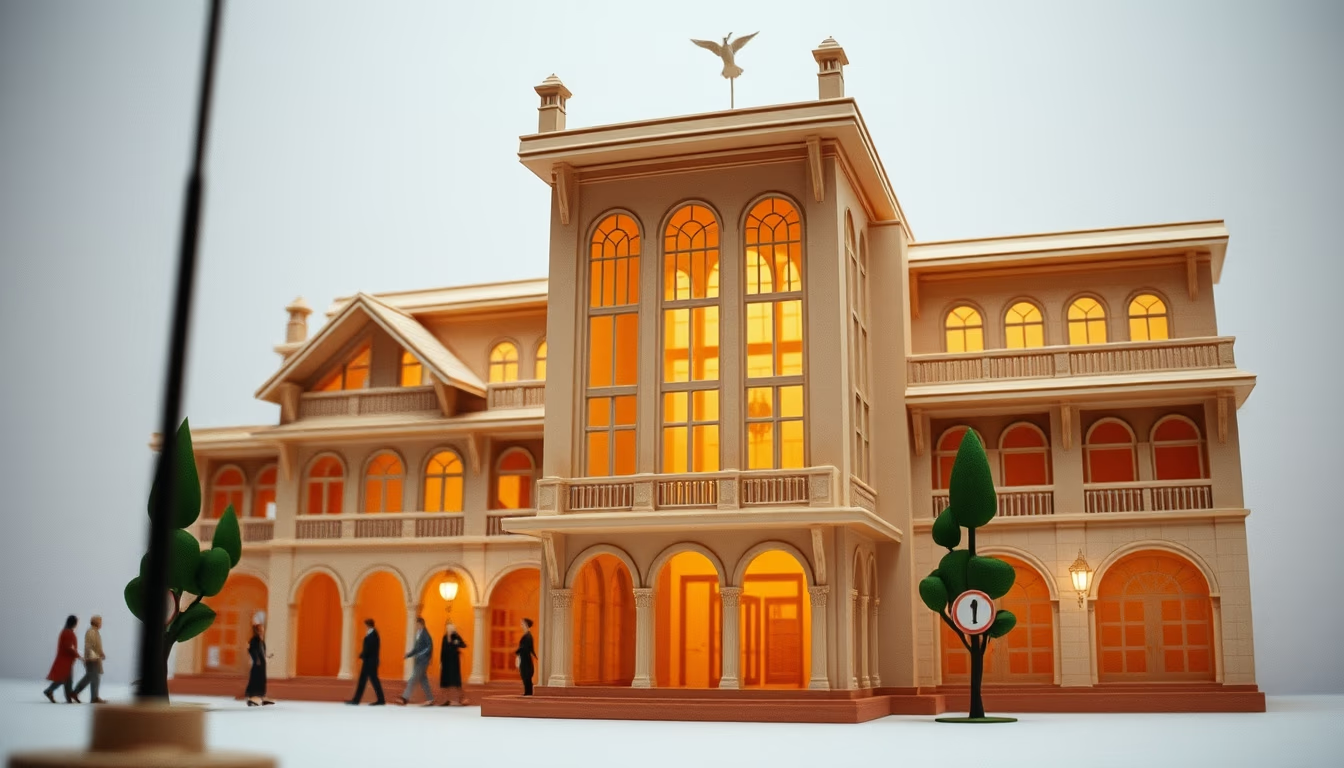
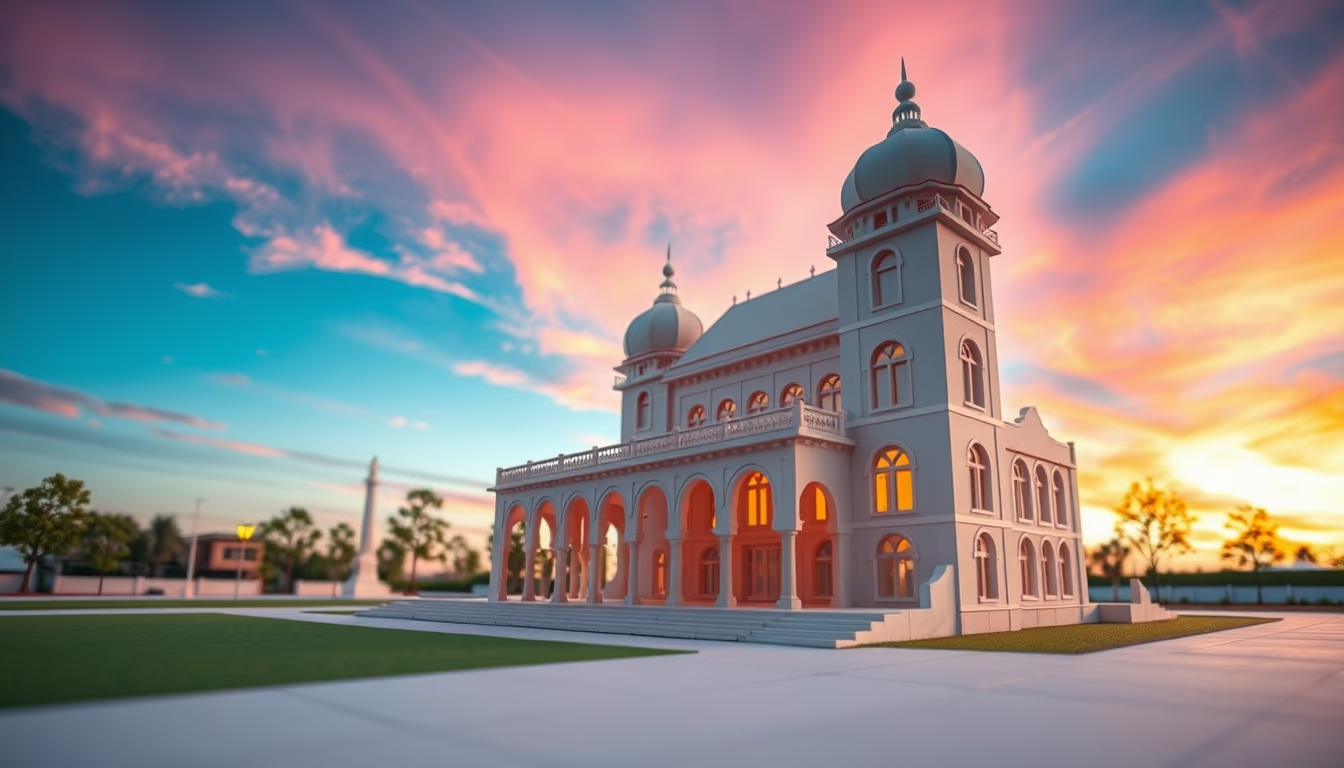
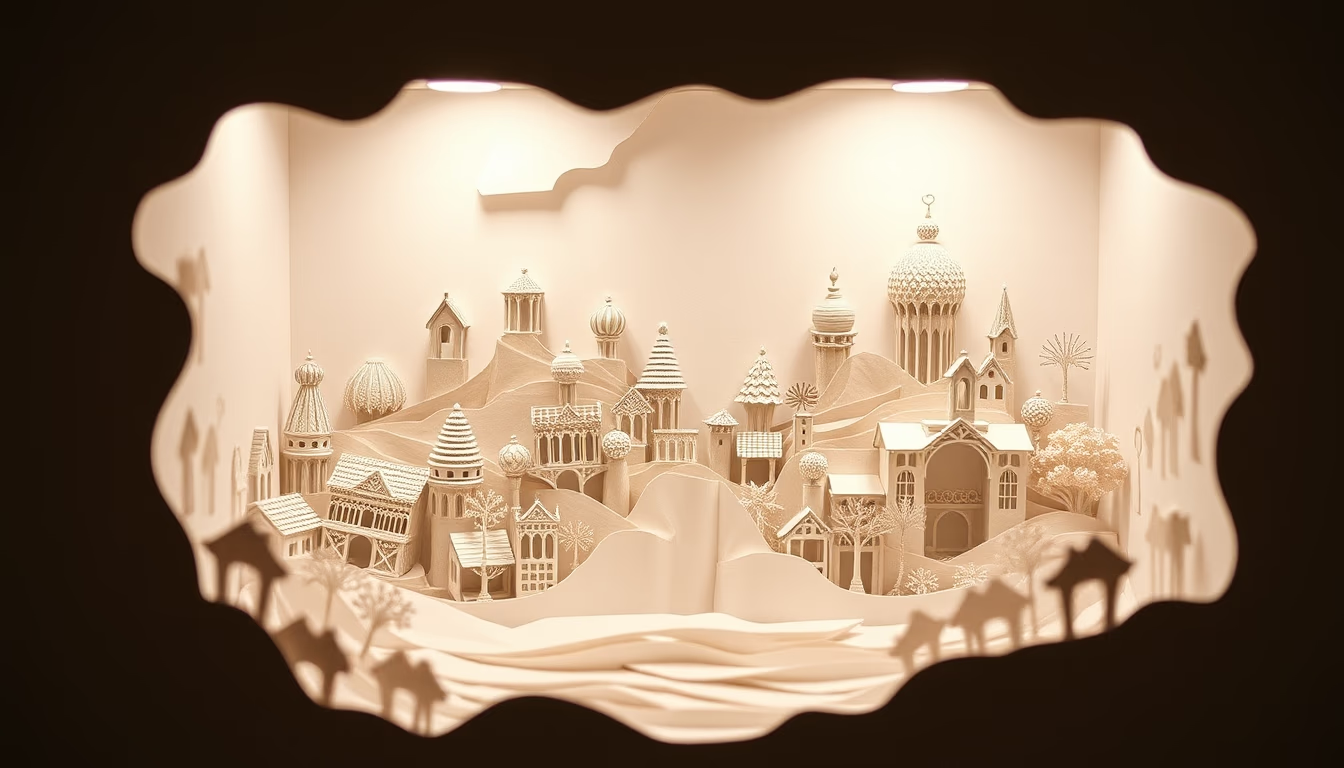
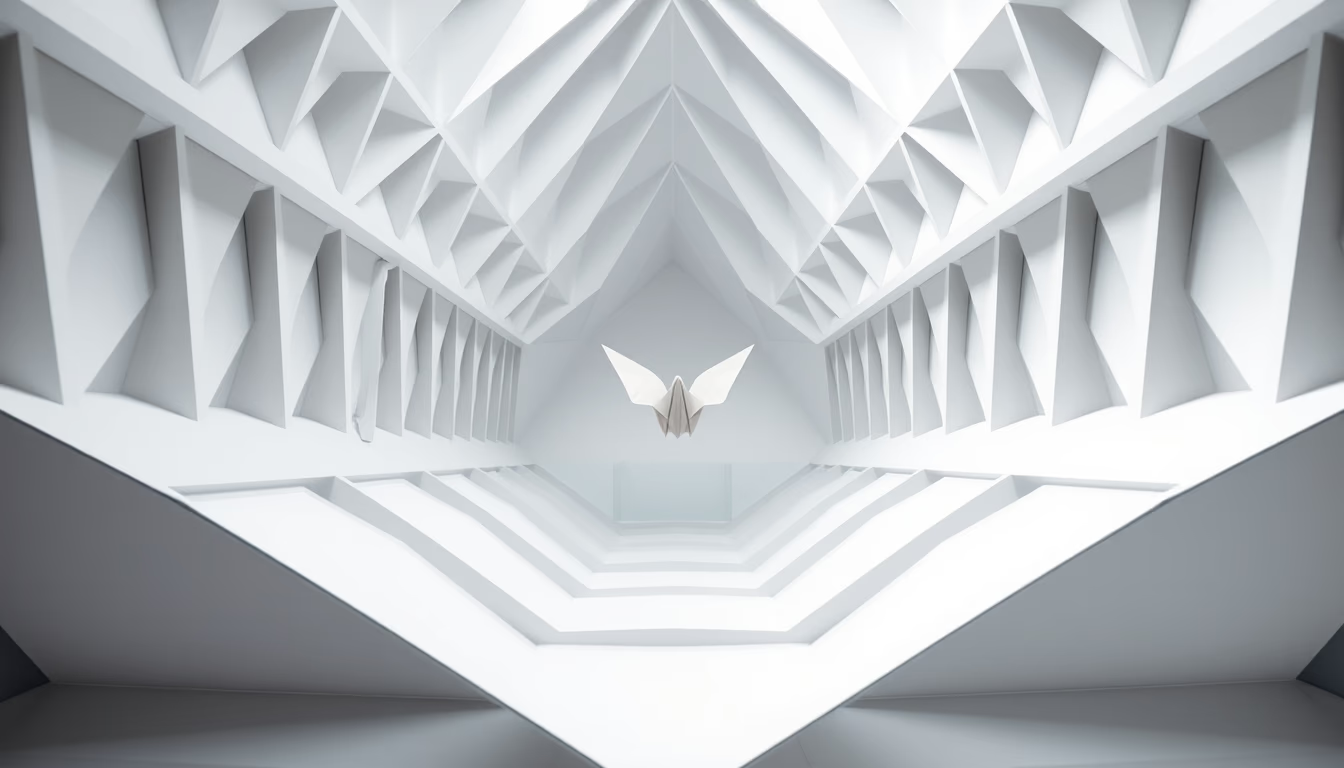
Papercraft architecture combines folding and cutting techniques to recreate architectural structures in miniature, merging art, engineering, and design.
About this subject
Papercraft architecture is an art form that uses paper as the primary material to build three-dimensional models of buildings, bridges, and other architectural elements. Unlike traditional origami, which relies solely on folding without cutting, papercraft allows cuts and gluing, enabling greater geometric complexity and detail. This technique gained prominence in post-war Japan, with artists like Masahiro Chatani, considered a pioneer in architectural kirigami, a variation that combines cutting and folding.
Common materials include cardstock, precision knives, metal rulers, and white glue. The choice of paper weight (between 180 and 300 gsm) is crucial to ensure stiffness without making cuts difficult. Many artists digitize their designs using software like AutoCAD or Illustrator, converting floor plans into interlocking patterns. The level of detail can range from conceptual models to faithful replicas of historic monuments, such as Notre-Dame Cathedral or the Taj Mahal.
In Brazil, architectural papercraft has grown in architecture and design schools as a teaching tool. The University of São Paulo (USP) has offered workshops on paper modeling for architecture students, highlighting its importance in developing spatial perception. Additionally, exhibitions like "Papercraft: Arte em Papel" at the Museu da Casa Brasileira showcased works by national and international artists, demonstrating the material's versatility. The technique is also used in rapid prototyping, allowing testing of volumes and proportions before actual construction.
Interestingly, architectural papercraft has therapeutic applications. Studies indicate that the concentration required for cutting and assembling reduces stress and improves fine motor skills. Enthusiast groups gather at annual conventions, such as Paperworld in Frankfurt, and online platforms like Paper Replika offer thousands of free templates. The technique has also influenced digital games and animated films, where entire scenes are modeled in paper to capture organic textures.
Frequently Asked Questions
What materials are essential to start in papercraft architecture?
You will need cardstock (180 to 300 gsm), a precision knife, a metal ruler, white glue or glue stick, and a cutting mat. For more complex projects, a printer for templates and image editing software can help.
How does papercraft architecture differ from traditional model making?
Traditional model making uses various materials like wood, plastic, or plaster, while papercraft uses only paper. Additionally, papercraft is usually made from flat templates that are cut and folded, whereas traditional models may be carved or molded.
Are there famous Brazilian artists in papercraft architecture?
Yes, São Paulo artist Rodrigo Migliorança is known for his detailed replicas of buildings in São Paulo, such as the Copan Building. Another reference is the group Papercraft Brasil, which organizes meetings and exhibitions across the country.
Direct URL
https://pub-c7d6a6ea828543ac903a74a341ccb2e1.r2.dev/imagens/papercraft-architecture-film-grain-authentic-fresh15.avifHow to credit
Include a visible link back to UtilizAí. Copy one of the snippets below:
<a href="https://xn--utiliza-eza.com/en/midia/imagens/papercraft-architecture-film-grain-authentic-fresh15">Papercraft architecture</a> by <a href="https://xn--utiliza-eza.com">UtilizAí</a>, licensed under <a href="https://creativecommons.org/licenses/by/4.0/">CC BY 4.0</a>.
[Papercraft architecture](https://xn--utiliza-eza.com/en/midia/imagens/papercraft-architecture-film-grain-authentic-fresh15) by [UtilizAí](https://xn--utiliza-eza.com), CC BY 4.0
License: CC-BY-4.0