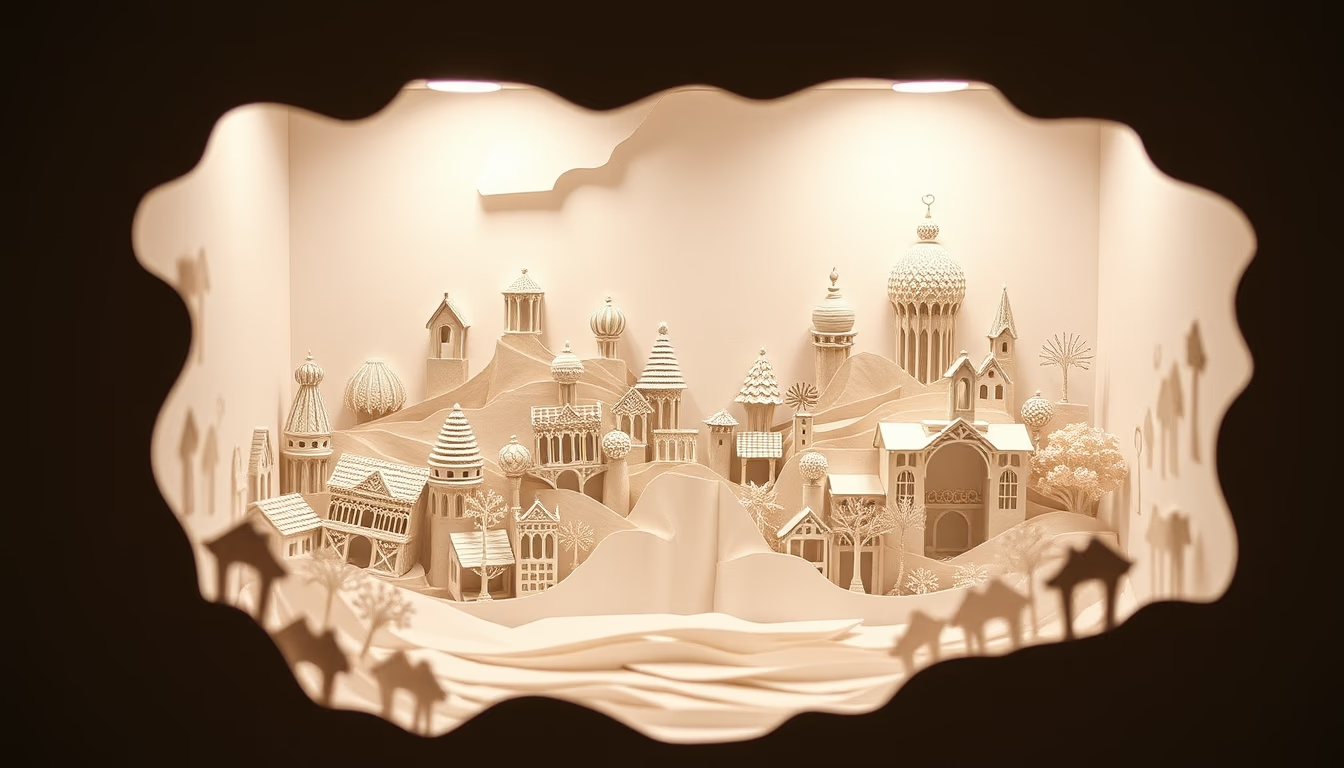
Paper sculpture intricate
1344×768 · AVIF · CC BY 4.0
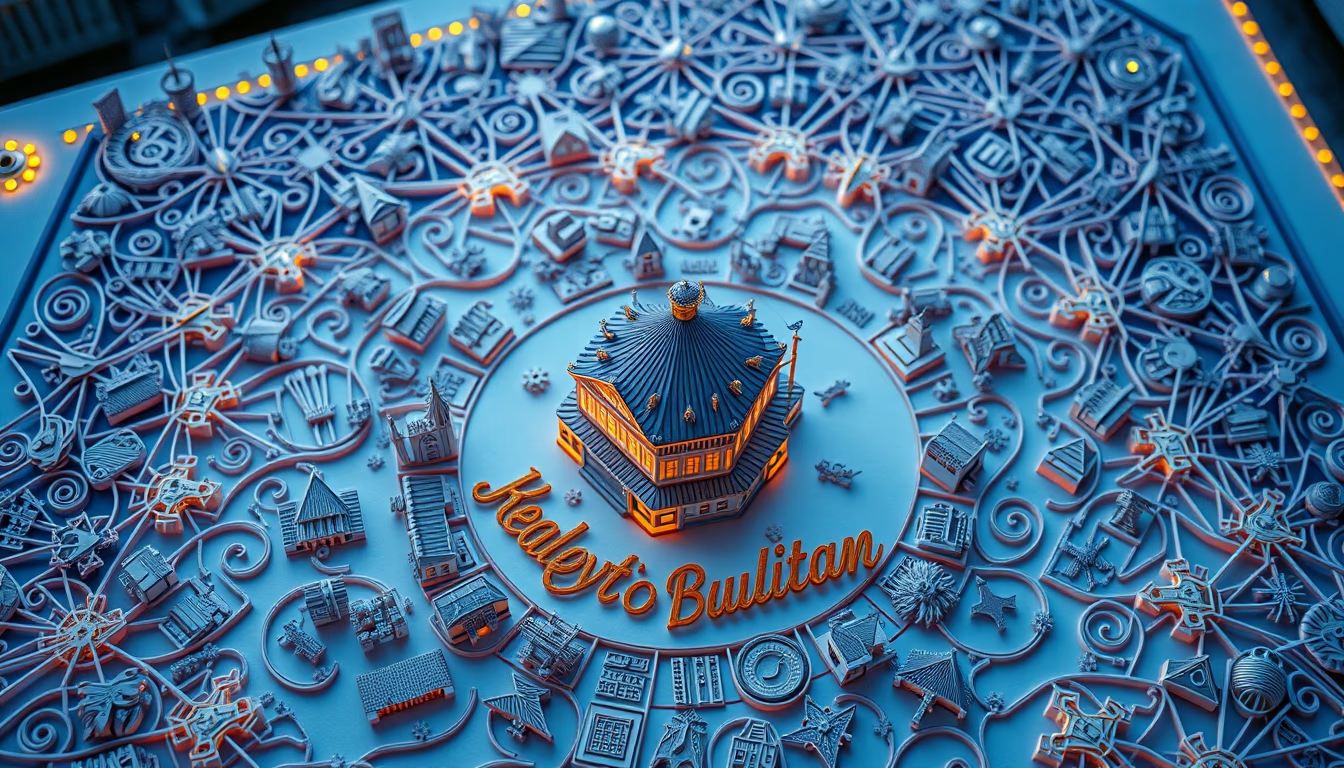
Paper sculpture is an ancient art form that transforms flat sheets into complex three-dimensional works, combining cutting, folding, and gluing techniques.
About this subject
Paper sculpture encompasses various techniques that use paper as the primary material to create three-dimensional forms. Originating from Japanese origami in the 17th century, the art has expanded to include papercutting, quilling, papier-mâché, and papercraft. Each technique demands precision: papercutting involves intricate cutouts from a single sheet, quilling rolls and shapes thin strips, and papercraft layers glued to form reliefs.
This art form holds cultural significance worldwide. In Japan, origami was used in Shinto ceremonies and as a symbol of good luck. In Europe, papercutting (scherenschnitte) flourished in Germany and Switzerland from the 16th to 19th centuries, often depicting biblical scenes. Contemporary artists such as Peter Callesen create monumental works from a single sheet of paper, exploring themes of fragility and transformation.
Sustainability is a strong point: paper is biodegradable and low-cost, making sculpture accessible. In 2021, the world record for the largest paper sculpture was a replica of an Indian temple 12 meters high, displayed in Chennai. The choice of glue and paper weight is crucial for durability. More delicate pieces require storage free from moisture and direct light to prevent yellowing.
Interestingly, Chinese papercutting (jiǎnzhǐ) is recognized by UNESCO as Intangible Cultural Heritage and has been used in festivals and decorations for over 1,500 years. The intricacy of paper sculpture lies in the patience and manual skill, where each cut or fold determines the final outcome.
Frequently Asked Questions
What is the origin of paper sculpture?
Paper sculpture has ancient origins: Japanese origami emerged in the 17th century, but Chinese papercutting (jiǎnzhǐ) has been practiced for over 1,500 years. In Europe, German papercutting (scherenschnitte) dates back to the 16th century.
What materials are used besides paper?
Depending on the technique, glue, scissors, craft knives, cutting mats, tweezers, and for quilling, rolling tools are used. Papers of various weights (such as bond paper, cardstock, or vellum) are chosen according to the need.
How to preserve a paper sculpture?
Avoid direct sunlight and humidity. Keep in a dry, well-ventilated environment, ideally in a display case or framed with glass. For cleaning, use a soft brush or gentle compressed air.
Direct URL
https://pub-c7d6a6ea828543ac903a74a341ccb2e1.r2.dev/imagens/paper-sculpture-intricate-aerial-drone-shot-fresh9.avifHow to credit
Include a visible link back to UtilizAí. Copy one of the snippets below:
<a href="https://xn--utiliza-eza.com/en/midia/imagens/paper-sculpture-intricate-aerial-drone-shot-fresh9">Paper sculpture intricate</a> by <a href="https://xn--utiliza-eza.com">UtilizAí</a>, licensed under <a href="https://creativecommons.org/licenses/by/4.0/">CC BY 4.0</a>.
[Paper sculpture intricate](https://xn--utiliza-eza.com/en/midia/imagens/paper-sculpture-intricate-aerial-drone-shot-fresh9) by [UtilizAí](https://xn--utiliza-eza.com), CC BY 4.0
License: CC-BY-4.0