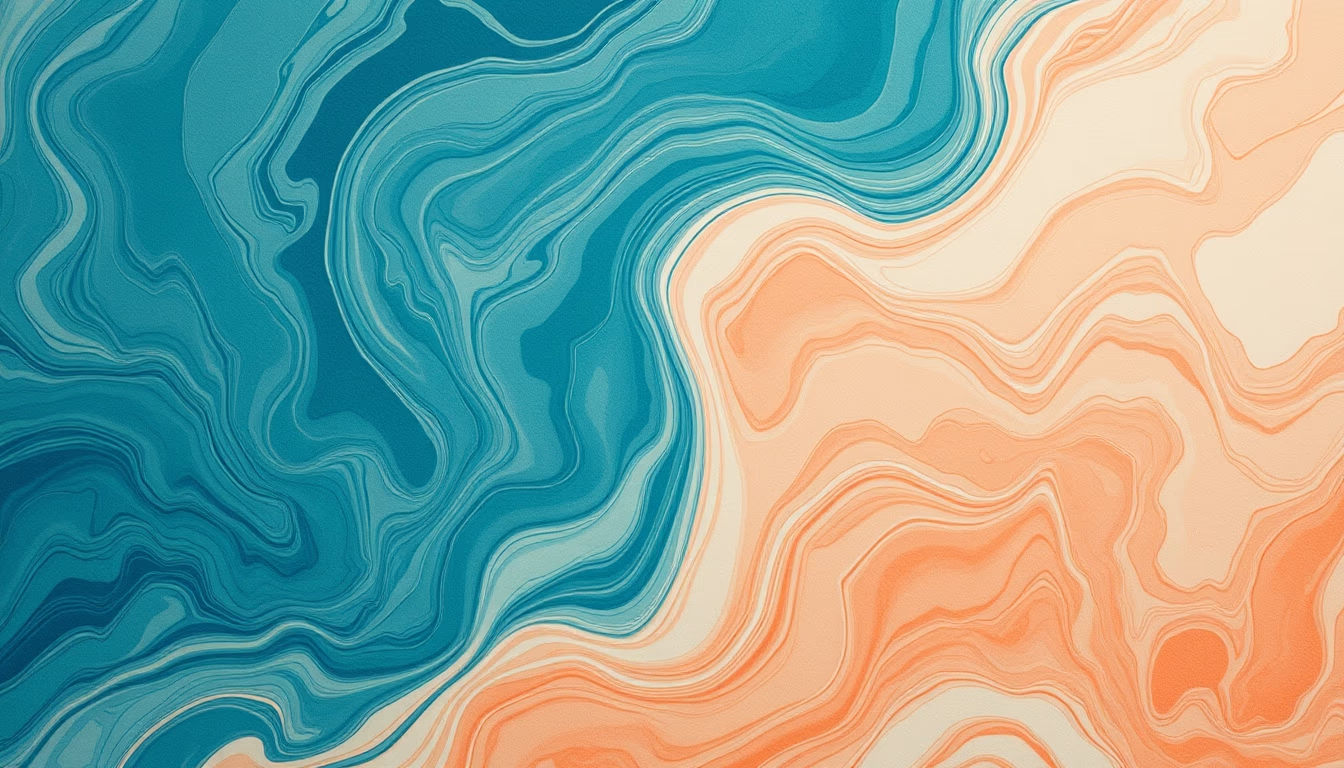
Paper marbling water
1344×768 · AVIF · CC BY 4.0

Paper marbling, a centuries-old technique where pigments float on water to create unique patterns on paper, blending art and chemistry.
About this subject
Paper marbling, also known as marbling, originated in Japan around the 12th century under the name suminagashi, meaning "floating ink." Early Japanese craftsmen used sumi ink on water to create concentric patterns that were transferred to paper. Simultaneously, in Ottoman Turkey, ebru emerged as a vibrant form of marbling featuring floral motifs and vivid colors, used to decorate manuscripts and official documents. Both traditions influenced the technique that spread to Europe in the 17th century, becoming popular in bookbinding.
The process involves preparing a water bath with a thickening agent like carrageenan to increase viscosity. Oil-based or acrylic paints are dripped onto the water's surface. Using combs, brushes, or blowing, the artist manipulates the colors into wavy, spiral, or geometric patterns. A sheet of paper is then carefully placed on the water, absorbing the pigments. After removal, the paper is washed and dried, revealing a unique, unrepeatable marbled design.
Today, paper marbling is practiced by contemporary artists worldwide, integrating with digital techniques and graphic design. Beyond its aesthetic appeal, the technique carries immense historical and cultural value; Turkish ebru is recognized by UNESCO as an Intangible Cultural Heritage of Humanity. Artists like Iris Nevins and Don Guyot are key figures in reviving and innovating marbling, proving this ancient art remains alive and evolving. Factors such as paper type, paint consistency, and water temperature greatly influence the final result, demanding patience and experimentation.
For those interested in learning, workshops and online courses are available, along with beginner kits sold at art supply stores. The beauty of paper marbling lies in its unpredictability: each piece is a frozen moment in fluid, impossible to replicate exactly. This makes marbling a metaphor for creativity and the intersection of art and science, where the chemistry of paints and the physics of surface tension meet the artist's sensitivity.
Frequently Asked Questions
How did the paper marbling technique originate?
Paper marbling originated in Japan in the 12th century as suminagashi and independently in Turkey as ebru. Both traditions are considered the roots of marbling.
What materials are needed for paper marbling?
You need water, a thickening agent like carrageenan, oil-based or acrylic paints, a tray, combs or tools to create patterns, and absorbent paper.
Can paper marbling be done at home?
Yes, with basic kits available online and following tutorials. Patience and practice are essential to master the technique and achieve good results.
Direct URL
https://pub-c7d6a6ea828543ac903a74a341ccb2e1.r2.dev/imagens/paper-marbling-water-studio-editorial-portrait-fresh4.avifHow to credit
Include a visible link back to UtilizAí. Copy one of the snippets below:
<a href="https://xn--utiliza-eza.com/en/midia/imagens/paper-marbling-water-studio-editorial-portrait-fresh4">Paper marbling water</a> by <a href="https://xn--utiliza-eza.com">UtilizAí</a>, licensed under <a href="https://creativecommons.org/licenses/by/4.0/">CC BY 4.0</a>.
[Paper marbling water](https://xn--utiliza-eza.com/en/midia/imagens/paper-marbling-water-studio-editorial-portrait-fresh4) by [UtilizAí](https://xn--utiliza-eza.com), CC BY 4.0
License: CC-BY-4.0