Paper marbling water
1344×768 · AVIF · CC BY 4.0
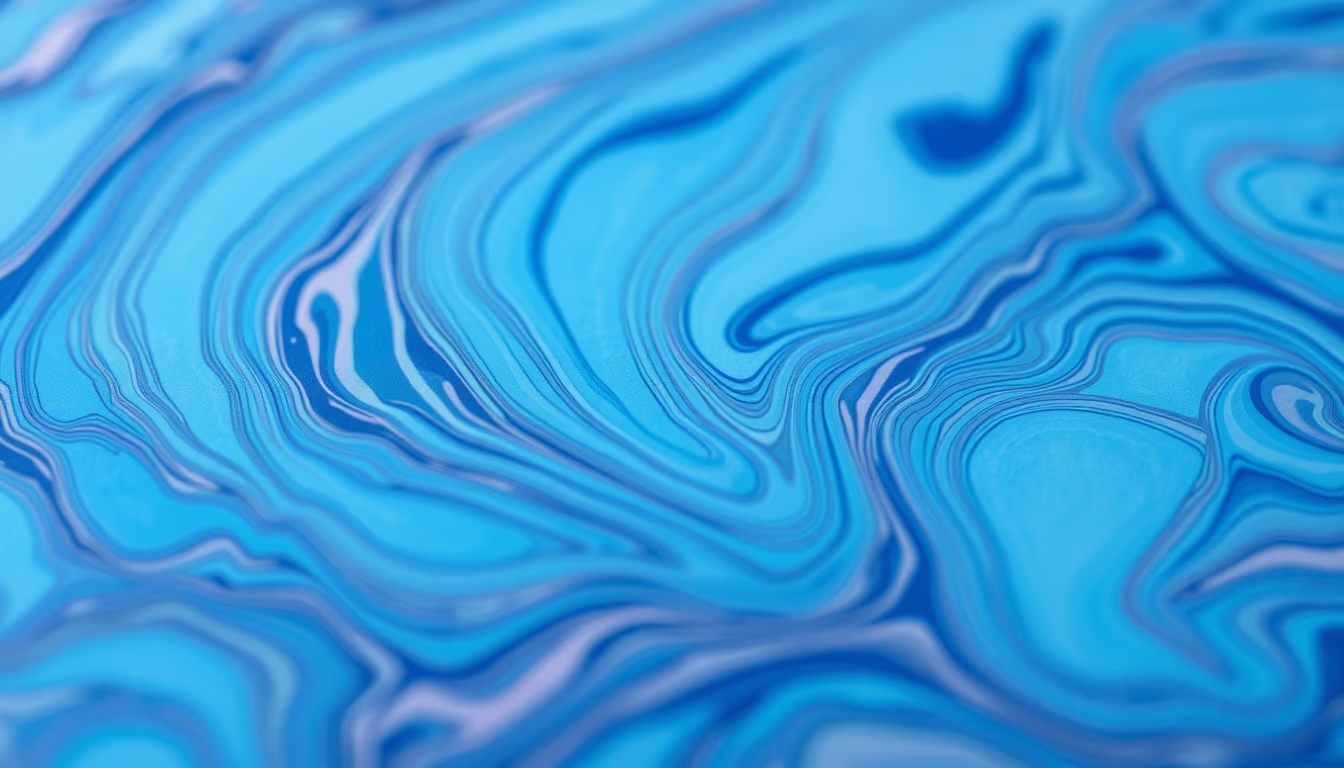
Paper marbling technique creates unique patterns on the water surface by combining inks and fluids.
About this subject
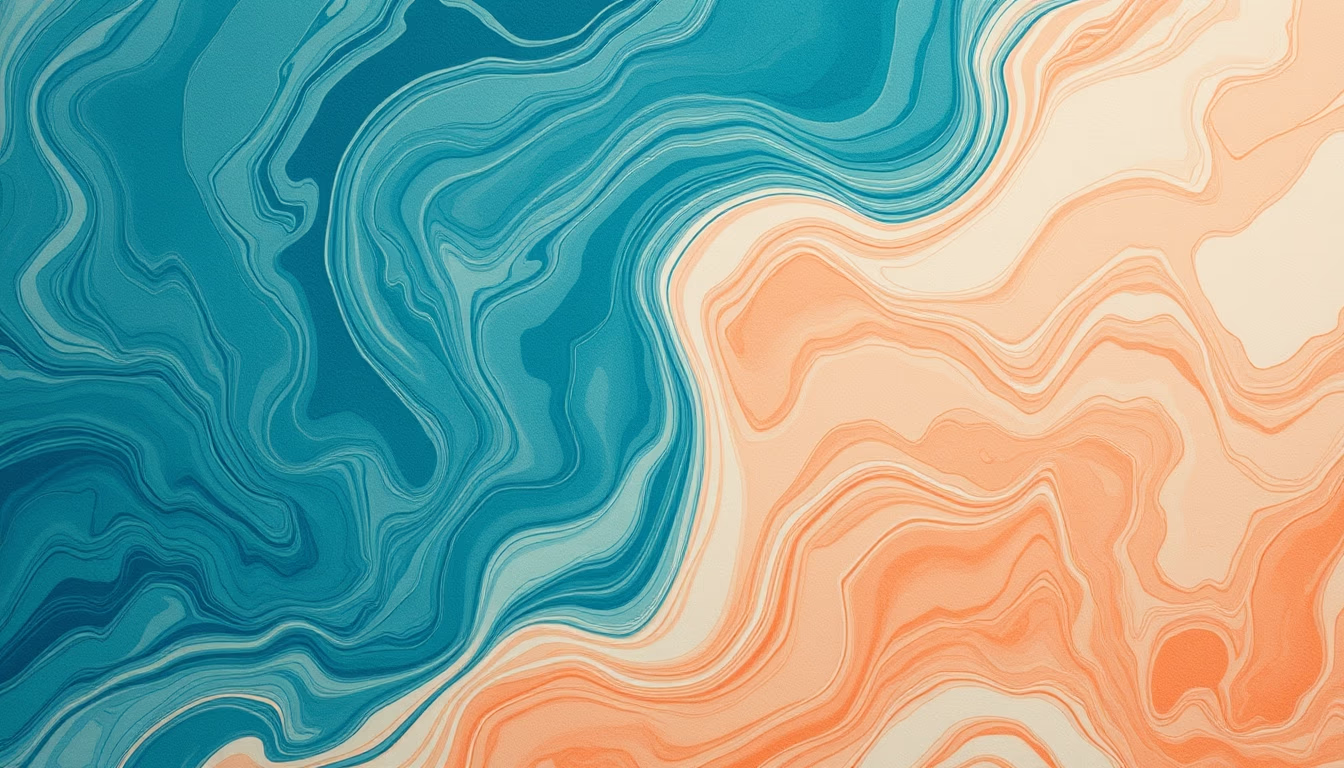
Paper marbling, also known as ebru or suminagashi, is an ancient art form involving floating inks on the surface of a viscous liquid, usually water mixed with thickeners like carrageenan or gum tragacanth. The process begins with preparing a liquid bath, where ink drops are placed and manipulated using combs, sticks, or blowing to create organic, symmetrical patterns. The paper is then gently laid onto the surface, transferring the design to the sheet. This technique originated in Asia, with records in Japan (suminagashi, 12th century) and Turkey (ebru, 15th century), spreading to Europe in the 17th century for decorating books and documents. The resulting patterns are unique and non-reproducible, as each movement of the inks is influenced by surface tension, viscosity, and density, creating unpredictable combinations of colors and shapes, such as marble veins, concentric circles, or fluid waves. Today, paper marbling is valued in book restoration and contemporary design, practiced by artists who explore variations with acrylic inks, eco-friendly dyes, and non-traditional surfaces like fabric and wood. Macrophotography reveals details like droplet dispersion and textures formed by chemical interactions between pigments and the liquid, highlighting the complexity and beauty of the process.
Frequently Asked Questions
What is the difference between ebru and suminagashi?
Ebru is Turkish marbling, using oil-based inks on water thickened with carrageenan. Suminagashi is the Japanese version, with water-based inks on washi paper, focusing on more subtle and organic patterns.
What materials are used in paper marbling?
Basic materials include: a water tray, thickening agent (carrageenan or gum tragacanth), special marbling inks (oil-based or acrylic), rakes for creating patterns, and absorbent papers like cotton or washi.
Can other materials besides paper be marbled?
Yes, the technique can be applied to fabrics (silk, cotton), wood, plastic, and even ceramics, as long as the material is porous or treated with a primer to absorb the ink.
Direct URL
https://pub-c7d6a6ea828543ac903a74a341ccb2e1.r2.dev/imagens/paper-marbling-water-macro-closeup-fresh6.avifHow to credit
Include a visible link back to UtilizAí. Copy one of the snippets below:
<a href="https://xn--utiliza-eza.com/en/midia/imagens/paper-marbling-water-macro-closeup-fresh6">Paper marbling water</a> by <a href="https://xn--utiliza-eza.com">UtilizAí</a>, licensed under <a href="https://creativecommons.org/licenses/by/4.0/">CC BY 4.0</a>.
[Paper marbling water](https://xn--utiliza-eza.com/en/midia/imagens/paper-marbling-water-macro-closeup-fresh6) by [UtilizAí](https://xn--utiliza-eza.com), CC BY 4.0
License: CC-BY-4.0