Paper marbling water
1344×768 · AVIF · CC BY 4.0
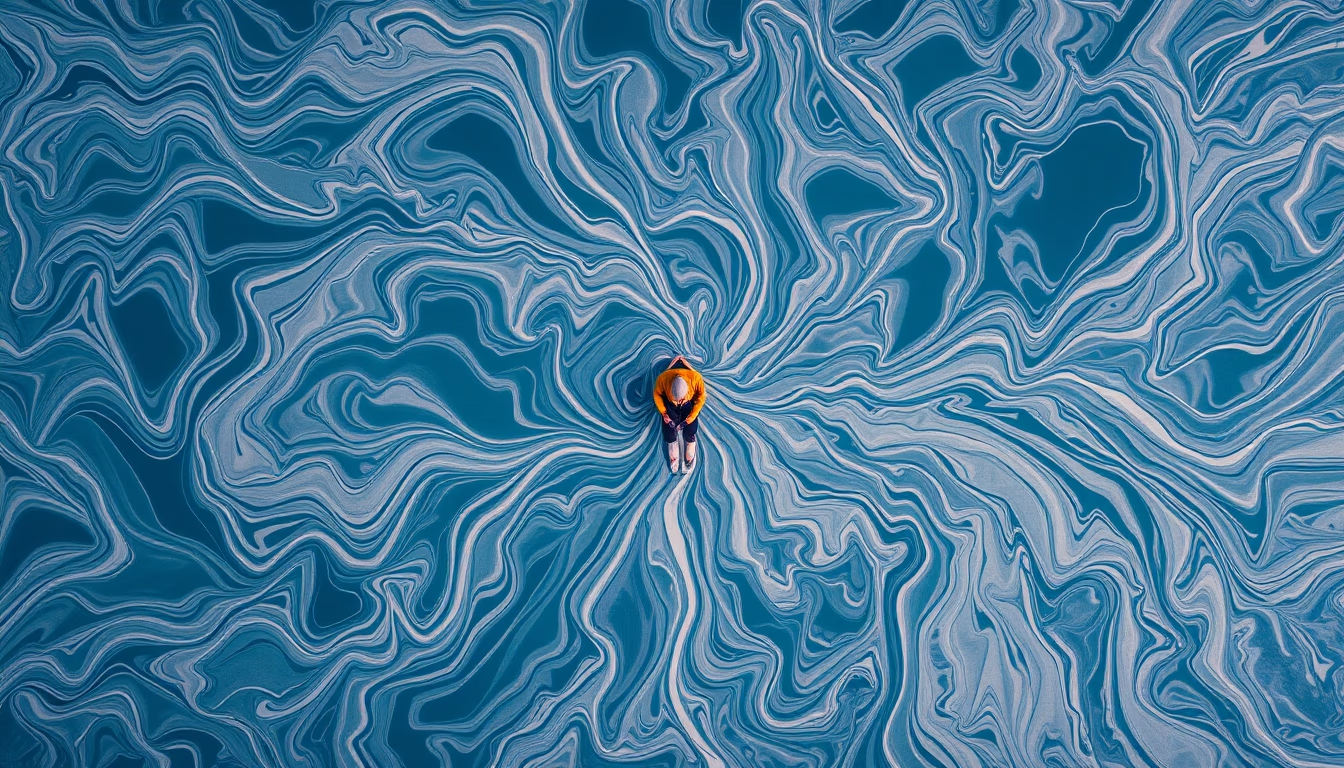
Paper marbling is a technique where pigments are floated on water and transferred to paper, creating unique patterns. This ancient art blends chemistry and creativity.
About this subject
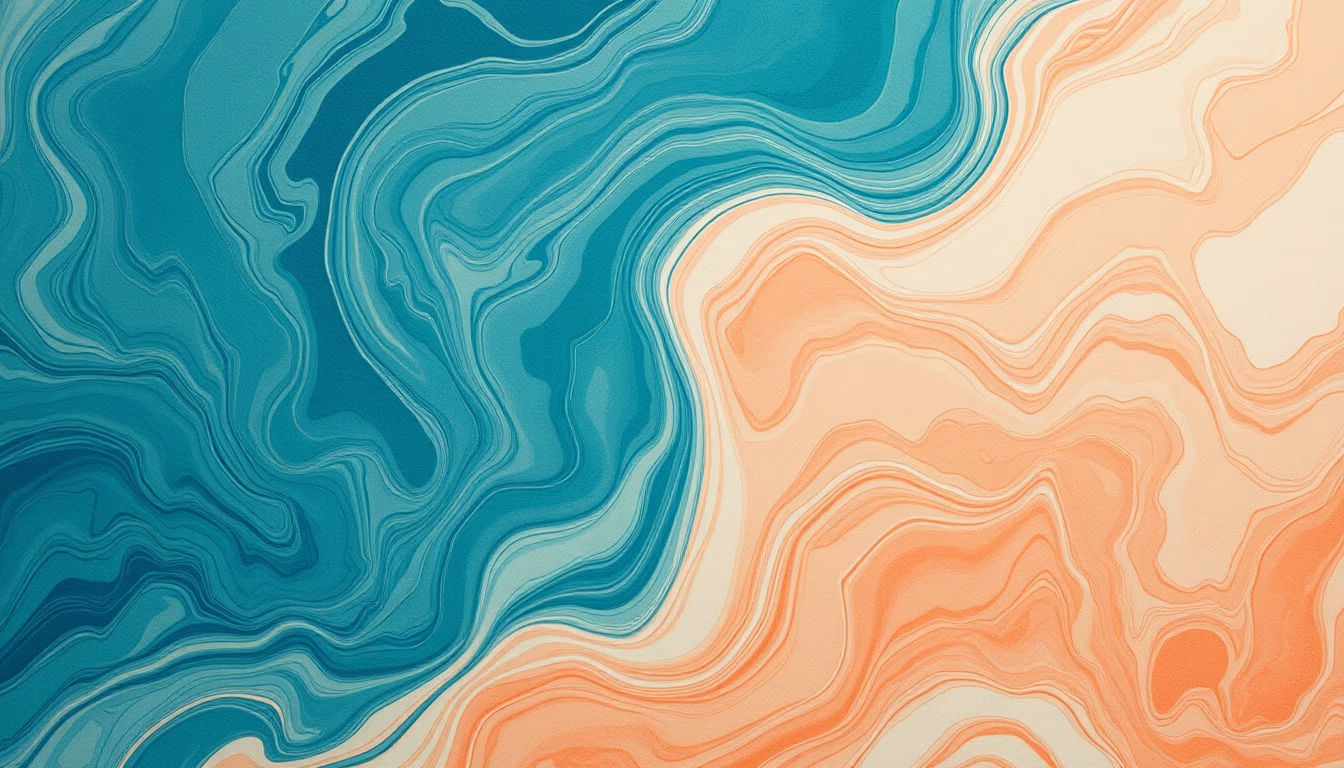
Paper marbling, known as ebru in Turkey and suminagashi in Japan, is an artistic technique dating back to the 12th century. The process involves tinting the surface of a water bath, often thickened with carrageenan or methylcellulose, and then dropping pigments that spread into patterns. Using tools like combs and styluses, the artist manipulates the colors to create designs resembling marble, waves, or florals. A sheet of paper is then laid gently onto the water, capturing the design. After drying, the marbled paper is used in bookbinding, stationery, and artwork.
The origin of marbling is disputed among China, Japan, and Persia, but in Ottoman Turkey, ebru developed as a refined art, adorning official documents and sacred books. In Japan, suminagashi ("floating ink") was practiced by monks and nobles, with more subtle, monochrome patterns. The technique reached Europe in the 17th century, becoming popular for bookbinding in Italy and France.
The chemistry behind marbling is fascinating: water's surface tension allows the ink to float, and thickening agents prevent colors from fully mixing. Each print is unique because patterns never repeat exactly. Contemporary artists experiment with acrylic paints and resins, expanding aesthetic possibilities. Despite its name, marbling is not limited to imitating marble; it can produce abstract, geometric, and figurative effects.
Today, the technique is valued both historically and artistically. Workshops and courses teach the process, and marbled papers are prized in scrapbooking, graphic design, and restoration of antique books. An aerial view of a marbling bath reveals the beauty of large-scale patterns, showcasing the interplay of color and fluid.
Frequently Asked Questions
What is paper marbling?
It is an artistic technique where pigments are floated on water, creating patterns that are transferred to paper. Each print is unique.
What materials are needed for paper marbling?
Water, a thickening agent (like carrageenan), special paints (oil-based or acrylic), a tray, combs and styluses, plus paper for transfer.
What are the historical origins of paper marbling?
The technique originated in Japan (suminagashi) and Turkey (ebru), with records dating back to the 12th century. It reached Europe in the 17th century and was widely used for bookbinding.
Direct URL
https://pub-c7d6a6ea828543ac903a74a341ccb2e1.r2.dev/imagens/paper-marbling-water-aerial-drone-shot-fresh5.avifHow to credit
Include a visible link back to UtilizAí. Copy one of the snippets below:
<a href="https://xn--utiliza-eza.com/en/midia/imagens/paper-marbling-water-aerial-drone-shot-fresh5">Paper marbling water</a> by <a href="https://xn--utiliza-eza.com">UtilizAí</a>, licensed under <a href="https://creativecommons.org/licenses/by/4.0/">CC BY 4.0</a>.
[Paper marbling water](https://xn--utiliza-eza.com/en/midia/imagens/paper-marbling-water-aerial-drone-shot-fresh5) by [UtilizAí](https://xn--utiliza-eza.com), CC BY 4.0
License: CC-BY-4.0