Paint roller and tray
1344×768 · AVIF · CC BY 4.0
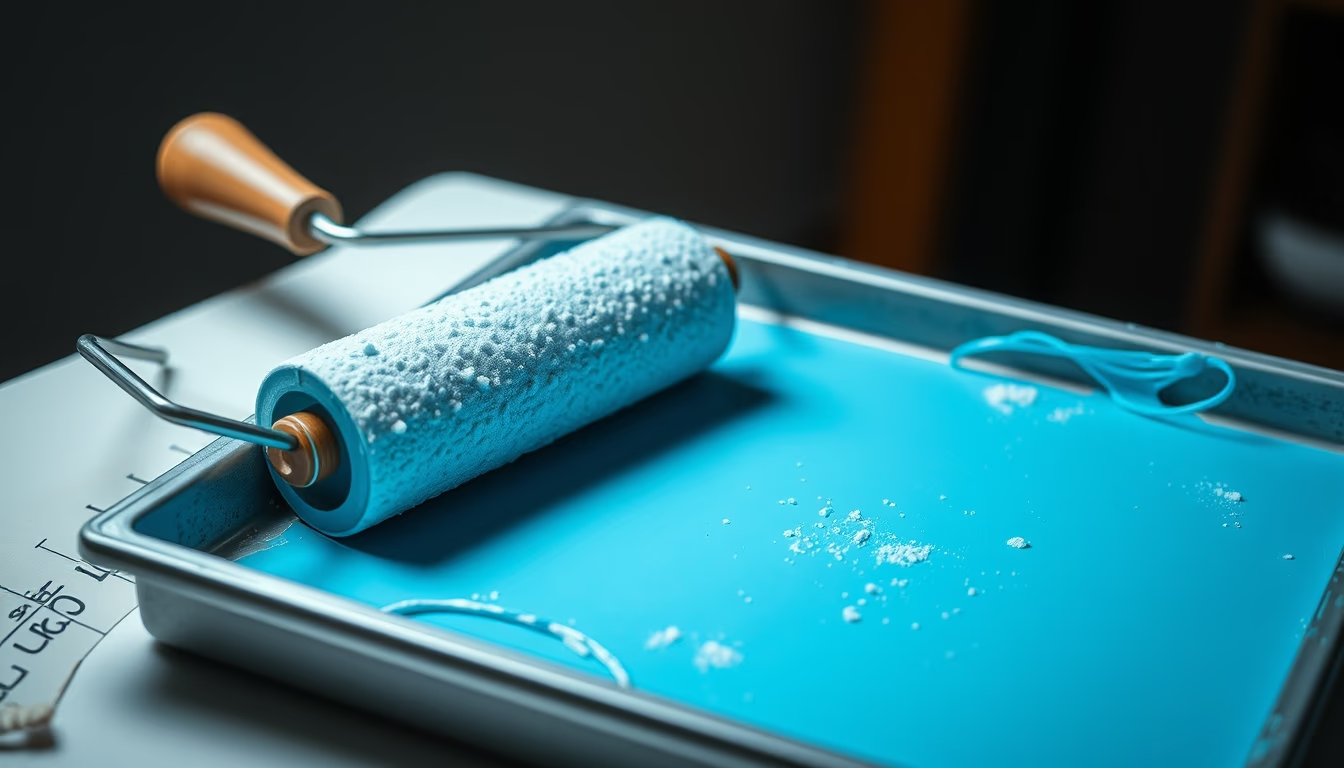
A paint roller and tray are essential tools for efficient paint application on smooth surfaces, revolutionizing work for professional and DIY painters.
About this subject
The paint roller consists of a cylinder covered with an absorbent material (nap, foam, or microfiber) mounted on a handle frame. The tray features a sloping area to evenly distribute paint onto the roller and remove excess. These components work together to cover large areas quickly, with fewer drips and marks than a standard brush. The nap length determines the finish: short nap for smooth walls, long nap for rough or textured surfaces.
The modern paint roller was invented by Canadian Norman Breakey in 1940, who recognized the need for a faster alternative to brushes for painting large surfaces. He patented the original design in 1941, and it gained popularity in the 1950s with the rise of quick-drying latex paints. Before that, painters relied solely on brushes, making the job much slower and more labor-intensive.
In practice, proper use begins by saturating the roller and removing excess paint on the tray to prevent dripping. A common technique is to paint in a 'W' or 'N' pattern, overlapping strokes for even coverage. For a smooth finish, avoid pressing too hard on the roller and maintain a wet edge. After use, thorough cleaning, with water for latex paint or solvent for oil-based paint, extends the roller's lifespan.
Interestingly, the standard 9-inch (23 cm) size was established as the ideal balance between coverage and handling. Larger rollers exist for walls and floors, while mini-rollers are used for details and corners. Compared to a paint sprayer, the roller is quieter, less messy, and does not require respiratory protection, making it the preferred choice for home renovations. Recent innovations include telescopic poles and anti-stick trays that further ease the work.
Frequently Asked Questions
What is the difference between a short nap and long nap roller?
Short nap rollers (6, 12 mm) are best for smooth surfaces like interior walls, giving a uniform finish. Long nap rollers (18, 25 mm) work on textured surfaces such as stucco, brick, or drywall, as they reach into uneven areas.
How do you clean a paint roller after use?
For latex paint, rinse with water and mild soap, squeezing the nap until water runs clear. For oil-based paint, use mineral spirits or turpentine. Dry the roller thoroughly before storing to prevent mildew.
When was the paint roller invented?
The paint roller was invented by Canadian Norman Breakey in 1940 and patented in 1941. It gained widespread use in the 1950s with quick-drying latex paints, transforming both DIY and professional painting.
Direct URL
https://pub-c7d6a6ea828543ac903a74a341ccb2e1.r2.dev/imagens/paint-roller-and-tray-fine-art-photography-p1.avifHow to credit
Include a visible link back to UtilizAí. Copy one of the snippets below:
<a href="https://xn--utiliza-eza.com/en/midia/imagens/paint-roller-and-tray-fine-art-photography-p1">Paint roller and tray</a> by <a href="https://xn--utiliza-eza.com">UtilizAí</a>, licensed under <a href="https://creativecommons.org/licenses/by/4.0/">CC BY 4.0</a>.
[Paint roller and tray](https://xn--utiliza-eza.com/en/midia/imagens/paint-roller-and-tray-fine-art-photography-p1) by [UtilizAí](https://xn--utiliza-eza.com), CC BY 4.0
License: CC-BY-4.0