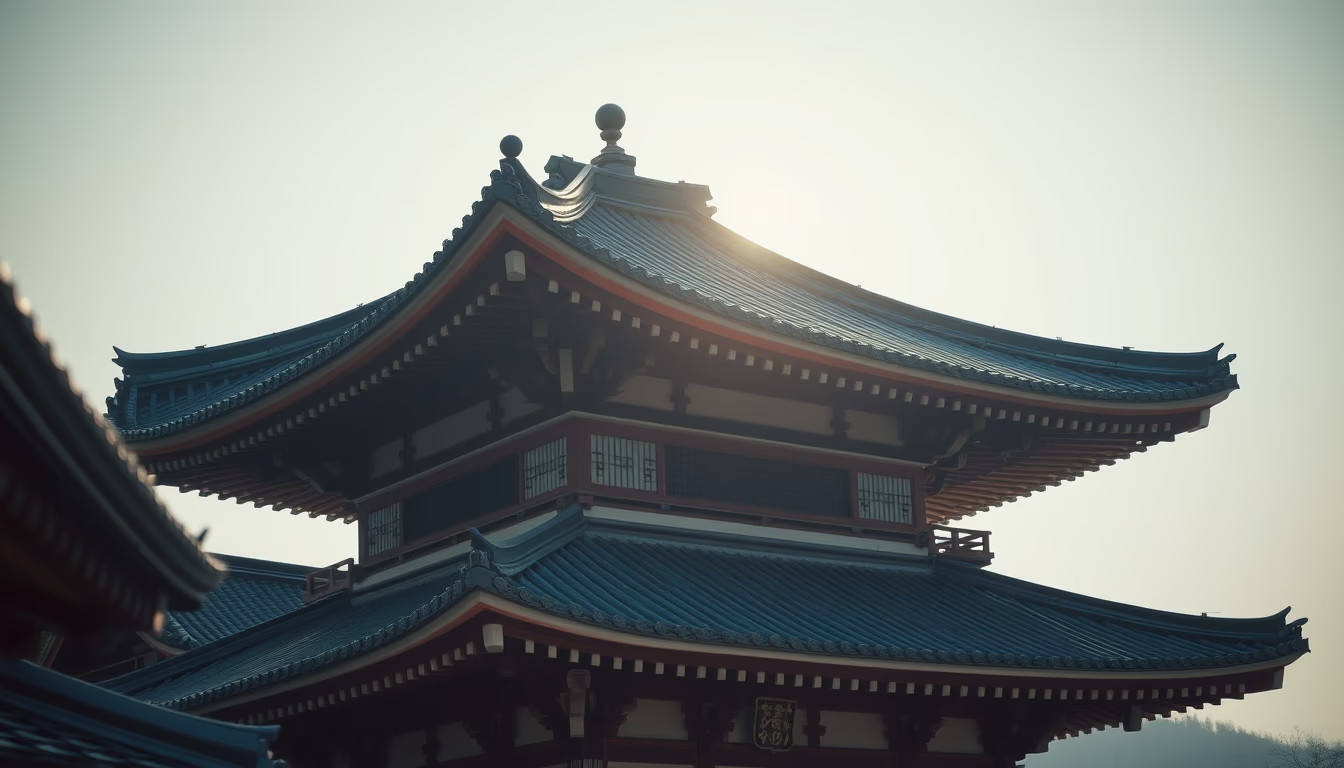
Pagoda roof japanese
1344×768 · AVIF · CC BY 4.0
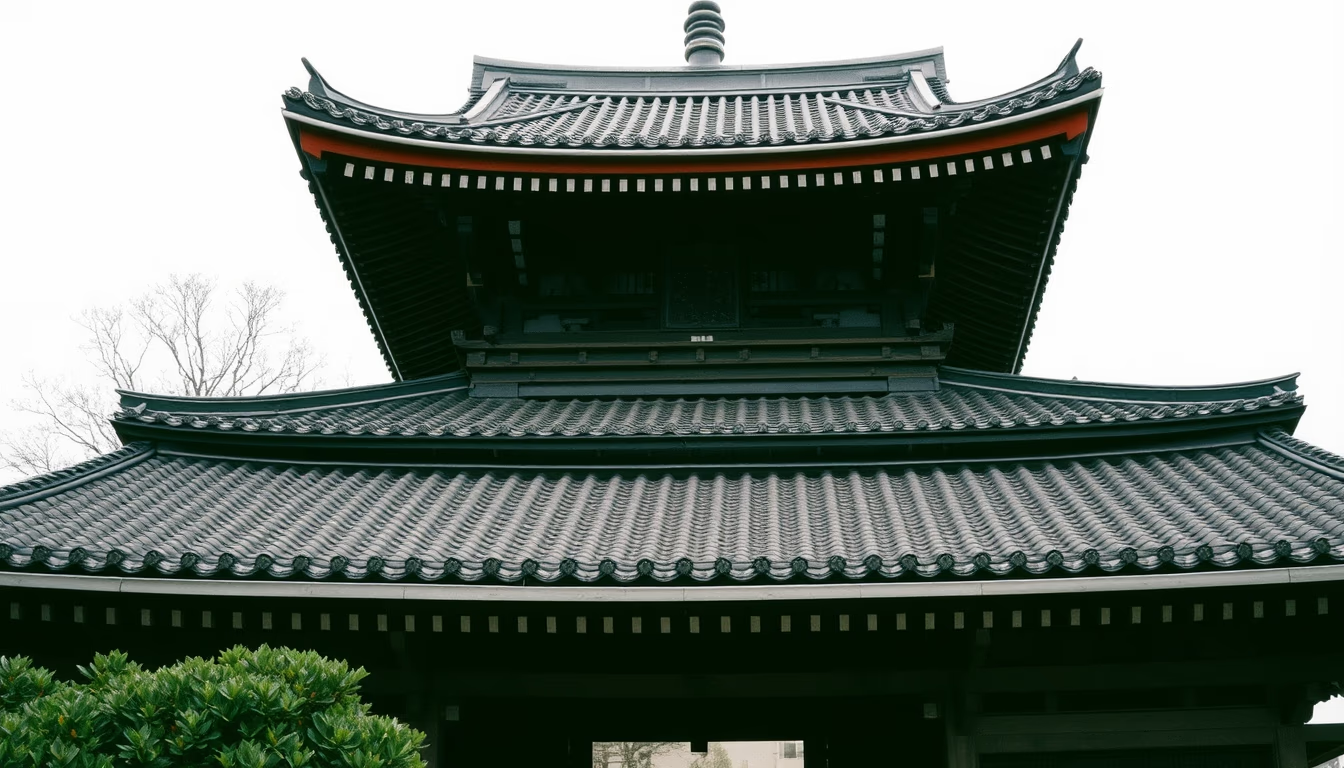
Japanese pagoda roofs blend elegant curves and Buddhist symbolism, representing centuries of architectural evolution.
About this subject
Japanese pagoda roofs are among the most distinctive features of traditional Japanese architecture. Originating from Indian stupas and adapted through China and Korea, these roofs evolved into unique forms that balance aesthetics and functionality. Structurally, a pagoda consists of multiple stacked stories, each with its own roof that extends outward and gently curves at the edges. This curvature, known as "sori," is not merely decorative: it helps distribute weight and resist earthquakes, a crucial feature in a seismically active country.
Traditional materials include ceramic tiles (kawara), typically gray or brown, but also wood or copper in wealthier constructions. The top of each roof is often crowned with a decorative element called "sorin," a metal spire with rings that symbolize the Buddhist spiritual hierarchy. Additionally, the upward-turning eaves ("noki") help channel rainwater away and protect wooden walls from moisture.
Culturally, pagodas are integral to Buddhist temples and sometimes Shinto shrines. They house sacred relics and serve as symbols of the connection between heaven and earth. The famous five-story pagoda at Toji Temple in Kyoto is the tallest in Japan at 57 meters, while Yasaka Pagoda, also in Kyoto, is a city icon. During the Edo period (1603, 1868), their construction reached peak technical sophistication.
Interestingly, many ancient pagodas lack a continuous central pillar, a surprise to modern engineers. Instead, they rely on interlocking joints and a damping system that makes them incredibly resilient. Horyuji Temple in Nara houses the world's oldest wooden structure, a five-story pagoda that has survived earthquakes for centuries. Today, these roofs continue to inspire contemporary architects and are often replicated in modern buildings seeking to honor Japanese heritage.
Frequently Asked Questions
What is the function of curved roofs on Japanese pagodas?
The curved roofs are not just aesthetic: they help channel rainwater away from wooden walls and distribute structural weight, improving earthquake resistance.
How many stories does a Japanese pagoda typically have?
Most pagodas have three or five stories, numbers with Buddhist significance. The five-story pagoda represents five elements: earth, water, fire, air, and void.
What is the 'sorin' on top of a pagoda?
The sorin is a metal spire with rings that crowns the roof. It symbolizes the Buddhist spiritual hierarchy and also serves as a spiritual lightning rod.
Direct URL
https://pub-c7d6a6ea828543ac903a74a341ccb2e1.r2.dev/imagens/pagoda-roof-japanese-film-grain-authentic-p3.avifHow to credit
Include a visible link back to UtilizAí. Copy one of the snippets below:
<a href="https://xn--utiliza-eza.com/en/midia/imagens/pagoda-roof-japanese-film-grain-authentic-p3">Pagoda roof japanese</a> by <a href="https://xn--utiliza-eza.com">UtilizAí</a>, licensed under <a href="https://creativecommons.org/licenses/by/4.0/">CC BY 4.0</a>.
[Pagoda roof japanese](https://xn--utiliza-eza.com/en/midia/imagens/pagoda-roof-japanese-film-grain-authentic-p3) by [UtilizAí](https://xn--utiliza-eza.com), CC BY 4.0
License: CC-BY-4.0