Pacific ocean waves
1344×768 · AVIF · CC BY 4.0
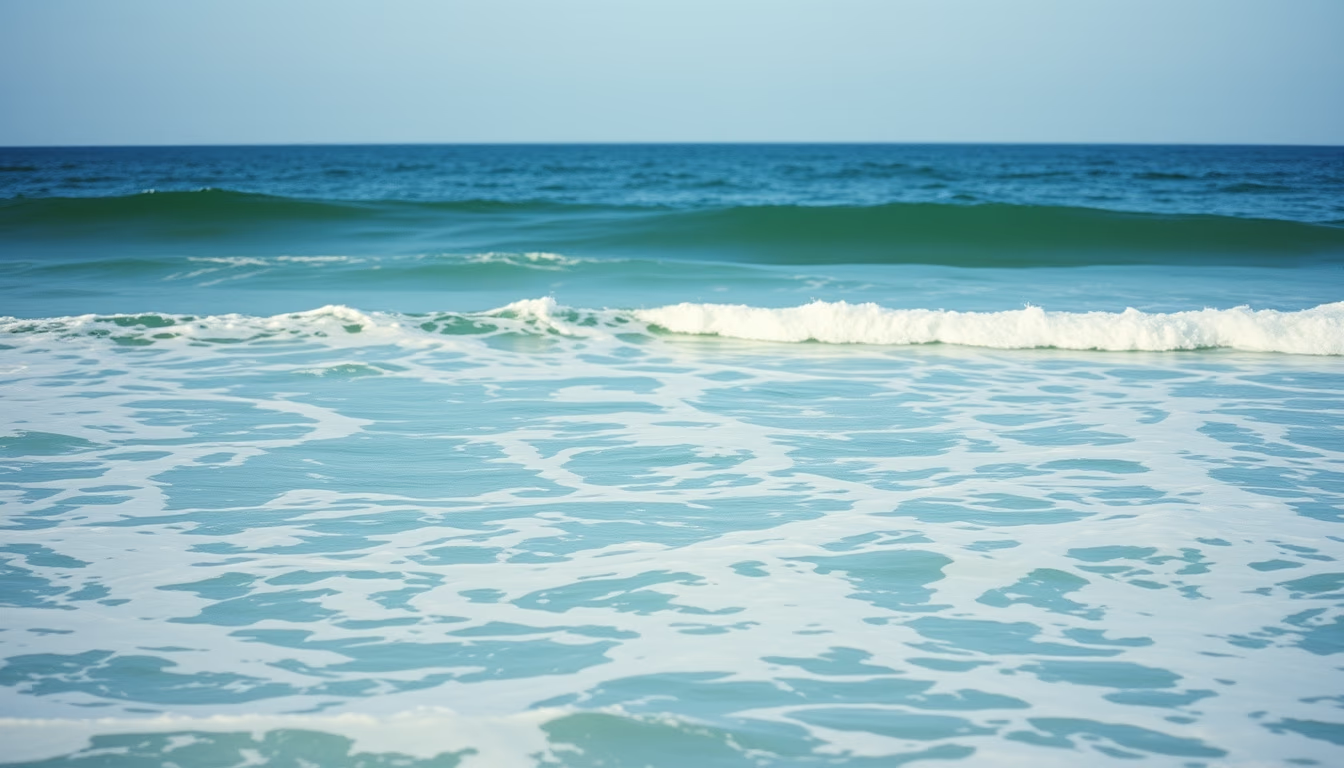
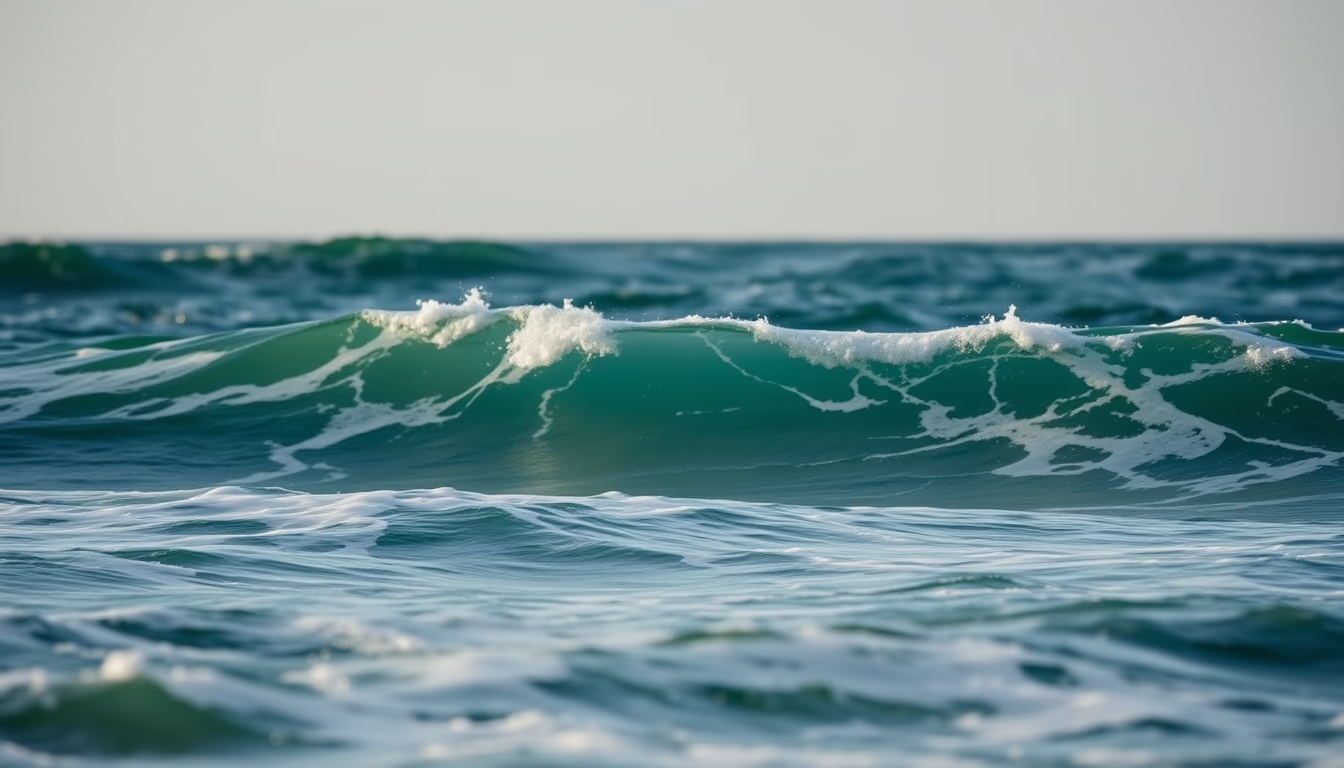
Pacific Ocean waves, the largest and deepest ocean on Earth, shaping coastlines and influencing global climates.
About this subject
The Pacific Ocean spans approximately 165 million square kilometers, more than all the land area on Earth combined. Its waves are generated by winds blowing across vast stretches of open water, forming swells that travel thousands of kilometers before reaching the coasts of continents such as the Americas, Asia, and Oceania. For instance, the North Pacific swell fuels iconic surf breaks in Hawaii, like Pipeline on Oahu, where waves can exceed 10 meters in height during winter. In the South Pacific, islands like Fiji and Tahiti receive consistent waves that attract surfers from around the globe.
Wave behavior in the Pacific is influenced by large-scale climate phenomena such as El Niño and La Niña. During El Niño, sea surface temperatures rise in the equatorial Pacific, altering wind patterns and generating more powerful waves in certain regions. La Niña, on the other hand, tends to strengthen trade winds, producing more frequent swell in the North Pacific. These phenomena affect not only waves but also marine life and fisheries, with economic repercussions for countries like Peru, Indonesia, and Japan.
Beyond surfing, Pacific waves play a significant geological role: coastal erosion and sediment deposition shape beaches and cliffs. The Pacific also hosts the Ring of Fire, a region of intense tectonic activity that generates tsunamis, such as the devastating 2011 tsunami in Japan. The waves of the Pacific are thus a multifaceted phenomenon connecting climate, geography, and culture.
Frequently Asked Questions
Why are Pacific waves famous for surfing?
The Pacific has vast open water without barriers, generating long-distance swell that produces powerful, consistent waves. Locations like Hawaii, Tahiti, and Fiji offer world-class breaks.
How does El Niño affect Pacific waves?
El Niño warms equatorial Pacific waters, altering winds and creating more intense swell patterns along parts of the Americas and Asia. It can increase wave size in some areas.
Can Pacific waves cause tsunamis?
Yes, the Pacific's Ring of Fire has intense seismic activity, and underwater earthquakes can generate destructive tsunamis, such as the 2011 event in Japan.
Direct URL
https://pub-c7d6a6ea828543ac903a74a341ccb2e1.r2.dev/imagens/pacific-ocean-waves-lo-fi-disposable-camera-p5.avifHow to credit
Include a visible link back to UtilizAí. Copy one of the snippets below:
<a href="https://xn--utiliza-eza.com/en/midia/imagens/pacific-ocean-waves-lo-fi-disposable-camera-p5">Pacific ocean waves</a> by <a href="https://xn--utiliza-eza.com">UtilizAí</a>, licensed under <a href="https://creativecommons.org/licenses/by/4.0/">CC BY 4.0</a>.
[Pacific ocean waves](https://xn--utiliza-eza.com/en/midia/imagens/pacific-ocean-waves-lo-fi-disposable-camera-p5) by [UtilizAí](https://xn--utiliza-eza.com), CC BY 4.0
License: CC-BY-4.0