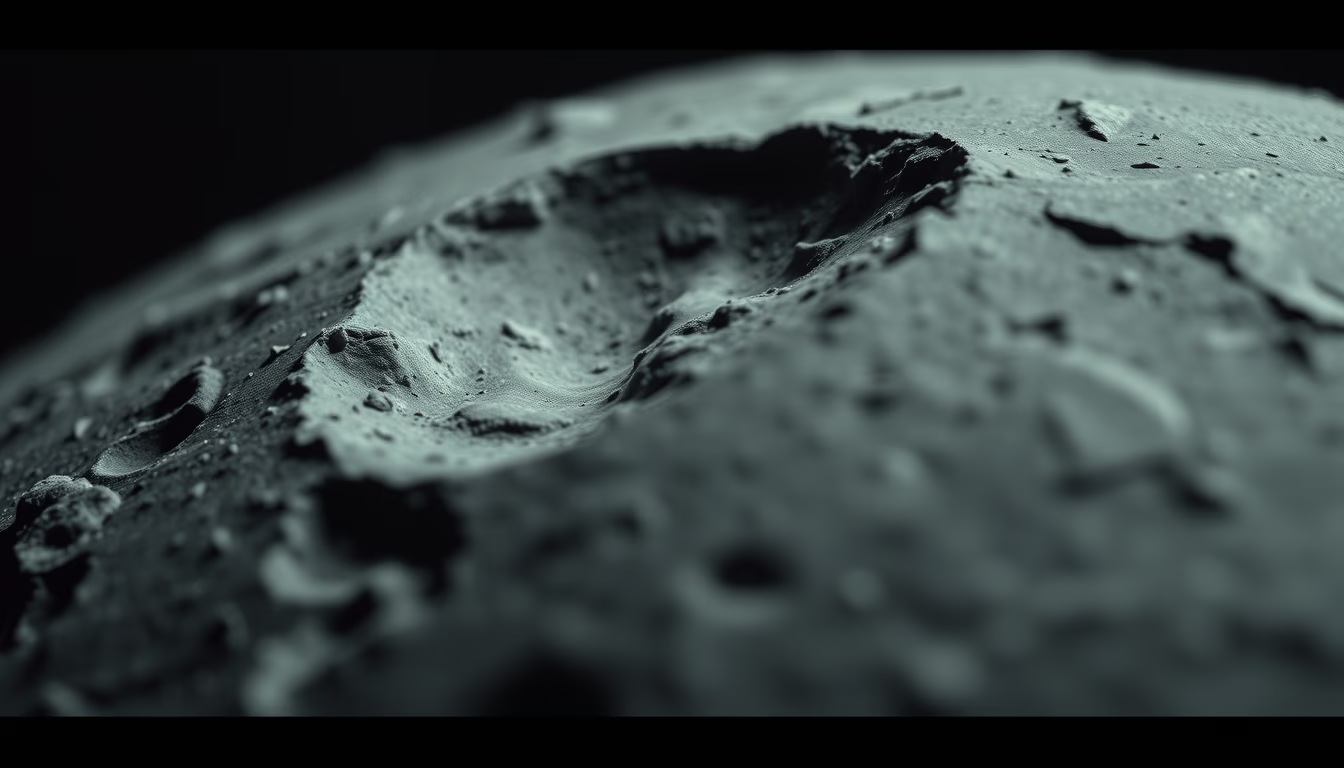
Osiris-rex bennu asteroid
1344×768 · AVIF · CC BY 4.0
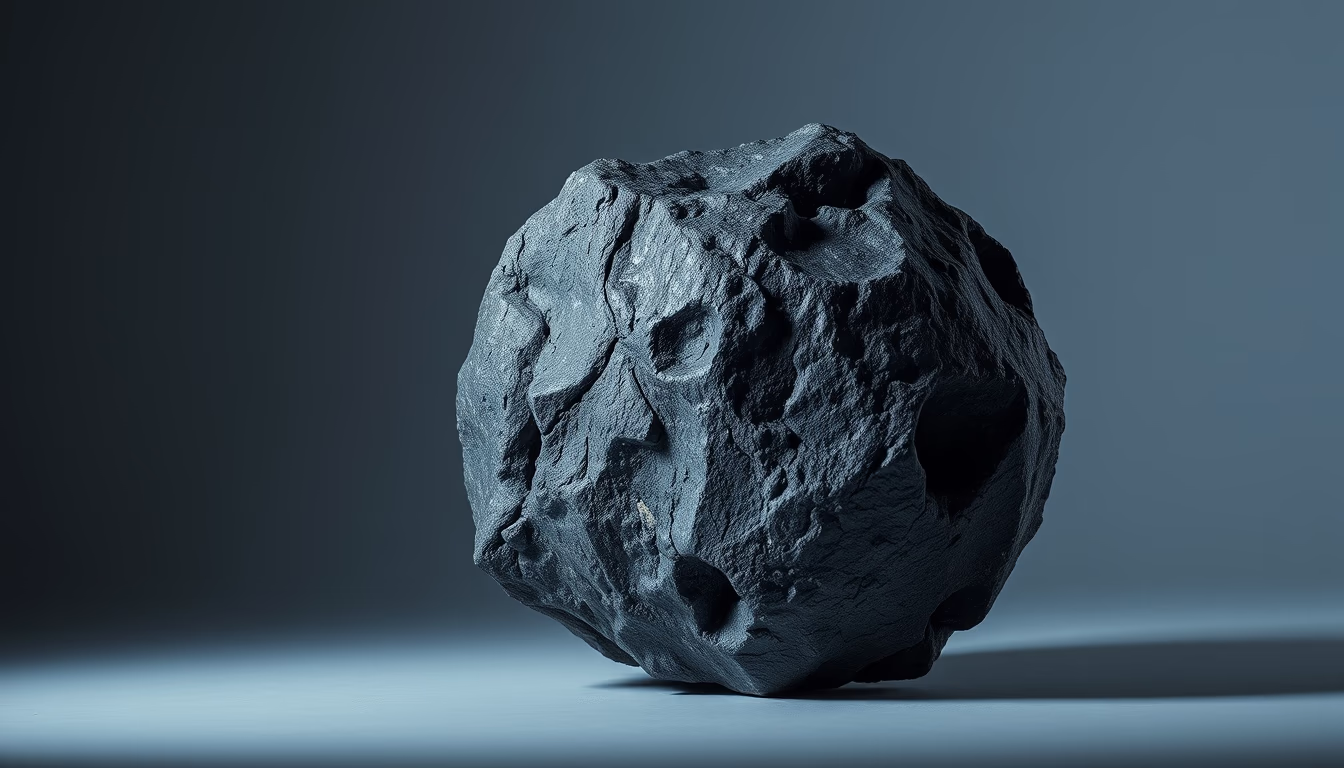
NASA's OSIRIS-REx mission collected samples from asteroid Bennu in 2020, unveiling secrets of the Solar System's formation.
About this subject
The asteroid Bennu, classified as a near-Earth object, measures approximately 500 meters in diameter and orbits the Sun every 1.2 years. Its carbon-rich composition makes it a fossil from the early Solar System, dating back more than 4.5 billion years. The OSIRIS-REx mission (Origins, Spectral Interpretation, Resource Identification, Security-Regolith Explorer) launched in 2016 with the goal of mapping, analyzing, and collecting a sample from Bennu's surface. In October 2020, the spacecraft briefly touched the asteroid in a maneuver known as Touch-And-Go (TAG), using a robotic arm to capture dust and gravel. The sample, weighing about 250 grams, is scheduled to return to Earth in September 2023, landing in the Utah desert. Scientists hope the material will help unravel the origins of water and organic compounds that may have seeded life on Earth. Additionally, Bennu is classified as a potentially hazardous asteroid, with a remote chance of impacting Earth in the 22nd century, making its study crucial for planetary defense strategies. The mission also mapped the asteroid's surface in unprecedented detail, revealing a landscape covered with loose rocks and regolith, resulting from impacts and space weathering.
Frequently Asked Questions
What is the asteroid Bennu?
Bennu is a near-Earth, carbon-rich asteroid about 500 meters in diameter. It orbits the Sun every 1.2 years and is considered a fossil from the early Solar System.
How did OSIRIS-REx collect samples from Bennu?
The spacecraft used a robotic arm called TAGSAM to touch the asteroid's surface for a few seconds, releasing nitrogen gas to stir up regolith and capture particles. The material was stored in a capsule for return to Earth.
Why is studying Bennu important?
Bennu contains primitive material that could clarify the formation of planets and the origin of water and organic compounds on Earth. Additionally, its study helps assess impact risks and develop planetary defense strategies.
Direct URL
https://pub-c7d6a6ea828543ac903a74a341ccb2e1.r2.dev/imagens/osiris-rex-bennu-asteroid-studio-still-life-fresh7.avifHow to credit
Include a visible link back to UtilizAí. Copy one of the snippets below:
<a href="https://xn--utiliza-eza.com/en/midia/imagens/osiris-rex-bennu-asteroid-studio-still-life-fresh7">Osiris-rex bennu asteroid</a> by <a href="https://xn--utiliza-eza.com">UtilizAí</a>, licensed under <a href="https://creativecommons.org/licenses/by/4.0/">CC BY 4.0</a>.
[Osiris-rex bennu asteroid](https://xn--utiliza-eza.com/en/midia/imagens/osiris-rex-bennu-asteroid-studio-still-life-fresh7) by [UtilizAí](https://xn--utiliza-eza.com), CC BY 4.0
License: CC-BY-4.0