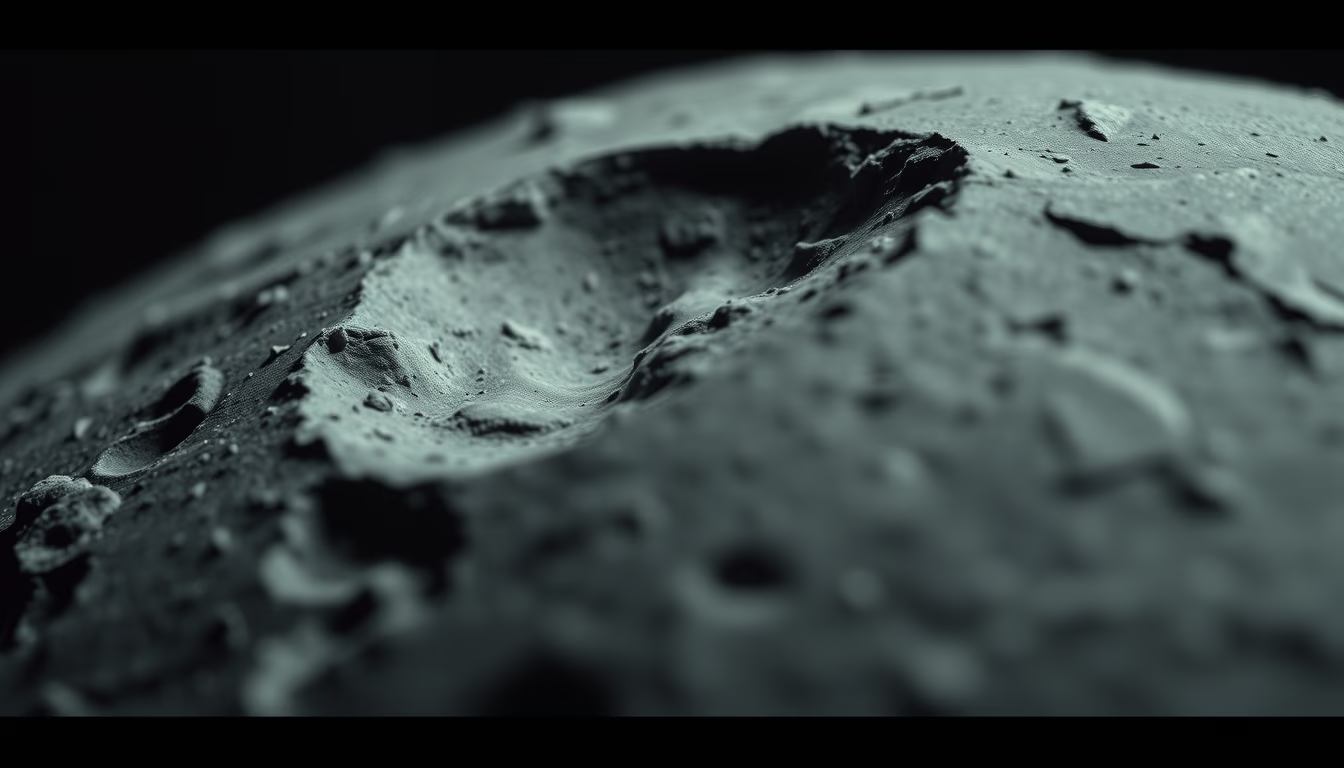
Osiris-rex bennu asteroid
1344×768 · AVIF · CC BY 4.0
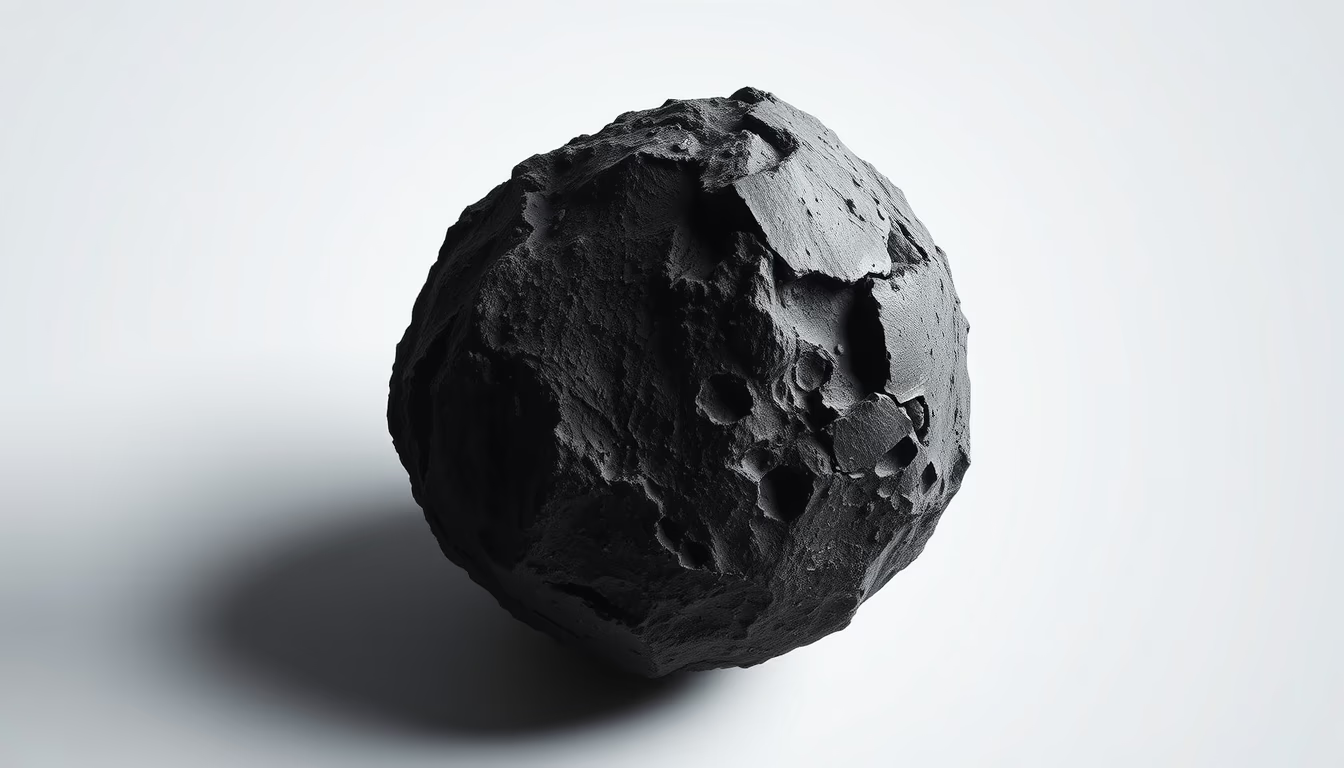
NASA's OSIRIS-REx mission collected samples from asteroid Bennu, a carbon-rich body that may hold clues about the origin of life and the Solar System.
About this subject
Asteroid Bennu, the target of NASA's OSIRIS-REx mission (Origins, Spectral Interpretation, Resource Identification, Security, Regolith Explorer), is a carbonaceous B-type asteroid approximately 500 meters in diameter. Its carbon-rich composition and organic molecules make it a fossil of the early Solar System, offering clues about planet formation and the origin of prebiotic compounds that may have seeded life on Earth.
OSIRIS-REx launched on September 8, 2016, and arrived at Bennu in December 2018. After detailed surface mapping, the spacecraft collected samples on October 20, 2020, using the Touch-And-Go Sample Acquisition Mechanism (TAGSAM). The collected material, estimated at about 60 grams, was stored in a capsule that returned to Earth on September 24, 2023, landing in the Utah desert.
Bennu is also classified as a potentially hazardous asteroid, with roughly a 1 in 2,700 chance of impacting Earth in the late 22nd century. Studying its orbit and composition helps refine planetary defense models. Additionally, Bennu's samples are being analyzed worldwide for organic compounds, amino acids, and nucleobases, potentially revealing how life's building blocks emerged in the Solar System.
Frequently Asked Questions
Why was asteroid Bennu chosen as the target for the OSIRIS-REx mission?
Bennu is a primitive carbonaceous asteroid rich in carbon and organic molecules. It is considered a fossil of the early Solar System, offering clues about planet formation and the origin of life. Additionally, its orbit near Earth makes it accessible for study.
How did OSIRIS-REx collect samples from Bennu?
The spacecraft used the Touch-And-Go Sample Acquisition Mechanism (TAGSAM), which briefly touched the asteroid's surface, released nitrogen gas to stir up dust and small fragments, and captured them in a filter. The process was carefully planned to minimize risks.
What can Bennu's samples reveal about life on Earth?
The samples contain organic compounds, amino acids, and possibly nucleobases. These are the building blocks of life as we know it. Studying them can show how prebiotic molecules formed in space and may have contributed to the emergence of life on Earth.
Direct URL
https://pub-c7d6a6ea828543ac903a74a341ccb2e1.r2.dev/imagens/osiris-rex-bennu-asteroid-commercial-product-photography-fresh1.avifHow to credit
Include a visible link back to UtilizAí. Copy one of the snippets below:
<a href="https://xn--utiliza-eza.com/en/midia/imagens/osiris-rex-bennu-asteroid-commercial-product-photography-fresh1">Osiris-rex bennu asteroid</a> by <a href="https://xn--utiliza-eza.com">UtilizAí</a>, licensed under <a href="https://creativecommons.org/licenses/by/4.0/">CC BY 4.0</a>.
[Osiris-rex bennu asteroid](https://xn--utiliza-eza.com/en/midia/imagens/osiris-rex-bennu-asteroid-commercial-product-photography-fresh1) by [UtilizAí](https://xn--utiliza-eza.com), CC BY 4.0
License: CC-BY-4.0