Oscilloscope display waveform
1344×768 · AVIF · CC BY 4.0
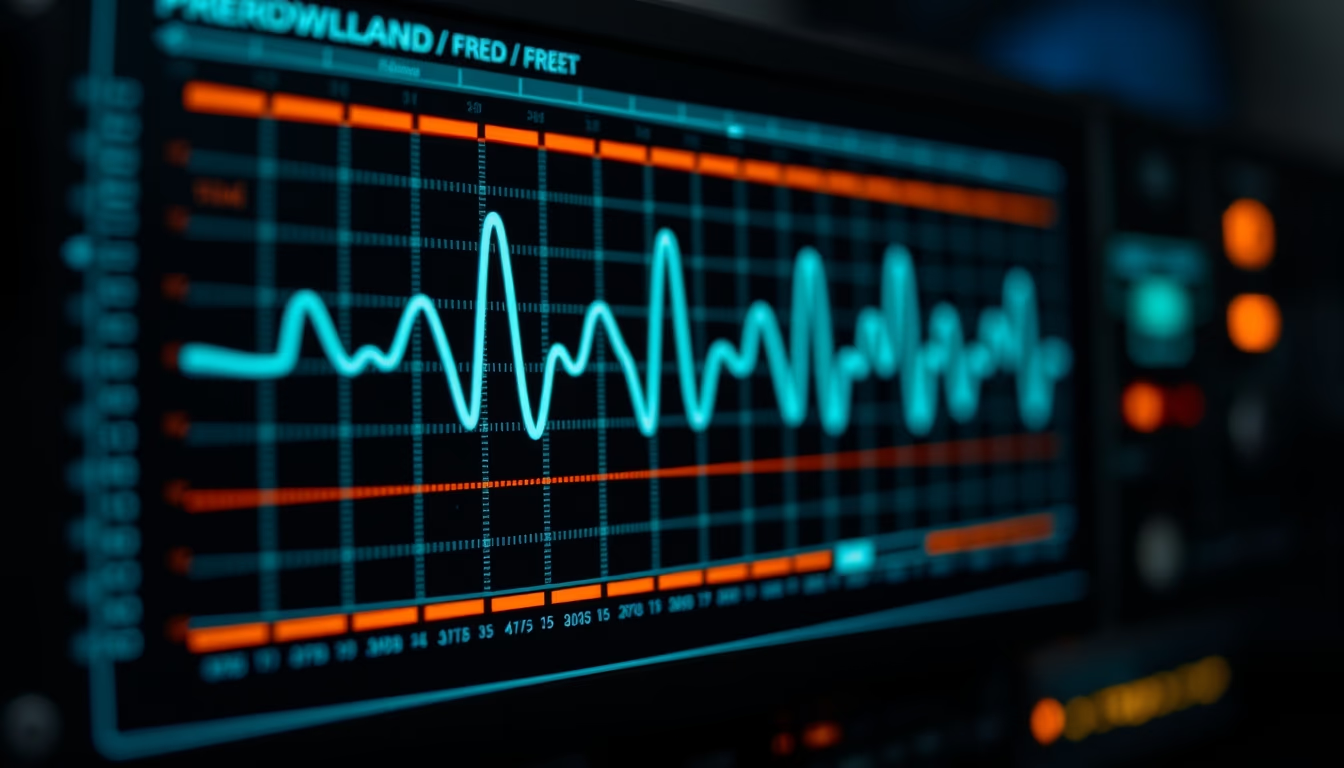
The oscilloscope is an essential instrument for measuring and visualizing electrical signals, displaying waveforms in real time.
About this subject
The oscilloscope is an electronic measuring instrument that visualizes the variation of voltage of an electrical signal over time. Its main function is to display waveforms representing the amplitude and frequency of the signal on a screen, typically a cathode-ray tube (CRT) or LCD. These devices are essential in electronics labs, engineering, and maintenance, used to diagnose faults, analyze circuits, and verify the quality of audio, video, and communication signals.
Historically, the first oscilloscope was developed in 1897 by Karl Ferdinand Braun, who invented the cathode-ray tube. Since then, technology has evolved into modern digital models offering features such as data storage, automatic analysis, and computer connectivity. Oscilloscopes can be classified as analog or digital: analog ones display the waveform directly, while digital ones sample and convert the signal for processing.
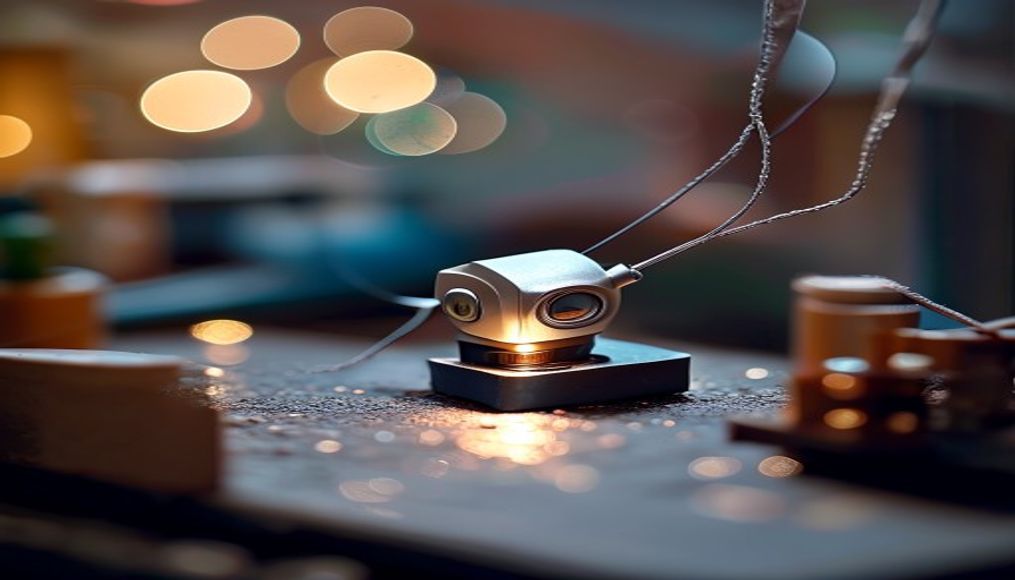
In practice, oscilloscopes are used in fields like electronic device development, telecommunications, and scientific research. Common examples include measuring amplifier distortion or synchronizing signals from a microcontroller. The image captured with a tilt-shift miniature effect makes the equipment look smaller, but it retains the essence of the precise visualization that the oscilloscope provides.
Frequently Asked Questions
What does the waveform on the oscilloscope mean?
The waveform represents the variation of the electrical signal voltage over time. Each point on the curve indicates the instantaneous voltage value, allowing analysis of parameters such as amplitude, frequency, and distortion.
What is the difference between analog and digital oscilloscopes?
An analog oscilloscope displays the signal continuously on a cathode-ray tube, while a digital one samples the signal at intervals and converts it into digital data for display and analysis. Digital scopes offer more processing and storage features.
What is the purpose of the time base on an oscilloscope?
The time base controls the speed at which the trace sweeps across the screen horizontally, setting the time scale per division. This allows adjustment for viewing signals of different frequencies.
Direct URL
https://pub-c7d6a6ea828543ac903a74a341ccb2e1.r2.dev/imagens/oscilloscope-display-waveform-tilt-shift-miniature-p6.avifHow to credit
Include a visible link back to UtilizAí. Copy one of the snippets below:
<a href="https://xn--utiliza-eza.com/en/midia/imagens/oscilloscope-display-waveform-tilt-shift-miniature-p6">Oscilloscope display waveform</a> by <a href="https://xn--utiliza-eza.com">UtilizAí</a>, licensed under <a href="https://creativecommons.org/licenses/by/4.0/">CC BY 4.0</a>.
[Oscilloscope display waveform](https://xn--utiliza-eza.com/en/midia/imagens/oscilloscope-display-waveform-tilt-shift-miniature-p6) by [UtilizAí](https://xn--utiliza-eza.com), CC BY 4.0
License: CC-BY-4.0