Oscilloscope display waveform
1344×768 · AVIF · CC BY 4.0
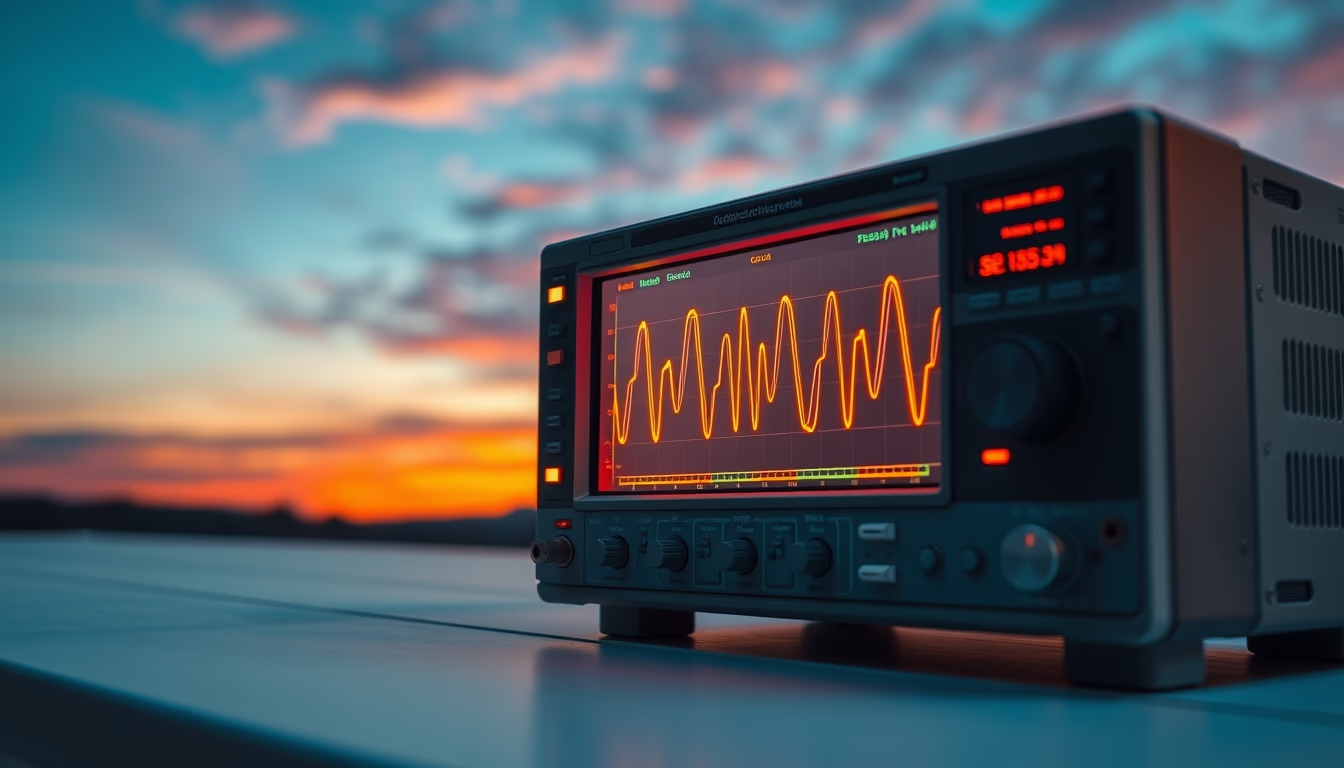
Oscilloscope displaying a waveform on a phosphor screen, a crucial instrument for electronic engineers to analyze electrical signals in real time.
About this subject
An oscilloscope is an electronic measurement instrument that displays varying signal voltages over time. The waveform on the phosphor screen represents voltage variation along the horizontal (time) and vertical (amplitude) axes. Invented by Karl Ferdinand Braun in 1897 as a cathode-ray tube, this device evolved into modern digital oscilloscopes with storage and advanced analysis capabilities.
Oscilloscopes are essential in electronics labs, telecommunications, and research. They measure parameters like frequency, period, amplitude, waveform shape, and distortion. Long-exposure photography captures the persistent trail of the electron beam on screen, revealing complex patterns such as Lissajous figures or modulations. This visual effect, though less common in digital oscilloscopes, is still studied for its aesthetics and educational value.
Waveform analysis is critical for diagnosing circuit faults, verifying signal integrity in communication systems, and calibrating equipment. Modern oscilloscopes include trigger functions, FFT, and serial protocol decoding. Long-exposure images enhance the signal path, providing detailed visualization of transient phenomena or noise.
Frequently Asked Questions
What is an oscilloscope used for?
An oscilloscope is used to visualize and measure varying electrical signals over time, such as voltage, frequency, and waveform shape. It helps diagnose circuits, analyze noise, and verify signal integrity.
What does the waveform on an oscilloscope represent?
The waveform represents the signal's voltage variation over time. The horizontal axis indicates time, and the vertical axis amplitude. Specific patterns indicate characteristics like sinusoidal, square, or pulse waves.
What is the difference between analog and digital oscilloscopes?
Analog oscilloscopes use a cathode-ray tube to display the waveform directly. Digital oscilloscopes convert the signal into digital data, allowing storage, advanced analysis, and higher precision.
Direct URL
https://pub-c7d6a6ea828543ac903a74a341ccb2e1.r2.dev/imagens/oscilloscope-display-waveform-long-exposure-p3.avifHow to credit
Include a visible link back to UtilizAí. Copy one of the snippets below:
<a href="https://xn--utiliza-eza.com/en/midia/imagens/oscilloscope-display-waveform-long-exposure-p3">Oscilloscope display waveform</a> by <a href="https://xn--utiliza-eza.com">UtilizAí</a>, licensed under <a href="https://creativecommons.org/licenses/by/4.0/">CC BY 4.0</a>.
[Oscilloscope display waveform](https://xn--utiliza-eza.com/en/midia/imagens/oscilloscope-display-waveform-long-exposure-p3) by [UtilizAí](https://xn--utiliza-eza.com), CC BY 4.0
License: CC-BY-4.0