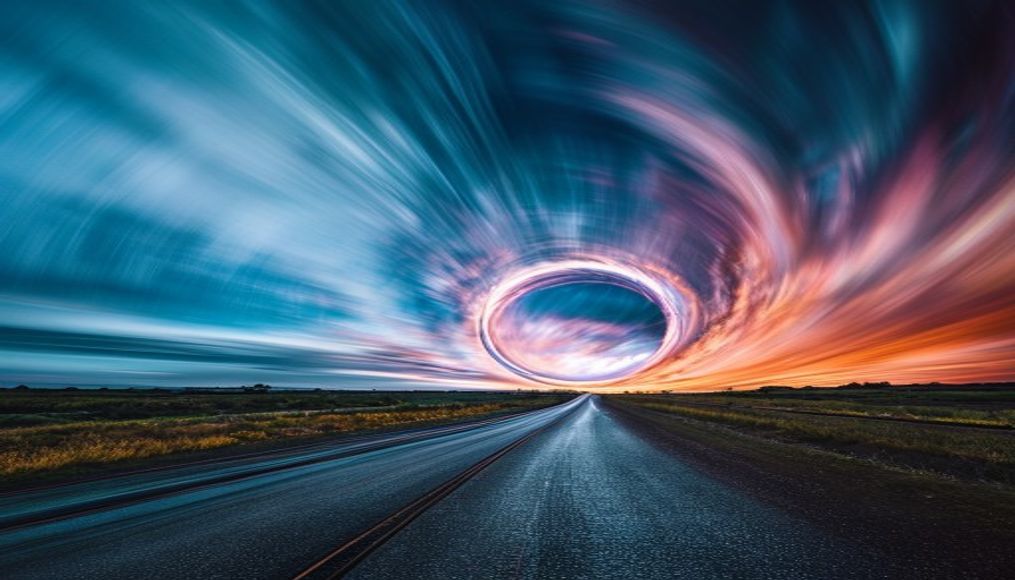
Orion nebula glowing
1344×768 · AVIF · CC BY 4.0

The Orion Nebula, a stellar nursery in the constellation Orion, is one of the brightest and most studied nebulae in the night sky.
About this subject
The Orion Nebula (also known as Messier 42, M42) is a diffuse interstellar cloud located approximately 1,344 light-years from Earth. It lies in the constellation Orion, just below the Belt of Orion (the Three Marias), and is visible to the naked eye as a whitish patch. It is the closest star-forming region to Earth, harboring thousands of young stars, protostars, and protoplanetary disks.
Discovered in 1610 by French astronomer Nicolas-Claude Fabri de Peiresc, the nebula was independently documented by Christiaan Huygens in 1656. Since then, it has become a celestial laboratory for studying star formation. The Hubble Space Telescope revealed stunning details such as evaporating protoplanetary disks (proplyds) and the dense Trapezium cluster, four massive stars that illuminate the nebula.
The Orion Nebula plays a crucial role in modern astrophysics. Infrared and radio observations allow scientists to peer through dust clouds, revealing stars in their earliest stages. The region is estimated to contain enough mass to form about a thousand Sun-like stars. The star formation processes observed there help us understand how stars and planetary systems, including our own, originate.
Interestingly, the nebula is gradually dissipating. Due to radiation from young stars, especially the Trapezium, gas and dust are being pushed outward. In about 100,000 years, the nebula may become less dense and more transparent, revealing the underlying star cluster. For amateur astronomers, M42 is one of the most rewarding objects to observe, even with modest telescopes, displaying intricate filamentary structure.
Frequently Asked Questions
How far is the Orion Nebula from Earth?
The Orion Nebula is approximately 1,344 light-years away, making it the closest massive star-forming region to our planet.
Why is the Orion Nebula important for astronomy?
It serves as a natural laboratory for studying star and planet formation. Detailed observations help understand how stars like the Sun and their planetary systems form.
Can I see the Orion Nebula without a telescope?
Yes, on dark nights with no light pollution, it is visible to the naked eye as a diffuse patch in the constellation Orion. Binoculars or small telescopes reveal more detail.
Direct URL
https://pub-c7d6a6ea828543ac903a74a341ccb2e1.r2.dev/imagens/orion-nebula-glowing-tilt-shift-miniature-p5.avifHow to credit
Include a visible link back to UtilizAí. Copy one of the snippets below:
<a href="https://xn--utiliza-eza.com/en/midia/imagens/orion-nebula-glowing-tilt-shift-miniature-p5">Orion nebula glowing</a> by <a href="https://xn--utiliza-eza.com">UtilizAí</a>, licensed under <a href="https://creativecommons.org/licenses/by/4.0/">CC BY 4.0</a>.
[Orion nebula glowing](https://xn--utiliza-eza.com/en/midia/imagens/orion-nebula-glowing-tilt-shift-miniature-p5) by [UtilizAí](https://xn--utiliza-eza.com), CC BY 4.0
License: CC-BY-4.0